Columbia, MD, a planned community developed by the Rouse Co. in 1967, is experiencing an affordable housing shortage.


"Thirty-six years after Rouse developed Columbia as a town where anyone could live--regardless of race or economic background--the planned community may have become too successful to maintain that vision. The high demand to live in the community of 96,000 residents means not just anyone can afford to live there anymore. Decent townhouses cost in the $200,000s, and standard single-family homes sell in the $300,000s....Those high prices also keep out many of the area's teachers, police officers and service workers, who should be able to live alongside Columbia's wealthier residents....But even in the beginning of the planned community, Columbia's vision of economic diversity was questioned. In 1967...the community's housing prices--$19,750 for the cheapest home and $128 for the lowest monthly rent for a one-bedroom apartment--were too costly for people with low incomes."
Thanks to Connie Chung
Read the full story: Prices close the door to some homebuyers


Planetizen Federal Action Tracker
A weekly monitor of how Trump’s orders and actions are impacting planners and planning in America.
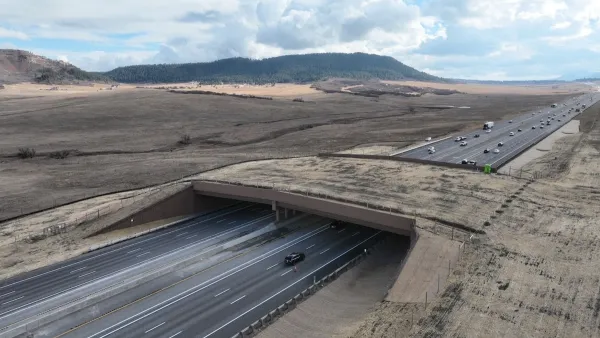
Record-breaking wildlife overpass in Colorado brings 91% reduction in animal collisions
Prior to the overpass, vehicles were hitting one deer per day on Colorado’s Interstate 25.

If Corpus Christi can’t revive desalination plant project, it may owe Texas $235 million
Earlier this month, city officials declined to pursue developing the plant for the second time in a year.

Mamdani sent nearly 6,000 pied-à-terre tax warnings to homes that didn’t qualify
A judge has ordered the administration to cancel thousands of pied-à-terre tax notices after it sent 35% of them erroneously.

Detroit to transform waterfront with $2.2 billion investment
Developers will convert about 18 acres of unused parking lot space into civic spaces.

‘Going backwards:’ Baltimore mayor, students rally against state's transit funding plan
Maryland's proposed six-year plan provides no funding for Baltimore’s BMORE bus program and reduces its road maintenance funding.

FREE Course: Walkable City 1: Why Walkability?
After describing his path towards focusing on walkability as the essence of good planning, Jeff Speck marches through his five principal reasons for making more walkable places.
Reinventing Malls: Planning Alchemy—Turning Gray Fields Into Gold
The course focuses on the opportunities and imperatives that shape reinvention of mall sites.

City of Thousand Oaks
City of Wisconsin Rapids
Harvard University Graduate School of Design
The Architects Foundation
University of Cincinnati Online
Northern Illinois Transit Authority (NITA)
The Pocatello Development Authority
The Urban Renewal Agency of the City of Pocatello