A sad day for the planning profession, as the American Planning Association makes the hard, but necessary decision to cancel the 2020 National Planning Conference.



American Planning Association (APA) President Kurt Christiansen and APA CEO Joel Albizo announced on March 17, 2020 that the 2020 National Planning Conference scheduled for April 25-28 in Houston would be canceled, in accordance with recommendations by the U.S. Centers for Disease Control and Prevention for controlling the spread of the coronavirus pandemic.
Registered attendees have the option of receiving a full refund or maintaining a credit with APA that can be applied to other programs, services, or membership renewal through September 30, 2021. We'll follow up shortly with additional information on future online learning opportunities that will facilitate the same high level of professional development for planners and the planning community that you've come to expect from APA.
The announcement also addresses the need to continue planning and working for the future of communities of all shapes and sizes in the United States:
As you focus on meeting the needs of your communities, we will turn our attention to the substantial challenge of keeping APA and the planning community strong in a rapidly changing world. We'll have more to say about this in the coming days.
The cancelation of the National Planning Conference is included in the larger context of the APA's COVID-19 response, which includes guiding principles—e.g., "The well-being of our staff, members, and partners is a top priority," and "Supporting planners across the country with empathy as they deal with uncertainty in their own lives and their communities is part of this shared experience"—as well as information about other APA COVID-19 response efforts and "important reminders and guidance."
The "important reminders and guidance" that conclude the announcement read as follows:
- Be aware of racism and xenophobia. With uncertainty comes fear and anxiety. When we're fearful, we're prone to making hasty decisions that cause harm. Anti-Asian/Chinese racism is on the rise globally as well as in biased media coverage and narratives. Please be vigilant about harmful and biased narratives regarding COVID-19.
- How we discuss the situation matters. Using statements intended to comfort others — such as "only old and sick people need to worry" or "you're young and healthy, you're fine" — can have an unintended consequence of further marginalizing those who are most vulnerable. Please encourage everyone to prioritize the most marginalized by taking the issue seriously, ensuring equitable resource and supplies allocation.
- Consider the impact of the situation on people who are caregivers to the elderly, infants, and/or immunocompromised individuals, who experts have determined are most prone to risk.
- Mitigate dissemination of false information designed to spread fear and hysteria. Share only verified information by trusted sources to fight against misinformation.
- Continue to exercise proper hand and cough hygiene, and stay home if you are feeling sick or are caring for a sick member of your household.
FULL STORY: COVID-19 Action Plan

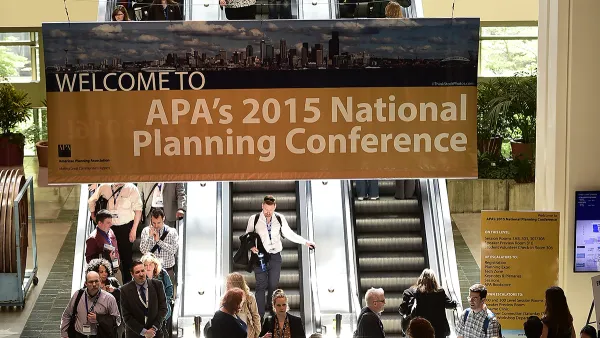
Planning for the 2021 National Planning Conference
After last year's National Planning Conference was canceled in the early days and weeks of the COVID-19 pandemic, the annual event returns online, with tons of planning content and even several avenues for networking and socializing.
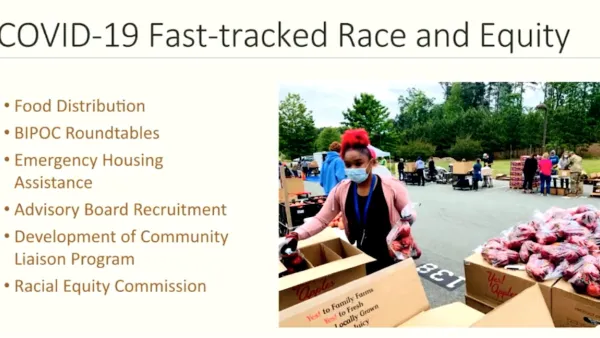
Equity and 'Righting Past Wrongs' to Start the 2021 National Planning Conference
The American Planning Association's 2021 National Planning Conference started streaming this morning, with an obvious focus on equity and the historical role of the planning profession in perpetuating systemic racism.
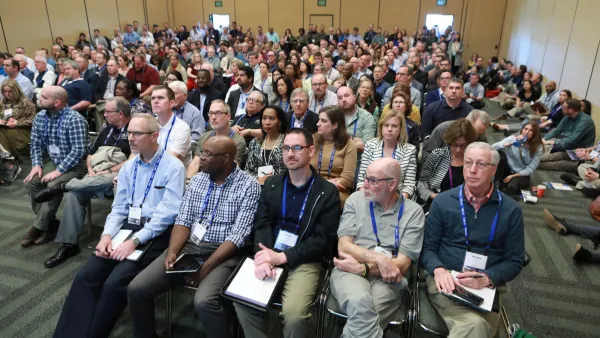
Searching for the Essence of Planning at the National Planning Conference
With so many applications and intersections, planning can be hard to define. Planetizen Managing Editor James Brasuell is in San Francisco searching for meaning.

The state-sanctioned urbicide of Austin
People don’t kill cities. Freeways do.

US to reduce Colorado River water deliveries to Mexico
A new Colorado Treaty amendment reduces Mexico’s Colorado River water allocation by 250,000 acre feet.

New Jersey’s second-largest city bans standalone data centers
Jersey City will continue to allow co-location facilities, such as those meant for research institutions that store their own data.

Amtrak not solely to blame for New Jersey commuter rail's unreliability, report finds
A new study from the Garden State Initiative found that NJ Transit’s budget grew 20% across a 4 year period, but reliability declined significantly over the same period.

EPA erases limits on planet-warming pollution from power plants
Under Monday’s plan, power plants would still have some limits on how much mercury, arsenic and other contaminants they can emit.

Phoenix announces new on-demand transit service, more frequent RAPID buses
Both new services will launch in October, and are part of Phoenix's Project Effective Access Solutions for Easing Congestion.

FREE Course: Walkable City 1: Why Walkability?
After describing his path towards focusing on walkability as the essence of good planning, Jeff Speck marches through his five principal reasons for making more walkable places.
Reinventing Malls: Planning Alchemy—Turning Gray Fields Into Gold
The course focuses on the opportunities and imperatives that shape reinvention of mall sites.

Eagle County Government
Harvard University Graduate School of Design
Nashville Planning Department
The Architects Foundation
University of Cincinnati Online
The Pocatello Development Authority
The Urban Renewal Agency of the City of Pocatello
Journal of the American Planning Association