The interest in less traditional housing arrangements for older people, such as shared housing and cohousing, is increasing.



Different models for senior housing are gaining in popularity, as the population of older Americans grows, writes Paula Span. "Shared housing, cohousing and village organizations appeal to those hoping to avoid the high costs and institutional nature of assisted-living and nursing homes, or at least stave them off for as long as possible."
These options help seniors continue to live independently, while providing other benefits such as additional income, companionship, and community support and access to services.
Still, challenges can hamper efforts, says Span. The scale of programs is small, and they help a relatively limited number of people. In addition, programs require a great deal of work to get off the ground and housing options can still be pricey and cost prohibitive.
"Finally, there’s the rubber-meets-the-road moment. Cohousing or village neighbors can offer lifts or bring meals, but they can’t help a frail older person take a shower. At some point, residents in declining health will need home care or a long-term facility," notes Span.
FULL STORY: ‘We Need Each Other’: Seniors Are Drawn to New Housing Arrangements


High housing costs force more seniors to live with roommates
Interest in shared living has risen fastest among Americans over 50.
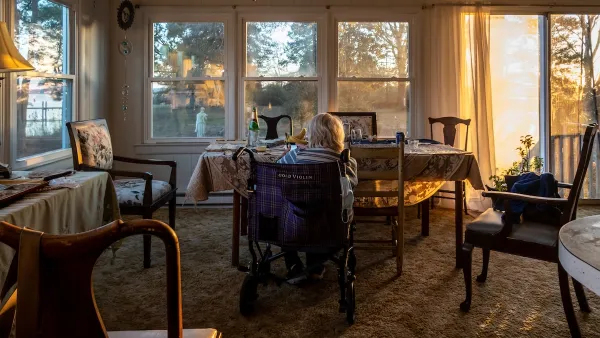
Homelessness Among Maryland Seniors Rose 77 Percent Since 2018
The high cost of housing is pushing many older adults into homelessness, while shelters are not equipped to address their specific needs.
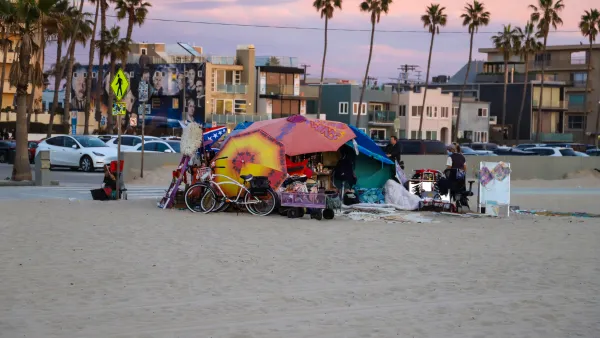
Seniors Over 50 Make up Almost Half of California’s Unhoused Population
A new study finds that low-income seniors are increasingly unable to find affordable housing.

Planetizen Federal Action Tracker
A weekly monitor of how Trump’s orders and actions are impacting planners and planning in America.

The state-sanctioned urbicide of Austin
People don’t kill cities. Freeways do.

US to reduce Colorado River water deliveries to Mexico
A new Colorado Treaty amendment reduces Mexico’s Colorado River water allocation by 250,000 acre feet.

5 New England states march closer to 800 megawatt wind energy project
Securing federal approval for the project may be complicated under the Trump administration, which has historically been hostile towards domestic wind power.

Baltimore to break ground on $50 million Transit Priority Project
The project will bring faster bus trips, safer streets and better bike connections to Baltimore.

Airbnb launches $250 million 'last-dollar financing' housing accelerator, makes first investment in Austin
The company will put $6.4 million towards affordable housing development in Texas’ capital.

FREE Course: Walkable City 1: Why Walkability?
After describing his path towards focusing on walkability as the essence of good planning, Jeff Speck marches through his five principal reasons for making more walkable places.
Reinventing Malls: Planning Alchemy—Turning Gray Fields Into Gold
The course focuses on the opportunities and imperatives that shape reinvention of mall sites.

Eagle County Government
Harvard University Graduate School of Design
Nashville Planning Department
The Architects Foundation
University of Cincinnati Online
The Pocatello Development Authority
The Urban Renewal Agency of the City of Pocatello
Journal of the American Planning Association