The Miami Herald is running a series of articles to explore the regional housing crisis. The latest in the series focuses on gentrification and displacement in the Little Haiti neighborhood.


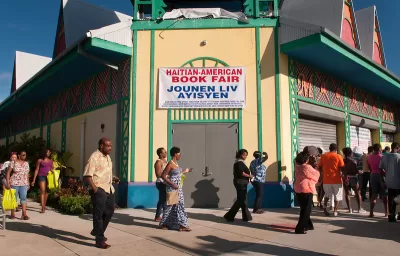
Andres Viglucci reports on the wave of investment and change washing over Little Haiti, describe dint he article as "one of Miami’s poorest, yet most singular and misunderstood, communities."
"Surrounded by gentrifying neighborhoods like Wynwood, the Design District and the upscale Upper East Side, the centrally located Little Haiti has become a magnet for real estate investors, business owners and speculators looking for opportunities with a low cost of entry and a potentially big upside," according to Viglucci.
Neighborhood leaders say the rising rent and land values in the neighborhood present an existential threat to the neighborhood. Local residents are vulnerable. "Little Haiti desperately needs physical and economic regeneration," writes Viglucci, and "median household income is a meager $24,800." Instead of community driven investments, real estate speculators are buying up the modest single-family homes and duplexes in the neighborhood—limited liability companies with names like Vulture Property Investments, Strictly Profits LLC, and World Domination Enterprises.
Viglucci also notes that some locals are concerned that a recently approved plan will exacerbate the threat of displacement. The Miami Commission recently approved the Magic City Innovation District plan, "which envisions construction of a nearly 18-acre, high-rise mini-city of apartments, shops and offices in the heart of the low-rise neighborhood."
The article is part of a series that exploring the housing crisis in South Florida, as well as promising future stories that will explore solutions to South Florida’s housing crisis. The Miami Herald has also produced an interactive tool to help renters and buyers match their budgets to affordable neighborhoods.
FULL STORY: Little Haiti is up for grabs. Will gentrification trample its people and culture?


Inclusive Prosperity: No Displacement Necessary
Recent analysis identifies nearly 200 U.S. neighborhoods that have achieved the highly-sought-after goal of increasing the prosperity of residents without displacing the existing community.
Revitalization Without Displacement: A New Model From Miami
Upzonings in working class neighborhoods usually provoke political opposition based on concerns about gentrification and displacement. But the new Wynwood Norte Neighborhood Revitalization District in Miami might have worked for a solution.
Is this the first wave of de-gentrification?
Valencia, Temescal, H Street and the fickle fortunes of the gentrified neighborhood.

Planetizen Federal Action Tracker
A weekly monitor of how Trump’s orders and actions are impacting planners and planning in America.

The state-sanctioned urbicide of Austin
People don’t kill cities. Freeways do.

US to reduce Colorado River water deliveries to Mexico
A new Colorado Treaty amendment reduces Mexico’s Colorado River water allocation by 250,000 acre feet.

5 New England states march closer to 800 megawatt wind energy project
Securing federal approval for the project may be complicated under the Trump administration, which has historically been hostile towards domestic wind power.

Baltimore to break ground on $50 million Transit Priority Project
The project will bring faster bus trips, safer streets and better bike connections to Baltimore.

Airbnb launches $250 million 'last-dollar financing' housing accelerator, makes first investment in Austin
The company will put $6.4 million towards affordable housing development in Texas’ capital.

FREE Course: Walkable City 1: Why Walkability?
After describing his path towards focusing on walkability as the essence of good planning, Jeff Speck marches through his five principal reasons for making more walkable places.
Reinventing Malls: Planning Alchemy—Turning Gray Fields Into Gold
The course focuses on the opportunities and imperatives that shape reinvention of mall sites.

Eagle County Government
Harvard University Graduate School of Design
Nashville Planning Department
The Architects Foundation
University of Cincinnati Online
The Pocatello Development Authority
The Urban Renewal Agency of the City of Pocatello
Journal of the American Planning Association