The City Council of Durham, North Carolina has approved changes to the city's master plan, first approved in 2005, to allow new forms of density in residential neighborhoods proximate to the city's downtown urban core.


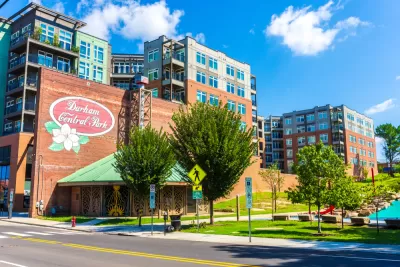
"The City Council agreed Tuesday night to allow more, and more varied, housing in neighborhoods near downtown Durham," reports Joe Johnson.
The approved "Expanded Housing Choices" plan will affect neighborhoods within two miles of the city's downtown core, allowing duplexes, creating a new small-lot option, and aligning duplexes and attached single-family housing with detached single-family standards. The plan also "[increases] opportunities for accessory dwelling units and modify residential infill standards," reports Johnson.
Mayor Steve Schewel is quoted in the article saying the plan is designed to "incrementally increase affordable housing" in the city. In 2017, the city was struggling to deal with skyrocketing evictions as the city dealt with a post-recession surge in development investment. The city also reorganized to streamline development review in the hopes of creating more supply in the city in 2017.
Durham is expecting 160,000 additional residents by 2045.
Read the full story: Durham votes for urban density, but will more housing change the city’s neighborhoods?


The Trouble With QUIMBY
The idea of “quality urbanism in my back yard” has its uses, but should not be used to limit housing supply.
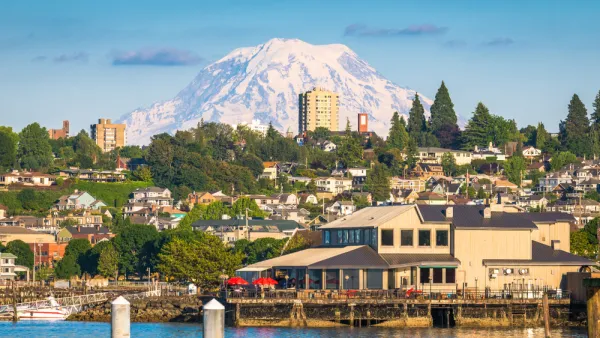
Tacoma Density Plan Moves to Phase Two
The Home in Tacoma plan would amend the city's zoning code to include more 'missing middle' housing types and encourage infill development.
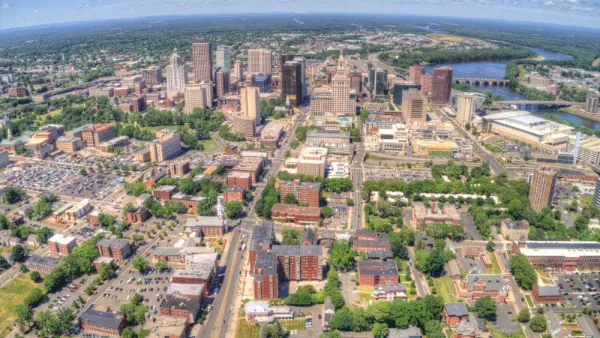
Pro-Development Coalition Forms in Connecticut
DesegregateCT is a growing coalition of groups coalescing behind ideas like Missing Middle Housing and zoning reform as a means to improved housing affordability.

Planetizen Federal Action Tracker
A weekly monitor of how Trump’s orders and actions are impacting planners and planning in America.

California plans to bury El Niño’s downpour
If the state plays its cards right, it may be able to store a billion acre-feet of El Niño’s water in aquifers.

Chicago breaks ground on $3 billion megadevelopment
The new neighborhood, titled Foundry Park, will one day host 3,700 residences.

Move over, LA: St. Louis gears up for Olympics, invests millions in downtown redevelopment
The Missouri city will host the 2028 Olympic soccer group stage and knockout matches.

Satanic place names
From streams and lakes to valleys and canyons, I mapped more than 1,000 places named after the Devil.

California High-Speed Rail Authority CEO resigns after $600,000 scandal
Under Ian Choudri, the authority used taxpayer dollars to fund first class flights and trips to nightclubs.

FREE Course: Walkable City 1: Why Walkability?
After describing his path towards focusing on walkability as the essence of good planning, Jeff Speck marches through his five principal reasons for making more walkable places.
Reinventing Malls: Planning Alchemy—Turning Gray Fields Into Gold
The course focuses on the opportunities and imperatives that shape reinvention of mall sites.

City of Rosemead
Rutgers University, Edward J. Bloustein School of Planning and Public Policy
One Hundred Miles
Hunter College, City University of New York (CUNY)
The Architects Foundation
University of Cincinnati Online
City of Cambridge
Montrose County
The Pocatello Development Authority