Cities need to increase density, but the design of buildings can drastically affect people’s quality of life. Architects are using new tactics and tools to create innovative structures where light, air, and space are not compromised.



"Viewed straight-on from the Hudson River, 40 Tenth [in New York City] looks like a simple rectangle. Shift to the right or left, though, and the building cuts inward, creating a dramatic faceted facade. The new development is part of [Studio] Gang’s exploration into 'solar carving,' a marketable term the firm uses to describe its process of shaping buildings based on the sun’s location and its desired effect," writes Liz Stinson.
Much more sunlight is beaming down on the High Line below — over three times the number of hours that would have resulted from a building that used convention design principles. The desire to limit shadows and bolster open space in dense urban areas is not new, says Stinson. But technology is giving architects and designers new tools to creatively tackle the challenges.
Underground roads, sunken and street-level plazas, and accessible public spaces are all strategies to help counter the negative effects of densification. "It’s getting easier for architects to ensure that discreet buildings are designed with an eye toward the long-term livability of cities," notes Stinson.
FULL STORY: Tall buildings are leaving cities in darkness. These architects have a radical fix

The Problem With All Those 'Livability' Rankings
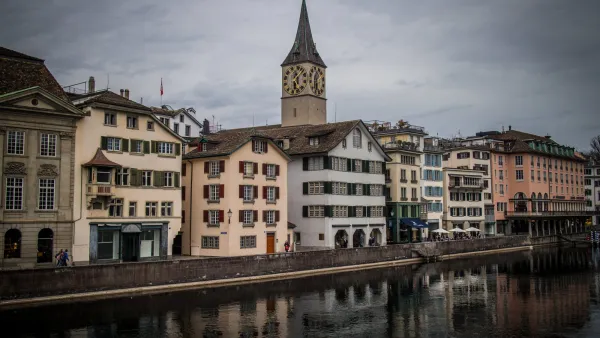
Why is it that smallish cities in western Europe always score so well? Perhaps the underlying assumptions behind ostensibly data-driven "livability" rankings cater to a certain audience and leave most of us out.
The Internet vs. the City
Will digital communications make cities obsolete, or can online connections actually complement the face-to-face interactions and the cities that support them?
Protests as Union Square Gets Privatized
New York's Union Square is the scene of a lively protest featuring Rev. Billy and the Church of Stop Shopping. At stake is the square's pavilion, which is set to be transformed into a restaurant.

Planetizen Federal Action Tracker
A weekly monitor of how Trump’s orders and actions are impacting planners and planning in America.

The state-sanctioned urbicide of Austin
People don’t kill cities. Freeways do.

US to reduce Colorado River water deliveries to Mexico
A new Colorado Treaty amendment reduces Mexico’s Colorado River water allocation by 250,000 acre feet.

LA Metro’s ultimatum: no extra buses for LA28 if federal funding isn’t imminently secured
If Metro does not provide additional buses, LA28 organizers will have to find a new way to manage Olympic traffic. LA28’s budget does not include a line item for transit.

Colorado’s Largest Data Center Could Rise Next to Homes — Without a Public Hearing
The proposed campus would consume 11 times the power of Denver International Airport; as it has across the country, opposition mounts.

5 New England states march closer to 800 megawatt wind energy project
Securing federal approval for the project may be complicated under the Trump administration, which has historically been hostile towards domestic wind power.

FREE Course: Walkable City 1: Why Walkability?
After describing his path towards focusing on walkability as the essence of good planning, Jeff Speck marches through his five principal reasons for making more walkable places.
Reinventing Malls: Planning Alchemy—Turning Gray Fields Into Gold
The course focuses on the opportunities and imperatives that shape reinvention of mall sites.

Eagle County Government
Harvard University Graduate School of Design
Nashville Planning Department
The Architects Foundation
University of Cincinnati Online
The Pocatello Development Authority
The Urban Renewal Agency of the City of Pocatello
Journal of the American Planning Association