Complicated laws around buildings owned by LLCs are making it difficult for NYC officials to determine which buildings can be taxed.


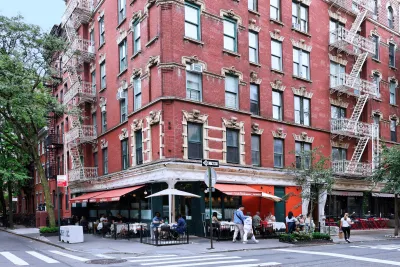
Opaque ownership laws surrounding LLCs are complicating Mayor Zohran Mandami’s pied-à-terre tax rollout. New York City officials are struggling to determine who — if anyone — has primary residence in many of the city’s luxury second homes, and thus, which properties actually qualify for Mandami’s tax.
On April 19, New York Mayor Zohran Mamdani and Governor Kathy Hochul announced a new "pied-à-terre tax" on one-, two-, and three family homes worth more than $5 million, and condominium and cooperative units worth more than $1 million, if not the owner’s primary residence. Last month, the city issued notices to 17,000 addresses, informing the owners they may be subject to the surcharge.
Michael Smilowitz, the New York City Department of Finance's general counsel, said “over half of the properties” that received the notices “are owned by trusts or entities such as partnerships, corporations and LLCs, rather than natural persons,” David Brand reports for Gothamist. If the occupant of a building holds a “majority interest” in the LLC listed in property records, the building is exempt from Mandami’s tax.
However, it can be difficult for city officials to access the records to determine which buildings qualify for exemption. The Gothamist reports:
The Department of Finance “lacks sufficient information about the structure and composition of such trusts and entities to determine whether a residential property owned by a trust or entity serves as the primary residence” of the actual person behind the corporation, Smilowitz wrote.
In Manhattan, roughly 37% of properties are owned by LLCs. While Mandami and New York Governor Kathy Hochul estimated that the tax could bring in $500 million annually for the city, the actual revenue could be lower if qualifying LLC owners elude the tax.
Read the full story: NYC homes hidden behind LLCs complicate pied-à-terre tax rollout


Exemption applications for NYC’s pied-à-terre tax see 55% success rate
The city sent nearly 40% of its initial pied-à-terre tax warnings erroneously.
Mamdani sent nearly 6,000 pied-à-terre tax warnings to homes that didn’t qualify
A judge has ordered the administration to cancel thousands of pied-à-terre tax notices after it sent 35% of them erroneously.
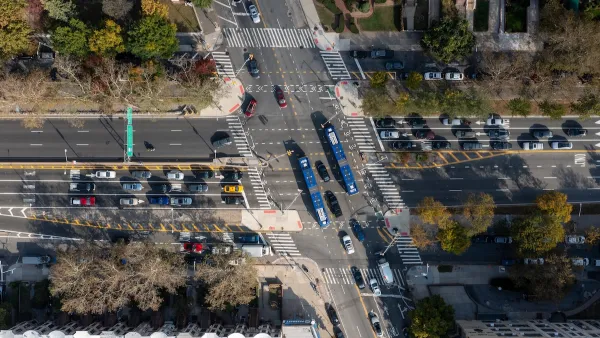
This road in NYC is infamously dangerous — and Mamdani can't fix it
New York City's Ocean Parkway is known for reckless driving, but the power to implement safety measures lies with the state rather than the city.

Planetizen Federal Action Tracker
A weekly monitor of how Trump’s orders and actions are impacting planners and planning in America.

California plans to bury El Niño’s downpour
If the state plays its cards right, it may be able to store a billion acre-feet of El Niño’s water in aquifers.

Chicago breaks ground on $3 billion megadevelopment
The new neighborhood, titled Foundry Park, will one day host 3,700 residences.

Satanic Place Names
From streams and lakes to valleys and canyons, I mapped more than 1,000 places named after the Devil.

California High-Speed Rail Authority CEO resigns after $600,000 scandal
Under Ian Choudri, the authority used taxpayer dollars to fund first class flights and trips to nightclubs.

Want to study the Missouri River? Soon, you may need unanimous approval from 10 states
Legislation would require 10 governors’ permission to study or build projects moving water outside the basin.

FREE Course: Walkable City 1: Why Walkability?
After describing his path towards focusing on walkability as the essence of good planning, Jeff Speck marches through his five principal reasons for making more walkable places.
Reinventing Malls: Planning Alchemy—Turning Gray Fields Into Gold
The course focuses on the opportunities and imperatives that shape reinvention of mall sites.

City of Rosemead
Rutgers University, Edward J. Bloustein School of Planning and Public Policy
One Hundred Miles
Hunter College, City University of New York (CUNY)
The Architects Foundation
University of Cincinnati Online
City of Cambridge
Montrose County
The Pocatello Development Authority