Ridepanda subscriptions, which allow companies to offer e-bike and scooter subscriptions as a workplace perk, are up over 300% as commute costs soar.


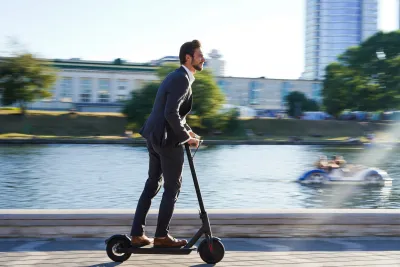
As gas prices soar amidst the United States and Israel’s conflict in Iran, e-bike subscriptions are seeing a simultaneous boom as workplaces get on board.
Fast Company reports that major companies and institutions like Amazon, Google, Axon and universities are partnering with Ridepanda, which allows companies to offer e-bike and scooter subscriptions as a workplace perk.
"Overall, subscribers are up 46% since gas prices first began to spike in March, and up 94% compared with this time last year. Ridepanda saw a record day for orders in April, when they were 311% above the average, and has continued to see that trend play out into May," Kristin Toussaint reports. "It’s not yet clear how many are switching from gas vehicles because of the oil crisis, but the company says on average, its riders—many of whom have never biked to work before—replace about six car trips per week. That saves companies some 1,500 pounds of CO2 emissions per employee per year."
Read the full story below.
Read the full story: More companies are offering a simple workplace perk to make commutes less painful as gas prices soar


Planetizen Federal Action Tracker
A weekly monitor of how Trump’s orders and actions are impacting planners and planning in America.

California plans to bury El Niño’s downpour
If the state plays its cards right, it may be able to store a billion acre-feet of El Niño’s water in aquifers.

Chicago breaks ground on $3 billion megadevelopment
The new neighborhood, titled Foundry Park, will one day host 3,700 residences.

Satanic Place Names
From streams and lakes to valleys and canyons, I mapped more than 1,000 places named after the Devil.

California High-Speed Rail Authority CEO resigns after $600,000 scandal
Under Ian Choudri, the authority used taxpayer dollars to fund first class flights and trips to nightclubs.

Want to study the Missouri River? Soon, you may need unanimous approval from 10 states
Legislation would require 10 governors’ permission to study or build projects moving water outside the basin.

FREE Course: Walkable City 1: Why Walkability?
After describing his path towards focusing on walkability as the essence of good planning, Jeff Speck marches through his five principal reasons for making more walkable places.
Reinventing Malls: Planning Alchemy—Turning Gray Fields Into Gold
The course focuses on the opportunities and imperatives that shape reinvention of mall sites.

City of Rosemead
Rutgers University, Edward J. Bloustein School of Planning and Public Policy
One Hundred Miles
Hunter College, City University of New York (CUNY)
The Architects Foundation
University of Cincinnati Online
City of Cambridge
Montrose County
The Pocatello Development Authority