Austin landlords filed a record number of evictions last year.


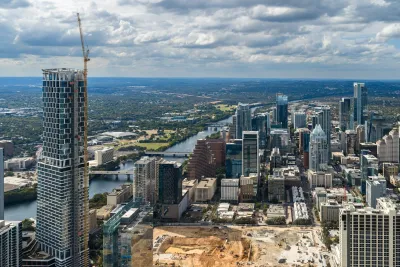
Median rent in Austin, Texas fell by 7% in 2024 as a result of the city's building boom, vindicating YIMBY activists who pushed the city to build more housing. But as Jared Brey explains in Governing, eviction filings rose by 30% last year — the biggest spike of any of the 38 cities tracked by Princeton University's Eviction Lab — signaling a lingering housing crisis.
According to Brey, "There’s no clean explanation for why eviction filings spiked last year in a city where rents have dropped below the national median." Eviction rates were clustered in some apartment buildings, some with eviction rates as high as 38%. "Tax-exempt properties, which provide reduced-rate housing for people who make less than the area median income, often supported by Low-Income Housing Tax Credits, also had higher eviction rates than the area average."
Eviction rates don't necessarily correlate with high costs of living, either. Evictions remain relatively low in New York, a city with one of the highest housing costs in the nation. "Places with lower eviction rates tend to have more tenant-friendly regulations in place, says Grace Hartley, a researcher at the Eviction Lab. An eviction diversion program in Philadelphia, which requires landlords to negotiate with tenants before moving ahead with an eviction, has been hailed as a model for the country. But there’s no single policy that’s associated with low eviction rates."
FULL STORY: Rents Are Down in Austin. So Why Are Evictions Still Climbing?

Rents Rose Between December and January
After dropping to a three-year low, U.S. rent costs grew in many major cities.
South Florida Renters Struggle To Find Affordable Housing
Tenants in Tampa Bay are finding it increasingly difficult to access stable housing as rents rise and affordable building stock dwindles.
Indianapolis rents grew by 30% since 2020
The metro area has a shortage of roughly 137,000 affordable homes for the lowest-income households.

The state-sanctioned urbicide of Austin
People don’t kill cities. Freeways do.

US to reduce Colorado River water deliveries to Mexico
A new Colorado Treaty amendment reduces Mexico’s Colorado River water allocation by 250,000 acre feet.

New Jersey’s second-largest city bans standalone data centers
Jersey City will continue to allow co-location facilities, such as those meant for research institutions that store their own data.

Amtrak not solely to blame for New Jersey commuter rail's unreliability, report finds
A new study from the Garden State Initiative found that NJ Transit’s budget grew 20% across a 4 year period, but reliability declined significantly over the same period.

EPA erases limits on planet-warming pollution from power plants
Under Monday’s plan, power plants would still have some limits on how much mercury, arsenic and other contaminants they can emit.

Phoenix announces new on-demand transit service, more frequent RAPID buses
Both new services will launch in October, and are part of Phoenix's Project Effective Access Solutions for Easing Congestion.

FREE Course: Walkable City 1: Why Walkability?
After describing his path towards focusing on walkability as the essence of good planning, Jeff Speck marches through his five principal reasons for making more walkable places.
Reinventing Malls: Planning Alchemy—Turning Gray Fields Into Gold
The course focuses on the opportunities and imperatives that shape reinvention of mall sites.

Eagle County Government
Harvard University Graduate School of Design
Nashville Planning Department
The Architects Foundation
University of Cincinnati Online
The Pocatello Development Authority
The Urban Renewal Agency of the City of Pocatello
Journal of the American Planning Association