The program explores how technology can help planners, architects, and others make cities more environmentally and socially sustainable.


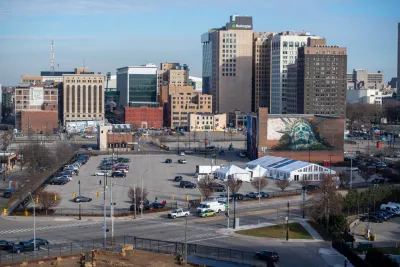
The University of Michigan's Taubman College of Architecture and Urban Planning will begin offering a one-year master of urban technology degree program, the first degree of its kind that can be completed in one year at a U.S. university.
According to an article in The Michigan Daily by Sonia Alizadeh, the program expands on the school's four-year bachelor's urban technology program, which explores how to make cities more environmentally and socially sustainable through technology and urban design. The master's program emphasizes the business, digital, and professional aspects of urban technology.
The program's faculty director Bryan Boyer explained, "What [the program] does is create new types of businesses and opportunities that are not architecture or urban planning or real estate. They’re ways to think about housing or workspace and provide those or create those through totally new means."
FULL STORY: UMich to launch first one-year urban tech master’s program in the nation


5 ways to hallucination-proof your AI output
With public trust on the line, the stakes are high for urban planners to ensure accuracy in our AI work. Here’s how to do it.

Getting Started with AI: A Practical Guide for Urban Planners
Planetizen’s resident AI and planning expert answers the number one question he gets asked: where do I begin?
Will Urban Planners Lose Their Jobs to AI?
Let’s see what the data says.

The state-sanctioned urbicide of Austin
People don’t kill cities. Freeways do.

US to reduce Colorado River water deliveries to Mexico
A new Colorado Treaty amendment reduces Mexico’s Colorado River water allocation by 250,000 acre feet.

New Jersey’s second-largest city bans standalone data centers
Jersey City will continue to allow co-location facilities, such as those meant for research institutions that store their own data.

Amtrak not solely to blame for New Jersey commuter rail's unreliability, report finds
A new study from the Garden State Initiative found that NJ Transit’s budget grew 20% across a 4 year period, but reliability declined significantly over the same period.

EPA erases limits on planet-warming pollution from power plants
Under Monday’s plan, power plants would still have some limits on how much mercury, arsenic and other contaminants they can emit.

Phoenix announces new on-demand transit service, more frequent RAPID buses
Both new services will launch in October, and are part of Phoenix's Project Effective Access Solutions for Easing Congestion.

FREE Course: Walkable City 1: Why Walkability?
After describing his path towards focusing on walkability as the essence of good planning, Jeff Speck marches through his five principal reasons for making more walkable places.
Reinventing Malls: Planning Alchemy—Turning Gray Fields Into Gold
The course focuses on the opportunities and imperatives that shape reinvention of mall sites.

Eagle County Government
Harvard University Graduate School of Design
Nashville Planning Department
The Architects Foundation
University of Cincinnati Online
The Pocatello Development Authority
The Urban Renewal Agency of the City of Pocatello
Journal of the American Planning Association