The law also paves the way for agricultural uses on land previously designated for conservation.



A new Farm Bill passed by the Florida legislature could slow the state’s progress toward reducing carbon emissions, reports Ayurella Horn-Muller in Grist.
The law bans local governments from outlawing gas- and diesel-powered tools such as leaf blowers and chainsaws, even though “at most” seven Florida municipalities have any such bans in place, and none have banned large gas-powered farm machinery such as tractors.
According to Horn-Muller, “The ‘Florida Farm Bill’ also includes a provision that allows the state to open land designated for conservation for commercial farm use. Under this policy, lands acquired for conservation purposes since 2024 can be reclassified if deemed suitable for agriculture by state agencies.”
The law excludes a prior proposal to expand a law known as “veggie-libel,” which allows farmers and companies to sue over potentially defamatory claims about agricultural products. The proposal would have expanded the products the law applies to, such as sugarcane.
FULL STORY: With its new farm bill, Florida’s climate fight just hit a tractor-sized roadblock


Trump Administration Would Slash 22 Percent of Farm Bill's Conservation Funding
The Farm Bill is one of the federal government's biggest, most controversial (yet still intractable) bills. The Trump Administration has plans for change.
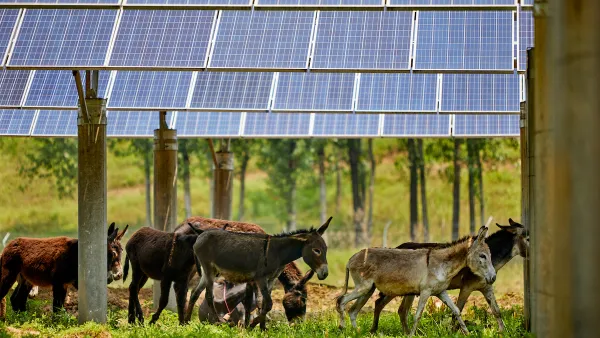
Making Solar Energy Land Use More Efficient
How an ‘ecovoltaic’ approach can balance energy production with conservation of sensitive land.
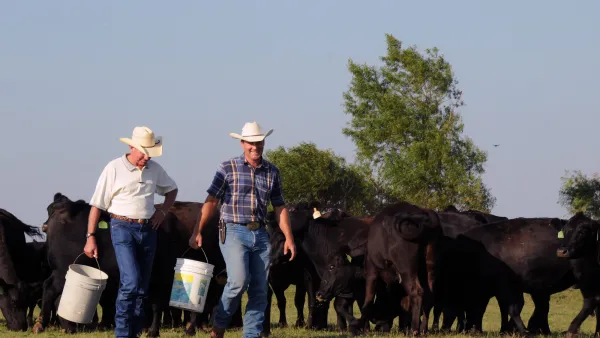
Film Highlights Conservationists' Diversity
This documentary complicates what can seem like a stark partisan divide on the environment, highlighting the many heartland residents who do conservation work.

The state-sanctioned urbicide of Austin
People don’t kill cities. Freeways do.

US to reduce Colorado River water deliveries to Mexico
A new Colorado Treaty amendment reduces Mexico’s Colorado River water allocation by 250,000 acre feet.

New Jersey’s second-largest city bans standalone data centers
Jersey City will continue to allow co-location facilities, such as those meant for research institutions that store their own data.

Amtrak not solely to blame for New Jersey commuter rail's unreliability, report finds
A new study from the Garden State Initiative found that NJ Transit’s budget grew 20% across a 4 year period, but reliability declined significantly over the same period.

EPA erases limits on planet-warming pollution from power plants
Under Monday’s plan, power plants would still have some limits on how much mercury, arsenic and other contaminants they can emit.

Phoenix announces new on-demand transit service, more frequent RAPID buses
Both new services will launch in October, and are part of Phoenix's Project Effective Access Solutions for Easing Congestion.

FREE Course: Walkable City 1: Why Walkability?
After describing his path towards focusing on walkability as the essence of good planning, Jeff Speck marches through his five principal reasons for making more walkable places.
Reinventing Malls: Planning Alchemy—Turning Gray Fields Into Gold
The course focuses on the opportunities and imperatives that shape reinvention of mall sites.

Eagle County Government
Harvard University Graduate School of Design
Nashville Planning Department
The Architects Foundation
University of Cincinnati Online
The Pocatello Development Authority
The Urban Renewal Agency of the City of Pocatello
Journal of the American Planning Association