Breckenridge has invested millions in creating deed-restricted workforce housing for local residents.


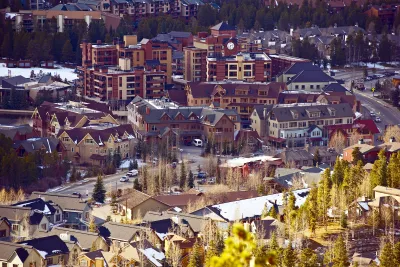
About three-quarters of full-time homes in Breckenridge, Colorado are deed-restricted to the local workforce, defined as people who work in the town for 30 or more hours per week. As Susan Shain explains in High Country News, “And, since Breckenridge passed a $50 million housing plan in 2022, more than 400 new deed-restricted units have been built. In the next four years, the town expects to add 300 more — a substantial increase in housing stock, given that Breckenridge has only about 5,000 full-time residents.”
The focus on workforce housing is crucial in a community where the average home listing price is $1.85 million. To make it work, the town made a deal with developers looking to build outside the town’s borders: “The town would annex the property, making city services available — and thus development more attractive — if the developers kept 80% of the units deed-restricted for locals.”
Breckenridge also uses a land bank to purchase land for future development, and created a city program that buys available units and sells them as deed-restricted housing to local workers. “Today, about 1,700 of the estimated 2,300 resident-occupied homes in Breckenridge are deed-restricted for the local workforce.”
Even with all these efforts, the town needs about 1,200 more units to accommodate demand. “And even when the town provides housing, the area’s high real estate values and high construction costs mean that the housing doesn’t always seem affordable.”
FULL STORY: How Breckenridge reserved almost 75% of its full-time housing for workforce


Colorado Town Fills Workforce Housing Need With ‘Dorm-Style’ Housing
Median rent in Steamboat Springs is $4,000 per month.
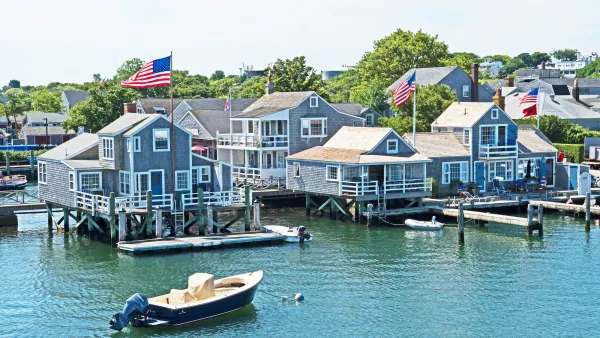
In Nantucket, where over half of homes are for seasonal use, workers struggle to find affordable housing
The island is short roughly 892 to 1,081 rental units.
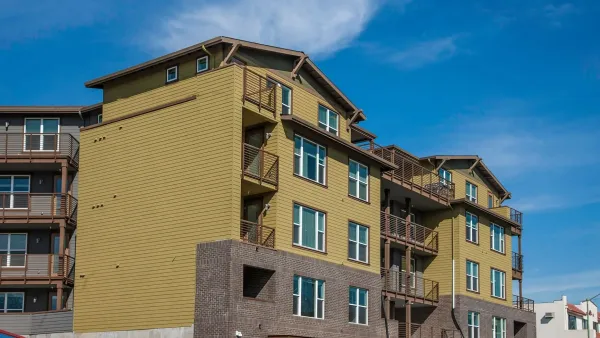
Oakland opens first affordable housing for teachers
The school district says 70% of its teachers can't afford to live in Oakland.

Planetizen Federal Action Tracker
A weekly monitor of how Trump’s orders and actions are impacting planners and planning in America.

The state-sanctioned urbicide of Austin
People don’t kill cities. Freeways do.

US to reduce Colorado River water deliveries to Mexico
A new Colorado Treaty amendment reduces Mexico’s Colorado River water allocation by 250,000 acre feet.

5 New England states march closer to 800 megawatt wind energy project
Securing federal approval for the project may be complicated under the Trump administration, which has historically been hostile towards domestic wind power.

Baltimore to break ground on $50 million Transit Priority Project
The project will bring faster bus trips, safer streets and better bike connections to Baltimore.

Airbnb launches $250 million 'last-dollar financing' housing accelerator, makes first investment in Austin
The company will put $6.4 million towards affordable housing development in Texas’ capital.

FREE Course: Walkable City 1: Why Walkability?
After describing his path towards focusing on walkability as the essence of good planning, Jeff Speck marches through his five principal reasons for making more walkable places.
Reinventing Malls: Planning Alchemy—Turning Gray Fields Into Gold
The course focuses on the opportunities and imperatives that shape reinvention of mall sites.

Eagle County Government
Harvard University Graduate School of Design
Nashville Planning Department
The Architects Foundation
University of Cincinnati Online
The Pocatello Development Authority
The Urban Renewal Agency of the City of Pocatello
Journal of the American Planning Association