Sometimes disasters open a space for bigger and faster positive change. In Lahaina, Hawai'i, after the devastating fires in 2023, community leaders built on preexisting relationships to approach housing and land in new ways.



After the 2023 Lahaina wildfires on Maui, community leaders leveraged decades of relationship-building to create the Lahaina Community Land Trust (LCLT)—a vehicle to prevent displacement, keep land local, and redefine wealth through cultural stewardship. Rather than allow “disaster capitalism” to drive speculative buyouts, LCLT quickly incorporated, launched fundraising, and established community-centered land criteria with survivors, cultural practitioners, attorneys, and public officials.
This article argues that rapid, equitable recovery depends on relational infrastructure built long before crisis—and that crisis opens up the chance to make bigger changes than were possible during "normal" times.
It documents how candid conversations—even with real estate professionals—produced voluntary practices to slow distress sales. Lahaina’s approach reframes disaster response as an opportunity to hardwire community control and long-term resilience, offering a replicable framework for post-disaster housing and land justice in other places.
FULL STORY: Harnessing the Shock of Disaster to Propel Change

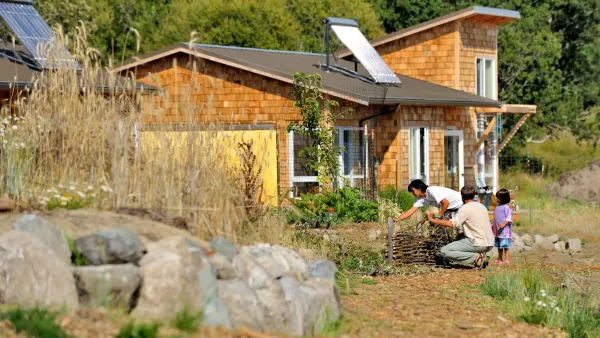
Community land trusts could be the secret to more co-op housing. Just ask Canada.
In Canada, more than half of all housing on community land trusts is cooperative housing. In the U.S., that number is less than 2%. Why?
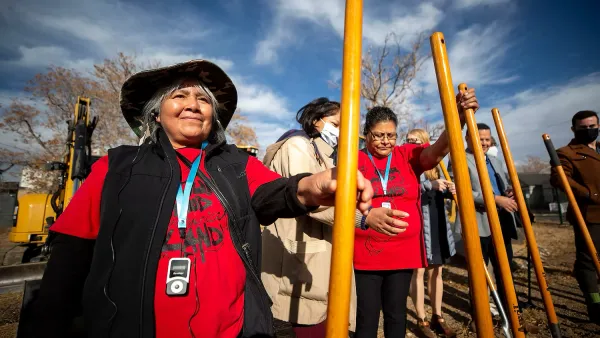
Denver Land Trust Fights Displacement Whether It Owns the Land or Not
Tierra Colectiva, a community land trust in the Denver neighborhoods of Globeville and Elyria-Swansea, combines community organizing, traditional CLT development, and more unusual roles in a large affordable housing development.
A Groundbreaking Southern California Land Trust Will Ready Formerly Incarcerated People for Housing Ownership
CLT named after Ruchell "Cinqué" Magee, considered by many to have been the longest-held political prisoner in the United States, aims to create not just affordability, but belonging.

The state-sanctioned urbicide of Austin
People don’t kill cities. Freeways do.

US to reduce Colorado River water deliveries to Mexico
A new Colorado Treaty amendment reduces Mexico’s Colorado River water allocation by 250,000 acre feet.

New Jersey’s second-largest city bans standalone data centers
Jersey City will continue to allow co-location facilities, such as those meant for research institutions that store their own data.

Amtrak not solely to blame for New Jersey commuter rail's unreliability, report finds
A new study from the Garden State Initiative found that NJ Transit’s budget grew 20% across a 4 year period, but reliability declined significantly over the same period.

EPA erases limits on planet-warming pollution from power plants
Under Monday’s plan, power plants would still have some limits on how much mercury, arsenic and other contaminants they can emit.

Phoenix announces new on-demand transit service, more frequent RAPID buses
Both new services will launch in October, and are part of Phoenix's Project Effective Access Solutions for Easing Congestion.

FREE Course: Walkable City 1: Why Walkability?
After describing his path towards focusing on walkability as the essence of good planning, Jeff Speck marches through his five principal reasons for making more walkable places.
Reinventing Malls: Planning Alchemy—Turning Gray Fields Into Gold
The course focuses on the opportunities and imperatives that shape reinvention of mall sites.

Eagle County Government
Harvard University Graduate School of Design
Nashville Planning Department
The Architects Foundation
University of Cincinnati Online
The Pocatello Development Authority
The Urban Renewal Agency of the City of Pocatello
Journal of the American Planning Association