The U.S. Interagency Council on Homelessness is the only federal agency dedicated to preventing and ending homelessness.



The new director of the United States Interagency Council on Homelessness put the entire 20-person staff of the agency on administrative leave Monday, furthering the administration’s effort to dismantle federal housing programs. While the President cannot legally abolish the agency outright, its legal authorization expires in 2028 unless Congress takes action to renew it.
According to a New York Times article by Jason DeParle, “Once seen as a vehicle for bipartisan work, [the Council] has come under conservative criticism for promoting a policy called Housing First, which houses some homeless people without requiring them to seek treatment for mental illness or substance abuse.” The agency administered homelessness prevention and relief programs at a time when the unhoused population has reached alarming highs.
A separate article by the same author explains that the Council actually advanced the administration’s goal to improve efficiency: “In coordinating the homelessness work of 19 federal agencies, the council seeks to eliminate duplication and make Washington more accessible to local organizations. Eliminating its annual budget, $4 million, would save about as much as the government spends every 18 seconds.”
Even critics of Housing First don’t want to see the agency eliminated altogether. Tom De Vries, CEO of the Citygate Network representing faith-based housing groups, says an agency that prioritizes and coordinates homelessness prevention efforts at the federal level is necessary.
FULL STORY: Trump administration places staff of homelessness agency on leave.

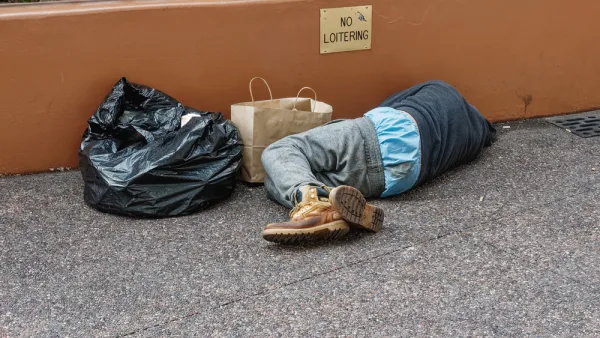
Housing, Supportive Service Providers Brace for Federal Cuts
Organizations that provide housing assistance are tightening their purse strings and making plans for maintaining operations if federal funding dries up.

Trump Executive Order on Homelessness Calls for Forced Institutionalization
The order seeks to remove legal precedents and consent decrees that prevent cities from moving unhoused people from the street to treatment centers.
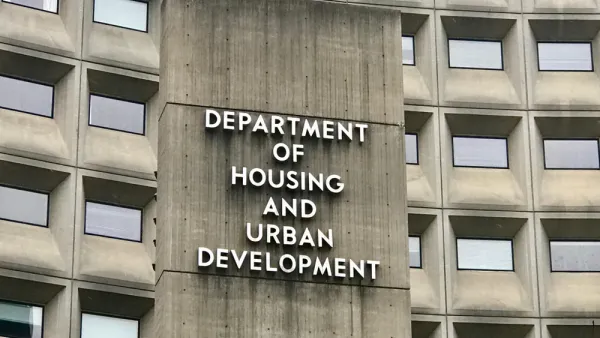
Local Governments Sue HUD Over Funding Cuts
A new lawsuit alleges that the Trump administration’s revised guidelines for housing and homelessness assistance funds will decimate key programs.

Planetizen Federal Action Tracker
A weekly monitor of how Trump’s orders and actions are impacting planners and planning in America.

The state-sanctioned urbicide of Austin
People don’t kill cities. Freeways do.

US to reduce Colorado River water deliveries to Mexico
A new Colorado Treaty amendment reduces Mexico’s Colorado River water allocation by 250,000 acre feet.

LA Metro’s ultimatum: no extra buses for LA28 if federal funding isn’t imminently secured
If Metro does not provide additional buses, LA28 organizers will have to find a new way to manage Olympic traffic. LA28’s budget does not include a line item for transit.

Colorado’s Largest Data Center Could Rise Next to Homes — Without a Public Hearing
The proposed campus would consume 11 times the power of Denver International Airport; as it has across the country, opposition mounts.

5 New England states march closer to 800 megawatt wind energy project
Securing federal approval for the project may be complicated under the Trump administration, which has historically been hostile towards domestic wind power.

FREE Course: Walkable City 1: Why Walkability?
After describing his path towards focusing on walkability as the essence of good planning, Jeff Speck marches through his five principal reasons for making more walkable places.
Reinventing Malls: Planning Alchemy—Turning Gray Fields Into Gold
The course focuses on the opportunities and imperatives that shape reinvention of mall sites.

Eagle County Government
Harvard University Graduate School of Design
Nashville Planning Department
The Architects Foundation
University of Cincinnati Online
The Pocatello Development Authority
The Urban Renewal Agency of the City of Pocatello
Journal of the American Planning Association