AI software used to select tenants or target housing advertisements has the potential to introduce discrimination and bias.



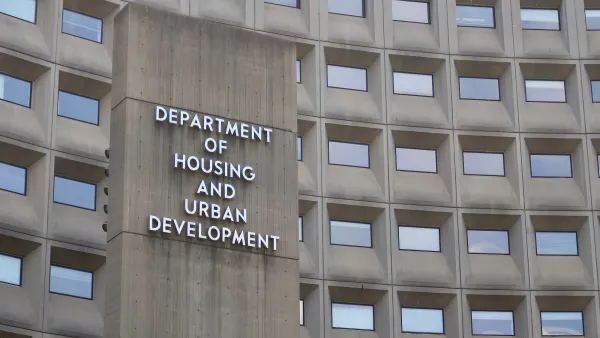
The U.S. Department of Housing and Urban Development (HUD) is warning that AI-powered software used to select tenants for rental housing and target housing advertisements can “introduce bias and potential discrimination into these activities.”
To address these issues, HUD released two guidance documents outlining how the Fair Housing Act impacts AI applications. As Alexandra Kelley explains in Route Fifty, “The tenant screening guidance released by HUD explains that housing providers cannot discriminate against applicants based on race, color, religion, sex or gender identity, national origin, disability or familial status — and that providers will be held accountable for discriminatory actions leveraged internally or by third party algorithms.”
HUD rules also bar advertisers from discriminating based on protected characteristics. “Discriminatory advertising practices include denying customers housing opportunities, targeting vulnerable populations for predatory products, deterring certain populations from opportunities or steering consumers to particular areas based on protected characteristics.”
FULL STORY: HUD warns on AI-fueled housing discrimination


HUD Plans to Kill Key Fair Housing Rule
The department issued a proposal to eliminate the disparate impact rule, a cornerstone of some discrimination rulings under the Fair Housing Act.

Colorado Becomes First State in US to Regulate AI for Bias
Under the new law, developers, deployers, and businesses using AI systems at “high-risk” for bias discrimination in critical areas like housing will be required to account for risks and be transparent about how the technology is being used.
16 States Sue HUD Over New Limits to Fair Housing Act
The lawsuit charges the agency with reversing decades of fair housing regulations and weakening its own enforcement capacity.

The state-sanctioned urbicide of Austin
People don’t kill cities. Freeways do.

US to reduce Colorado River water deliveries to Mexico
A new Colorado Treaty amendment reduces Mexico’s Colorado River water allocation by 250,000 acre feet.

New Jersey’s second-largest city bans standalone data centers
Jersey City will continue to allow co-location facilities, such as those meant for research institutions that store their own data.

Amtrak not solely to blame for New Jersey commuter rail's unreliability, report finds
A new study from the Garden State Initiative found that NJ Transit’s budget grew 20% across a 4 year period, but reliability declined significantly over the same period.

EPA erases limits on planet-warming pollution from power plants
Under Monday’s plan, power plants would still have some limits on how much mercury, arsenic and other contaminants they can emit.

Phoenix announces new on-demand transit service, more frequent RAPID buses
Both new services will launch in October, and are part of Phoenix's Project Effective Access Solutions for Easing Congestion.

FREE Course: Walkable City 1: Why Walkability?
After describing his path towards focusing on walkability as the essence of good planning, Jeff Speck marches through his five principal reasons for making more walkable places.
Reinventing Malls: Planning Alchemy—Turning Gray Fields Into Gold
The course focuses on the opportunities and imperatives that shape reinvention of mall sites.

Eagle County Government
Harvard University Graduate School of Design
Nashville Planning Department
The Architects Foundation
University of Cincinnati Online
The Pocatello Development Authority
The Urban Renewal Agency of the City of Pocatello
Journal of the American Planning Association