For Catholic school teachers and other educators, housing costs can be a burden in many U.S. cities.


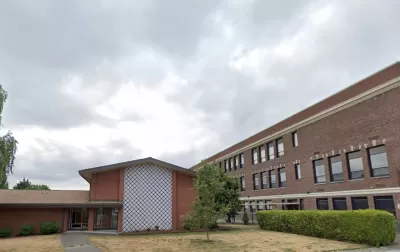
Catholic dioceses around the United States are looking for ways to develop their underutilized real estate to provide housing for Catholic school teachers who struggle to afford rent in many U.S. cities, reports Katie Collins Scott in National Catholic Reporter. “Many public school teachers struggle to afford housing close to where they work, and it can be even more difficult for Catholic educators, who make on average 26% less than their public school counterparts, according to data from the National Center for Education Statistics.”
In San Jose, California, the local diocese renovated a former convent into housing for teachers at its schools. “Migration to the suburbs, parish consolidations, and fewer people entering the priesthood and religious life have left a sizable quantity of underused and vacant properties, said Maddy Johnson, program manager for the Church Properties Initiative.”
While convents provide a convenient existing layout for communal living, “Solutions for people with growing families or who are ready for home ownership are more challenging, said education and housing experts, but they hope projects emerge.”
Aside from teacher housing, a growing ‘Yes in God’s Backyard’ movement is calling on faith-based organizations to consider building housing on properties they own. Last year, California passed a law that eases the permitting process to encourage churches to do so.
Read the full story: Parishes turn former convents into affordable housing for teachers
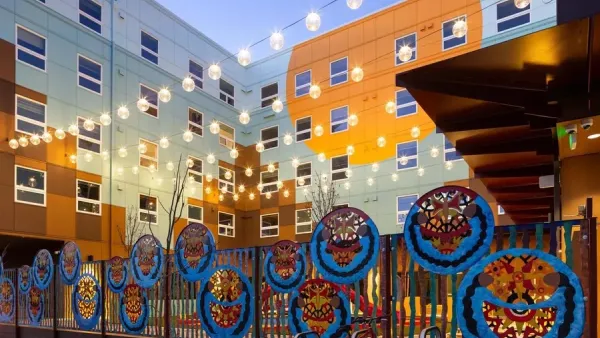
Seattle church complex includes 87 affordable homes
The Columbia City Church of Hope deeded part of its property to an affordable housing developer after limiting in-person congregation during the pandemic.
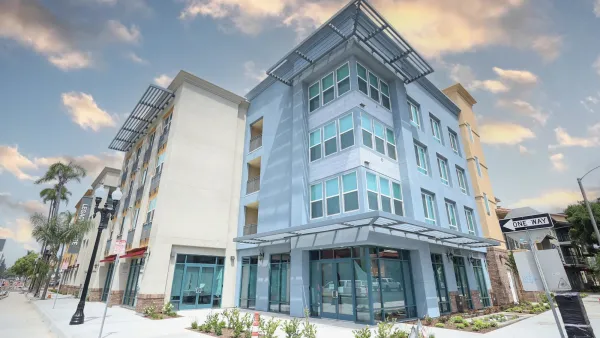
Church-to-housing trend grows in Southern California
Many faith leaders are eager to support housing construction on church land.
Chattanooga selects churches to build up to 400 affordable homes
Eight churches will move forward with plans to develop housing, from emergency shelter to single-family homes, on their properties.

Planetizen Federal Action Tracker
A weekly monitor of how Trump’s orders and actions are impacting planners and planning in America.

California plans to bury El Niño’s downpour
If the state plays its cards right, it may be able to store a billion acre-feet of El Niño’s water in aquifers.

Desperate measures: Advocates weigh draining Lake Powell to fill Colorado River
Draining the reservoir could reduce evaporation losses by a couple hundred thousand acre-feet.

US buildings threatened, destroyed by fires set to triple by 2060
Researchers found a high fire risk for socioeconomically vulnerable neighborhoods in the American West.

LA residents may be allowed to paint their own crosswalks
Councilwoman Katy Yaroslavsky put out a motion instructing the Los Angeles Department of Public Transportation to study the feasibility of allowing volunteers to paint crosswalks.

Dallas moves to overhaul its zoning code
The city's zoning reform will allow more multi-family and mixed-use developments.

FREE Course: Walkable City 1: Why Walkability?
After describing his path towards focusing on walkability as the essence of good planning, Jeff Speck marches through his five principal reasons for making more walkable places.
Reinventing Malls: Planning Alchemy—Turning Gray Fields Into Gold
The course focuses on the opportunities and imperatives that shape reinvention of mall sites.

City of Rosemead
Rutgers University, Edward J. Bloustein School of Planning and Public Policy
One Hundred Miles
Hunter College, City University of New York (CUNY)
The Architects Foundation
University of Cincinnati Online
City of Cambridge
Montrose County
The Pocatello Development Authority