The pandemic housing market may be a different beast from the recession market, but the outcomes could be eerily similar.


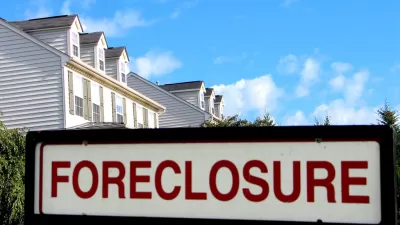
In the early weeks of 2008, as it became clear that millions of Americans were going to default on their mortgage payments and lose their homes to the recession, a bold idea emerged from a coalition of community development organizations.
What if a great number of these foreclosed properties could be swiftly acquired by nonprofit organizations and municipalities, which would then sell the housing stock to low- and moderate-income buyers?
It was a bold plan for diverting thousands of foreclosed homes away from private capital, back toward the people who are historically shut out of homeownership. Dubbed “the Great American Dream Neighborhood Stabilization Plan,” or GARDNS Fund, the framework called for a federal investment of $20 billion to grant in-community housers the purchasing power to obtain newly available housing and resell it affordably, with profits being funneled toward acquiring additional housing.
Instead, Congress coughed up $7 billion to fund a different plan, the Neighborhood Stabilization Program (NSP), which was festooned with red tape and cumbersome stipulations for how stabilization capital could or could not be used. “For the most part, I’d say [NSP] was not successful,” says Chris Herbert, managing director for Harvard’s Joint Center for Housing Studies. “It didn’t enable many nonprofits to quickly acquire properties in an effective way. Instead, the market for investor-purchased properties developed very fast. [Investors] became much more nimble.”
NSP wasn’t entirely a failure—it’s since evolved into a permanent program run by HUD, which still offers grants to community developers looking to add stock to their inventories. But a historic housing acquisition opportunity was missed during the program’s launch. Many of the foreclosed properties from the recession were subsumed by institutional investors like Blackstone Inc. and repurposed as market-rate rentals. This marked the beginning of a seismic shift away from homeownership, long held up as the gold standard of American lifestyles and one of the most reliable ways for a person of modest means to build wealth.
Between 2006 and 2015, 3.8 million Americans who once owned property became renters of single-family homes—a spike of more than 30 percent. Across 22 large U.S. cities, including Detroit, Tampa, and Honolulu, renters overtook property owners as the majority population. Between 2006 and 2016, the number of Americans renting their homes nationwide swelled by 25 percent. This expansion of rentals was partially enabled by the Federal Reserve’s decision to keep interest rates low: a boon for real estate investors. Stagnant wages and waning housing production exacerbated the problem, as more Americans were forced to rent and as more housing stock was added to portfolios.
For housers, the overarching question since the recession has been threefold. When will the next foreclosure crisis occur? When it happens, how can more foreclosed housing stock be recirculated back into the hands of affordable housing stewards? And will housers be ready for the next crisis?
The New Storm
The early economic shock waves of the COVID-19 pandemic appeared to mark the next cataclysm ...
FULL STORY: Pandemic Housing Market Is Not Like the Great Recession’s


Planetizen Federal Action Tracker
A weekly monitor of how Trump’s orders and actions are impacting planners and planning in America.

The state-sanctioned urbicide of Austin
People don’t kill cities. Freeways do.

US to reduce Colorado River water deliveries to Mexico
A new Colorado Treaty amendment reduces Mexico’s Colorado River water allocation by 250,000 acre feet.

LA Metro’s ultimatum: no extra buses for LA28 if federal funding isn’t imminently secured
If Metro does not provide additional buses, LA28 organizers will have to find a new way to manage Olympic traffic. LA28’s budget does not include a line item for transit.

Colorado’s Largest Data Center Could Rise Next to Homes — Without a Public Hearing
The proposed campus would consume 11 times the power of Denver International Airport; as it has across the country, opposition mounts.

5 New England states march closer to 800 megawatt wind energy project
Securing federal approval for the project may be complicated under the Trump administration, which has historically been hostile towards domestic wind power.

FREE Course: Walkable City 1: Why Walkability?
After describing his path towards focusing on walkability as the essence of good planning, Jeff Speck marches through his five principal reasons for making more walkable places.
Reinventing Malls: Planning Alchemy—Turning Gray Fields Into Gold
The course focuses on the opportunities and imperatives that shape reinvention of mall sites.

Eagle County Government
Harvard University Graduate School of Design
Nashville Planning Department
The Architects Foundation
University of Cincinnati Online
The Pocatello Development Authority
The Urban Renewal Agency of the City of Pocatello
Journal of the American Planning Association