We can change that.


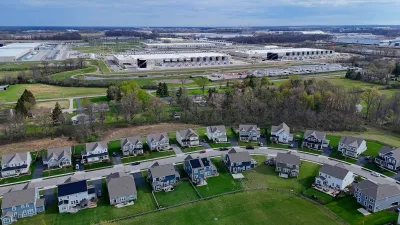
In August 2025, the Tucson, Arizona City Council voted 7-0 to reject Project Blue, a data center campus that was set to draw $3.6 billion in investment and up to 600 megawatts of power for its operation. As Arizona Luminaria and other local outlets documented, the project had been under discussion since 2023, largely outside public view, and for months, residents didn’t know which tech company was behind it. The developer on record, Beale infrastructure, acted as the public face of the project, and the tech company behind it was only revealed to be Amazon Web Services after local reporters from Arizona Luminaria dug through public records to find out. The council’s vote blocked the project from coming into the city and drawing on Tucson’s water utility, and local residents who had been mobilizing against the project, particularly its water use in a drought-strained region, celebrated.
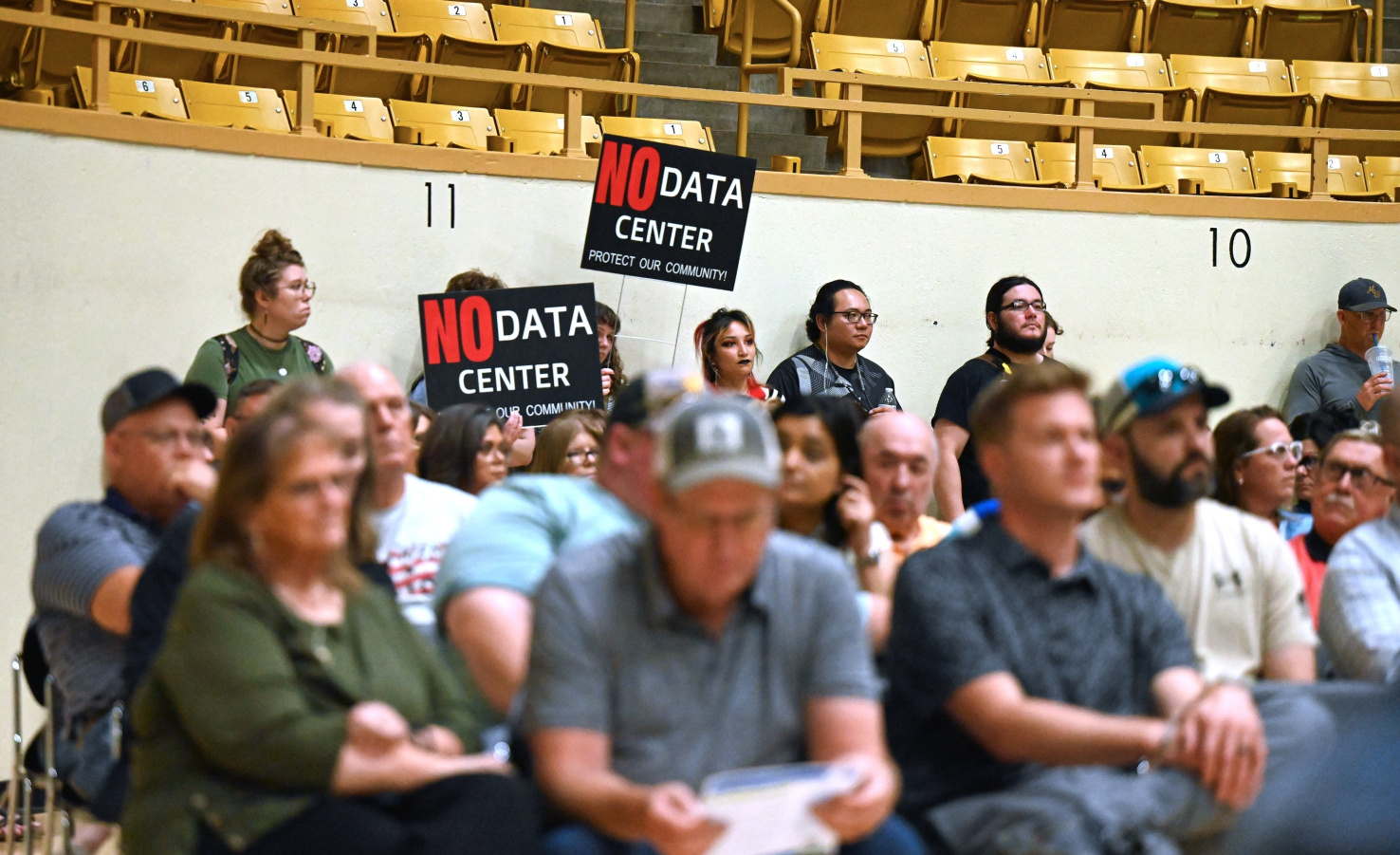
However, the decision didn’t hold. Pima County, which had rezoned and sold the underlying land independently of the city, closed a sale in December. The developer secured its power supply from Tucson Electric Power, an agreement that only needed approval from the state utility regulatory, the Arizona Corporation Commission. State water officials approved private groundwater wells that the city utility had refused to provide. By April, 2026, bulldozers were clearing the site, and the same residents who had celebrated a unanimous council vote were once again protesting a project their elected officials had already killed once.
Tucson’s council held public hearings and delivered a unanimous vote against the deal, but did not have authority over the other three bodies whose approval allowed the project to proceed: the county, the state commission, and the state water agency, who approved the rezoning of the land, the power agreement, and the wells, respectively. A municipal land-use process can only stop what it has jurisdiction over, and data center chokepoints are often distributed. While Tucson is a particularly striking example, several hundred versions of this story are likely moving through local reviews right now, and opposition to data centers has spread to virtually every state in the United States in 2026. The planning professionals who are implicated in and affected by these issues are doing it with training largely meant for a slower, more contained era of infrastructure review.
The planning school problem
Planning programs in the United States have almost no curriculum for data centers. What teaching exists at the professional, collegial, or postgraduate level treats them as pure engineering challenges, focusing on how to design the hardware and software, or the mechanical and electrical design and operation. The questions that actually fall to planners, like siting, cumulative impact, and public process, go largely untaught.
A few brand-new interdisciplinary programs have begun to take up aspects of the subject. The University of California, Berkeley launched a Certificate in Global Digital Infrastructure in 2025 under its Center for New Media, covering the technical, environmental, and social dimensions of data centers and undersea cables; and the University of Texas at Austin launched a research initiative the same year to study data center sustainability, in its Jackson School of Geosciences. But these are recent, they sit outside planning as a field, and they are exceptions rather than the norm.
The reasonable first instinct is that we can borrow from how we regulate other large infrastructure, and to a point we certainly can. But the comparisons only carry so far. Three features set data centers apart:
-
They move quickly, and quietly: a proposal can arrive and win approval within months, and officials who move them forward are often under non-disclosure agreements (NDAs), a factor in a general lack of transparency in the data center development field.
-
They are large in ways that strain local systems built for a smaller scale: individual municipalities — especially in rural, exurban, and periurban areas — are suddenly handling large industrial infrastructure requests. Meta’s Hyperion campus in rural Richland Parish, Louisiana, for instance, now spans roughly four times the footprint of Manhattan’s Central Park.
-
And how they actually get decided is unusual: much of the substance is settled before a proposal reaches land-use review, in tax agreements, site-control deals, and non-disclosure agreements negotiated by economic development offices. By the time the planning commission, and especially the public, sees the project, the terms that matter are often already fixed.
This is where there is a specific need for topical education. Data center conflicts are multi-party. Local residents — themselves split into groups with different concerns — may be in conflict with their city council members, who may be coordinating with regional planning groups and energy infrastructure professionals. And they are cross-jurisdictional. They are fought under an immense amount of uncertainty, often with significant information asymmetry between developers and everyone else. And they ignite genuine value conflicts, with stakeholders from labor having different perspectives than private homeowners, for example, rather than technical questions with correct or optimal answers.
The competencies these conflicts demand are largely procedural and tacit. Knowing the facts about cooling systems and interconnection queues is hugely important for facility and community safety, but it is not enough. A planner also must understand whether objections are about addressable issues like cost, or more loose concerns like political risk. They must balance the interests of different stakeholder groups and potentially support in negotiating community benefits agreements, among other responsibilities.
No do-overs
While the background information to support informed decision can be shared through lectures and workshops focused on data center and planning issues, the value judgements, stakeholder management, and conflict resolution skills needed to navigate a controversial field are difficult to transmit through lectures. The next generation of planners may deal with data centers across their entire careers, and degree programs should prepare them. But the planners deciding these cases right now never encountered the topic in school, and they cannot wait for programs to catch up. For them, continuing education is important.
Experiential learning methods are one way how a field, and early stage practitioners, builds practice in areas they have not yet lived. If a problem has decades of precedent, planning programs can teach it through cases; AI data centers don’t offer that yet, so the learning has to happen through doing instead. It’s not a new idea in planning education generally, but it is a new application to a conflict the field has not organized around before. Experiential learning here is wider than any single format. Studio problems built around a live local proposal, role-play, negotiation and consensus-building exercises, joint fact-finding drills, practicums, and field-based clinics all fit, and each develops a different capacity.

The most fully developed example available now is simulation. I designed Data Center Negotiation, published through Harvard’s Program on Negotiation, to put participants inside the permitting of a 500 MW facility, negotiating renewable energy accounting, grid reliability, water use, and community benefits under real time pressure and uncertainty. Participants don’t read about the conflict. They make decisions inside it, and find out how much was already settled before they reached the table.
The data build-out will not wait for curriculums to catch up. Facilities are being sited now, and the planners handling them are learning on the job, in public, with consequences that are difficult to reverse. Tucson’s council may not get to refight the Project Blue vote, and the next council or commission that discovers, mid-fight, how little of a data center deal it actually controls will not get a do-over either. If planners are going to help communities engage in these decisions on their own terms, rather than ratify terms set elsewhere, they need that preparation now, and planning programs must be prepared to provide it.


Mississippi Opens Its First Utility-Scale Wind Farm
The 184-megawatt wind project will help supply power to Amazon’s growing data center operations and logistics hubs in the region.

Getting Into Grad School in Planning
Ten years ago I wrote "Graduate School 2008: Nuts and Bolts of Applying". As deadlines draw near for this year’s round of applications it is a good time to revisit and update this advice.

Colorado’s Largest Data Center Could Rise Next to Homes — Without a Public Hearing
The proposed campus would consume 11 times the power of Denver International Airport; as it has across the country, opposition mounts.

Planetizen Federal Action Tracker
A weekly monitor of how Trump’s orders and actions are impacting planners and planning in America.

The state-sanctioned urbicide of Austin
People don’t kill cities. Freeways do.

US to reduce Colorado River water deliveries to Mexico
A new Colorado Treaty amendment reduces Mexico’s Colorado River water allocation by 250,000 acre feet.

LA Metro’s ultimatum: no extra buses for LA28 if federal funding isn’t imminently secured
If Metro does not provide additional buses, LA28 organizers will have to find a new way to manage Olympic traffic. LA28’s budget does not include a line item for transit.

Colorado’s Largest Data Center Could Rise Next to Homes — Without a Public Hearing
The proposed campus would consume 11 times the power of Denver International Airport; as it has across the country, opposition mounts.

5 New England states march closer to 800 megawatt wind energy project
Securing federal approval for the project may be complicated under the Trump administration, which has historically been hostile towards domestic wind power.

FREE Course: Walkable City 1: Why Walkability?
After describing his path towards focusing on walkability as the essence of good planning, Jeff Speck marches through his five principal reasons for making more walkable places.
Reinventing Malls: Planning Alchemy—Turning Gray Fields Into Gold
The course focuses on the opportunities and imperatives that shape reinvention of mall sites.

Eagle County Government
Harvard University Graduate School of Design
Nashville Planning Department
The Architects Foundation
University of Cincinnati Online
The Pocatello Development Authority
The Urban Renewal Agency of the City of Pocatello
Journal of the American Planning Association

