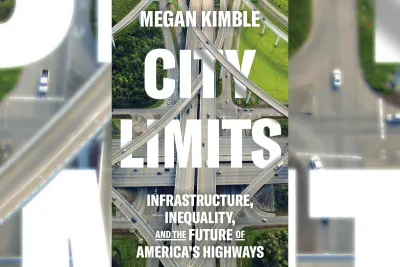
Book review: “City Limits: Infrastructure, Inequality, and the Future of America’s Highways” tells the story of Texas residents’ decades-long battle to curb the impacts of three highway projects.



This review is part of a special collaboration between Planetizen and Booked on Planning, a biweekly podcast where AICP planner Stephanie Rouse and Jennifer Hiatt chat with authors of the latest books shaping urban planning today. Listen to the episode with today’s author in the player below.
When the Infrastructure Investments and Jobs Act funneled millions into equity projects intended to take down highways that cut through neighborhoods, Texas chose to double down on its highway expansion projects. The resulting battles between the state and residents who feared displacement is the premise of author Megan Kimble’s book: “City Limits: Infrastructure, Inequality, and the Future of America’s Highways.”

“City Limits” focuses on the long drawn out fights against three specific highway expansion projects in Texas: I-35 through Austin, I-345 through Dallas and I-45 through Houston. Kimble follows the stories of twelve individuals who the highway expansion projects directly impacted: from displacing the Escuelita del Alma childcare center, a community bedrock, to Modesti Cooper, who fought to save the brand new house she built when she was finally ready to settle down after years of military service. At Escuelita del Alma, owner Dina Flores was ready to retire, but held off to ensure the school found a new home, despite the high prices of Austin real estate, to avoid closure that would leave hundreds of families, like Matt Rutledge, without childcare. Through her writing, Kimble shows the human cost of Texas’ highway expansion projects.
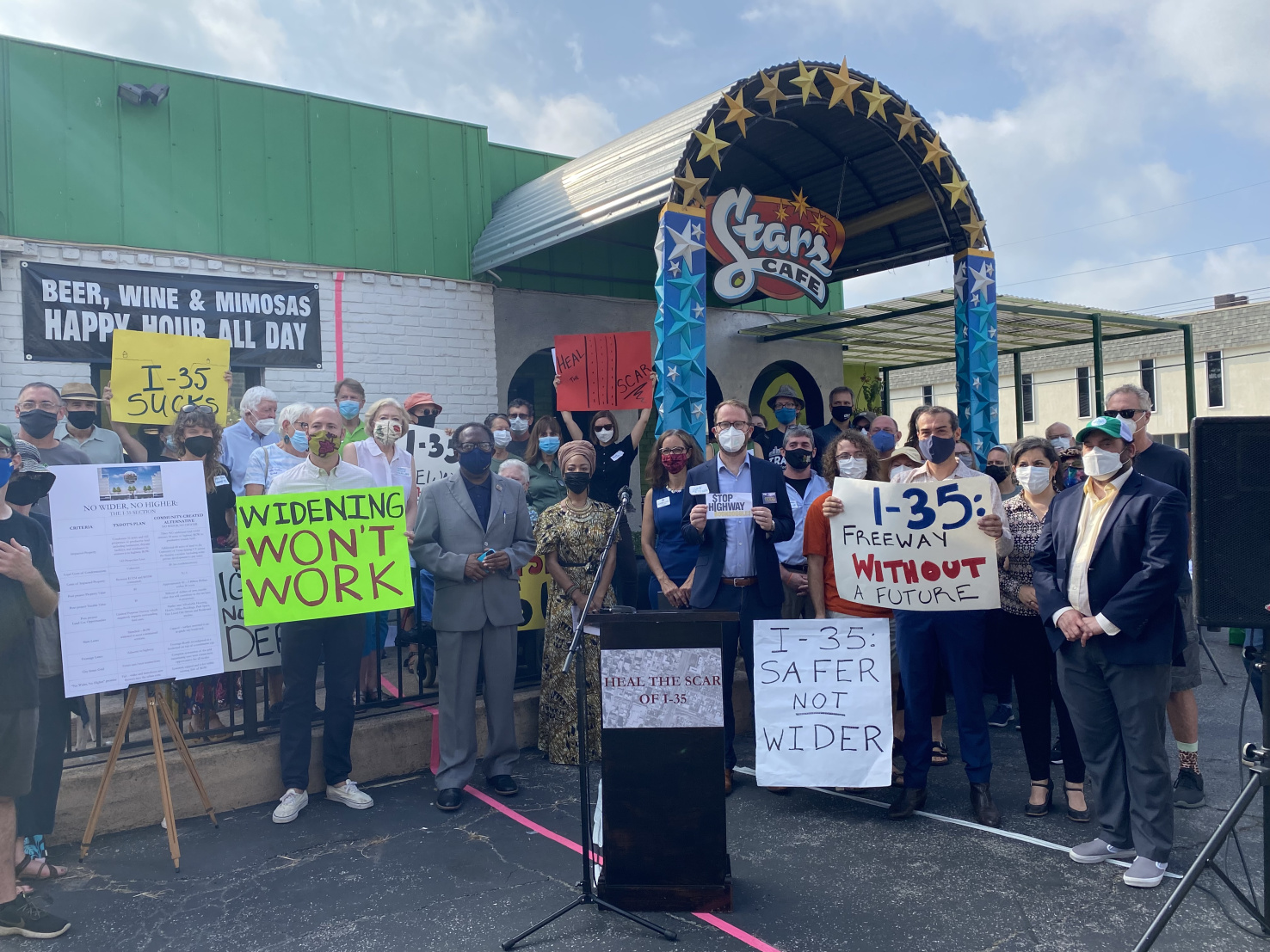
In discussing growing suburban sprawl that’s predicated on the need for ever expanding highways to move people farther and faster, Kimble vitally brings to light “a growing movement to resist this form of development, to recalibrate our bargain with speed.” She follows the creation of Stop TxDot I-45, beginning with one person attending an information session, recognizing the detrimental consequences if the highway plans were realized, and then working to organize others into a formal advocacy effort that fought back.
Kimble highlights the disadvantaged funding system that “perpetuates highway construction as virtually the only solution to transportation problems that most cities and States can afford to choose.” Since the Reagan era, “highway programs receive 80 percent of federal transportation funding while transit gets only 20 percent.” There was hope that the IIJA would change this, but the imbalance remained. “City Limits” is well timed, serving as a perfect documentation of what should change in the current Surface Transportation Reauthorization bill, The Build America 250 Act, which Congress is debating now.
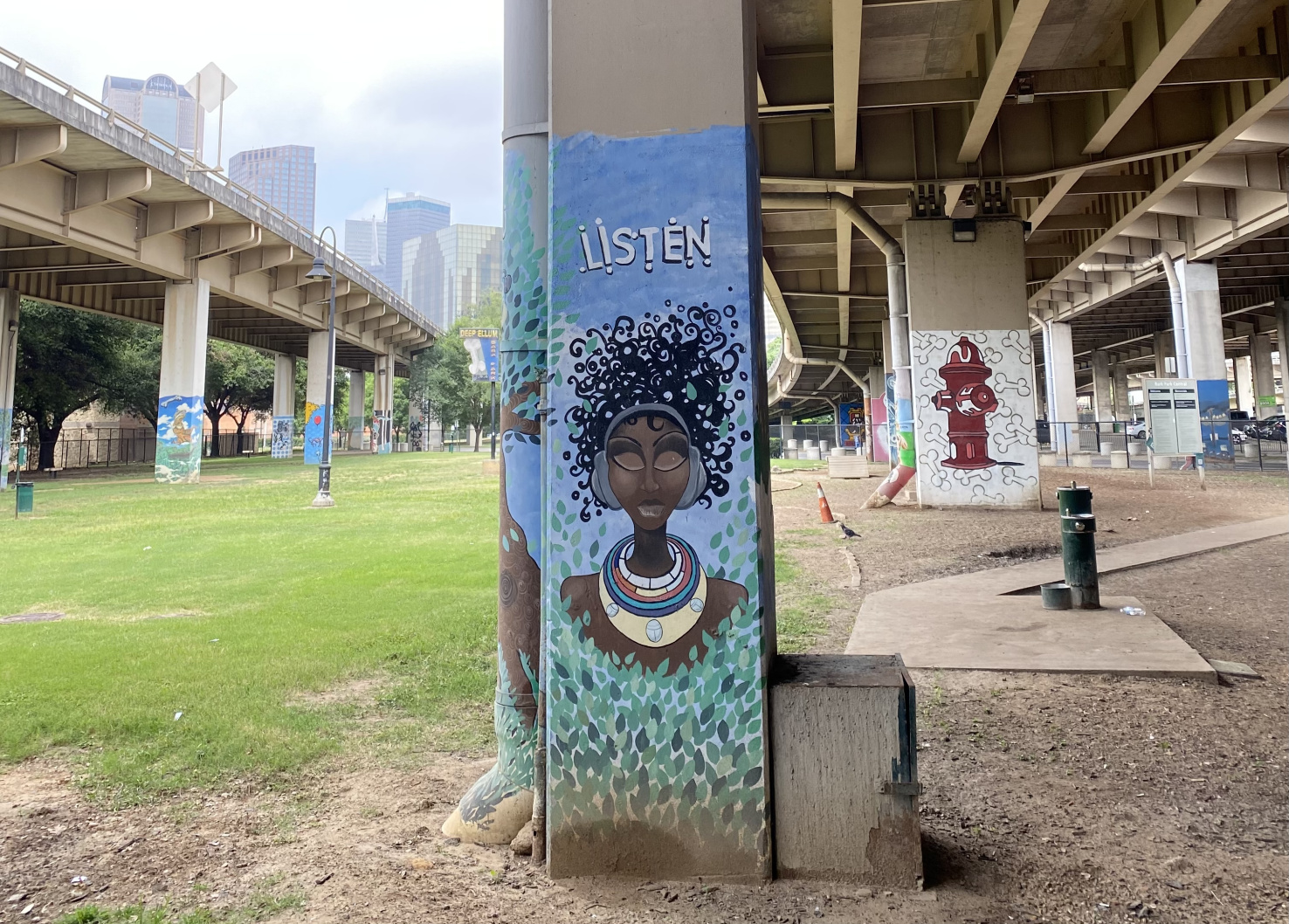
Kimble provides a hopeful narrative that highlights the determination and spirit of everyday residents fighting against highway expansion projects. It is important to learn about these stories first hand because it makes the highway fights real and shows that it is worth the effort to push back. Even highway battles lasting decades, which would wear on even the most committed person, didn’t discourage the residents whose lives were upended by Texas’ three proposed projects. They may not have stopped the highway expansions in the end, but they succeeded in slowing down the projects and altering them just enough to lessen the negative impacts. As Beth Osbourne is quoted in the book “My head might crack before I get the change, but I will set the stage for somebody who will finally push it through.”



Planetizen Federal Action Tracker
A weekly monitor of how Trump’s orders and actions are impacting planners and planning in America.

Data reveals that NYC’s bet on congestion pricing has paid off
After almost two years of the program, reports show positive impacts on traffic and air quality and no disruptions to parking.

HUD modernizes 50-year-old manufactured housing framework
The Next Generation Manufactured Housing Action Plan establishes new energy-efficiency standards for manufactured homes, and new guidelines for anchoring them.

Yet again, Seattle’s density zoning update is hit with delays
The city must now examine the ‘maximum possible development’ under a future zoning scenario, rather than the ‘maximum likely development.’

In the heart of suburbia, a Utah developer is building a high-density downtown from scratch
The project faces criticism from some city council members, who say the private developer is using taxpayer dollars to turn a profit.

California voters weigh $11.25 billion housing bond
Prop. 1, combined with other funding, would support over 40,000 new rental units in California.

FREE Course: Walkable City 1: Why Walkability?
After describing his path towards focusing on walkability as the essence of good planning, Jeff Speck marches through his five principal reasons for making more walkable places.
Reinventing Malls: Planning Alchemy—Turning Gray Fields Into Gold
The course focuses on the opportunities and imperatives that shape reinvention of mall sites.

One Hundred Miles
County of Mendocino
planning NEXT
The Architects Foundation
University of Cincinnati Online
Montrose County
Northern Illinois Transit Authority (NITA)
The Pocatello Development Authority

