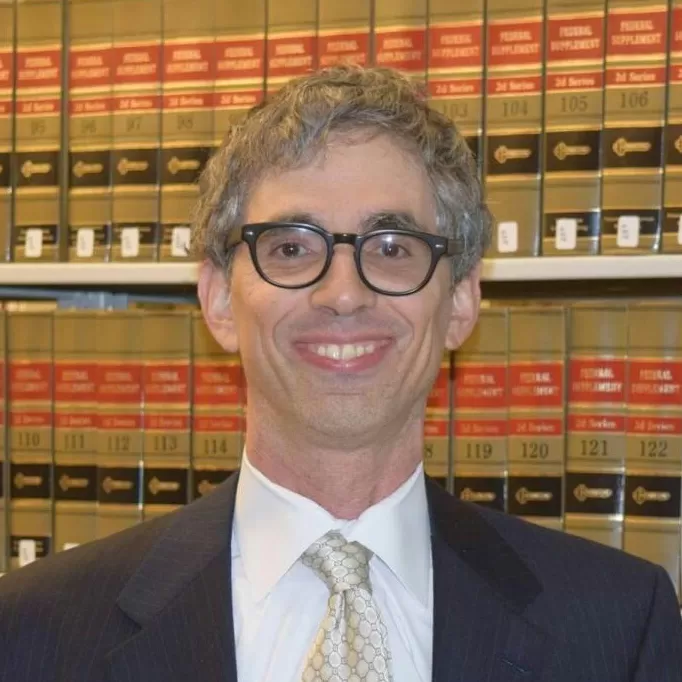
Michael Lewyn is a professor at Touro University, Jacob D. Fuchsberg Law Center, in Long Island. His scholarship can be found at http://works.bepress.com/lewyn.
Who fights for suburbia?
<p> This morning, one of my listservs was aflutter with discussion of a new article by Joel Kotkin, attacking an alleged "war against the suburbs." According to Kotkin, this "war" consisted of Jerry Brown’s efforts to "compel residents to move to city centers." After reading Kotkin’s article, I couldn’t really figure out exactly what Brown was trying to do- and since I don’t live in California, it really isn’t that important to me. </p> <p> However, it is important to realize that "smart growth" need not be the enemy of suburbs. Here’s why: </p>
Why Kelo is not a blank check
Last week marked the third anniversary of the Supreme Court’s ruling in <em>Kelo v. New London</em>. The first time I read <em>Kelo</em>, I thought what many Americans probably thought: that any government could seize property for any reason, so long as it compensated prior owners. <br /> <br /> But after having taught <em>Kelo</em> to law students several times over the past few years, I now realize that Kelo is much more complex. <em>Kelo</em> was a 5-4 decision, and Justice Anthony Kennedy wrote a separate concurrence. Because Justice Kennedy was the “swing vote”, his decision predicts future Court decisionmaking more accurately than the Court’s primary opinion, because a taking which fails to satisfy Kennedy might not be able to get five votes in the Supreme Court.
Learning from exam schools
<p> Yesterday’s Washington Post contained <a href="http://www.washingtonpost.com/wp-dyn/content/article/2008/06/23/AR2008062300297.html?hpid=news-col-blog">a list of elite public schools</a>- schools where the average student SAT is over 1300. Since suburban schools generally have better reputations than urban schools, one might expect that all the schools on the list would be in prestigious suburban school districts. But in fact, this is not the case. Three New York City schools (Stuyvestant, Hunter College, Bronx High) and one school near downtown Richmond (Maggie Walker) are on the high-SAT list- despite the fact that the New York City and Richmond school districts, like nearly all urban school districts, have mediocre reputations. </p>
Learning from my suburb
<p> <br /> For nearly all of my adult life, I have lived in small towns or urban neighborhoods. But for the past two years, I have lived in sprawl. When I moved to Jacksonville two years ago, I moved to Mandarin, a basically suburban neighborhood about nine miles from downtown. As I looked for apartments in 2006, I noticed that in many ways, Mandarin is typical sprawl: our major commercial street (San Jose Boulevard) is as many as eight lanes in some places, and even most apartments are separated from San Jose’s commerce. [See http://atlantaphotos.fotopic.net/c872477.html for my photos of Mandarin and other Jacksonville neighborhoods.] I thought Mandarin would be a typical suburb: homogenously white and upper-middle class. <br />
How to teach about sprawl
<p> Today, I turned in my grades for my seminar on "Sprawl and the Law." It occurred to me that some readers of this blog might be academics, and might be interested on how one can teach a course on sprawl. </p> <p> I began by defining the issue. As I pointed out in an earlier post (at <a href="/node/31063)"><u><span style="color: #0000ff">http://www.planetizen.com/node/31063)</span></u></a> the term "sprawl" has two common meanings: where we grow (city or suburb) and how we grow (pedestrian-friendly or automobile-dependent). Policies that affect the first type of "sprawl" need not affect the second (and vice versa). </p>