















Public Private Partnerships

Big Public-Private Partnership to Reset Internet Infrastructure in San Jose
The city of San Jose's Broadband and Digital Inclusion Strategy is leveraging the private sector to ensure broad inclusion of new Internet technology.
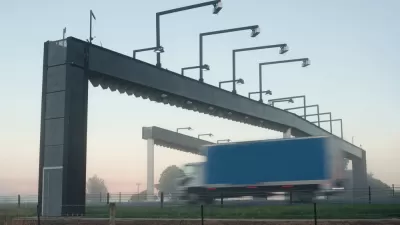
Praise for the Trump Infrastructure Plan
While there has been no lack of criticism (some might say condemnation) of the $200 billion investment that aims to generate an additional $1.3 trillion, some individuals and groups have stepped forward to praise the plan, or at least parts of it.
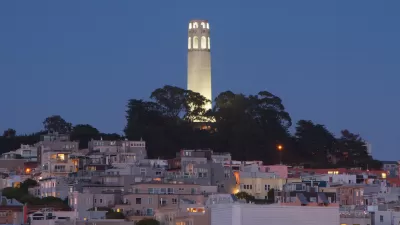
To Meet Climate Change Goals, San Francisco Tries Networking
San Francisco's Business Council on Climate Change serves as a 'convener' between municipal government and the private sector to tackle issues related to climate change. Writer Andrew Wade spoke with the Council's executive director, Michael Parks.
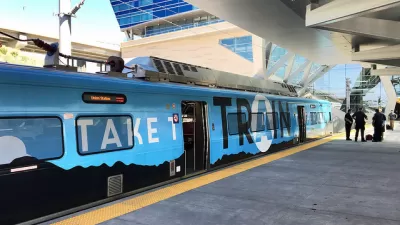
Denver's New Commuter Train to the Plane Achieves Record Ridership
Ridership on the electrified A Line, which opened to great fanfare on Earth Day, reached a weekday average of 16,910 as of June 5. The 23-mile line operates from Union Station to Denver International Airport. Not all is perfect though.
St. Louis Finally Has a Developer for Long-Sought Redevelopment Project
The St. Louis City Council recently approved the initial steps for 1,800 acres of Maryland Heights floodplain. Plenty of hurdles remain, such as coming up with the money the developer wants to see the project through.
Philadelphia's Grand New Dilworth Park—How a Public-Private Partnership Delivered
Dilworth Park, on the front door of Philadelphia's City Hall, made a splashy debut yesterday, but just as impressive as the design of the park is the work of a non-profit in achieving the grand vision for the park.
Public Toilets Continue to Foil New York City’s Bureaucracy
In 2006, New York City signed contracts for private-public partnerships that would deliver a variety of street furniture throughout the city. To date, 3,355 bus shelters, 304 newsstands, and three (3) public toilets have been built.
Tolls are not Taxes, Rules Virginia's Supreme Court
They are fees, ruled the court on Oct. 31, overturning a May 1, Portsmouth circuit judge ruling in a major victory for both tolling and public-private partnerships. It allows tolls to fund the Elizabeth River Crossings, VDOT's P3 tunnels project.
LaHood Calls For 10-cent Gas Tax Increase with Indexing
Freed from the political constraints of holding a cabinet position, former Secretary of Transportation Ray LaHood told a university audience that the increase is necessary to meet multi-modal infrastructure needs, not just road construction.
How the Private Sector Just Might Revive Intercity Passenger Rail in the US
For those following the intense debate over intercity passenger rail in the US, the following recent news items might have a few planners scratching their heads:
Public-Private-Partnership Ready To Build Rail To Denver Airport
Known as PPPs, these consortiums combine the best of public and private sectors to finance, build and operate large projects quickly and efficiently. The 23-mile rail line from downtown's Union Station is expected to start soon and open in 2016.
City And Business House Homeless
San Antonio, Texas, is partnering with business and nonprofit groups on a project aimed at curbing homelessness.
British Columbia a Model for Public-Private Partnerships
U.S. states and officials are looking North to Canada where public-private partnerships have successfully funded infrastructure projects for years in British Columbia.
The Hornery Institute and Inner-Urban Suburbs
On a recent business trip to Australia, I had the opportunity to visit with an interesting group of social planners called The Hornery Institute. Specifically, their charter is “to assist communities in becoming better places to live, learn, work and play.” The Hornery Institute was established in November 2000, in recognition of Lend Lease’s Chairman, Stuart Hornery and his commitment to community and people. To mark his retirement, the shareholders and employees of this great company formed a not-for-profit organization that allowed Hornery and his dedicated, hand-picked staff to continue working on independent projects to make communities more fulfilling.

Urban Design for Planners 1: Software Tools
This six-course series explores essential urban design concepts using open source software and equips planners with the tools they need to participate fully in the urban design process.
Planning for Universal Design
Learn the tools for implementing Universal Design in planning regulations.

planning NEXT
Appalachian Highlands Housing Partners
Mpact (founded as Rail~Volution)
City of Camden Redevelopment Agency
City of Astoria
City of Portland
City of Laramie