Alphabet will likely pursue other ways to deliver high-speed fiber-optic internet service.


Alphabet is halting plans to expand its fiber-optic internet network, Google Fiber, which not long ago had cities competing to attract service. Alphabet, the parent company of Google, had been in talks to install infrastructure in several cities including Dallas, Los Angeles, and Phoenix.
The CEO of Access, the division that oversees Google Fiber, will step down, and will also see an undetermined reduction in staff.
The New York Times reports that Alphabet may be "shifting to new technologies and methods of deploying high-speed internet":
After years of costly investments to dig up roads and lay fiber optic cable, Google started considering alternatives, including wireless and fiber partnerships, that did not necessarily require the company to build a full network.
The service won’t shut down in the eight metropolitan areas where it exists—like Atlanta, Nashville, and Salt Lake City—or where construction is underway.
Read the full story: Google Curbs Expansion of Fiber Optic Network, Cutting Jobs

City Stunts Try to Lure Fiber Optic Internet
A handful of American cities are hoping to become testing grounds for a new fiber optic Internet connection being offered by Google. To catch the company's eye, many of these cities are making concerted -- and sometimes audacious -- efforts.
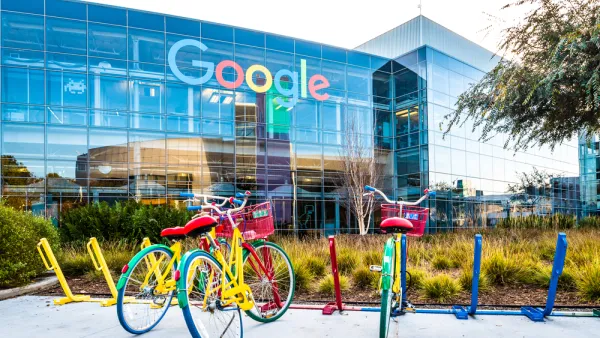
Google's Decade of Land Acquisition Cresting During the Pandemic
According to reports, Google parent company Alphabet is pulling back on two massive land acquisition deals amidst the economic uncertainty of the COVID-19 pandemic. A development approval setback will also slow the company's expansion.
Breaking News: Google to Spend $1 Billion on Housing in the Bay Area
The tech industry giant answers a call to do more to help alleviate housing prices in the region it calls home by promising to build tens of thousands of units on its own land.

Planetizen Federal Action Tracker
A weekly monitor of how Trump’s orders and actions are impacting planners and planning in America.

Amtrak, CN end decades-long dispute with eight-year agreement
The new operating agreement establishes an updated framework for the companies to work together, including processes to resolve disputes.

Northwest rail fans eager for Sept. 30 debut of Amtrak’s Airo fleet
Get ready for that new train smell and more seats. But they won’t go faster or run more frequently on the Cascades route in Washington and Oregon.

Trump administration unlawfully slashed $7 billion in clean energy grants, judge rules
The Environmental Protection Agency ended the Solar For All program, which provided the grants, after President Donald Trump’s inauguration.

Record-breaking wildlife overpass in Colorado brings 91% reduction in animal collisions
Prior to the overpass, vehicles were hitting one deer per day on Colorado’s Interstate 25.

California lawmakers approve just 5% of much-needed LA28 transportation funding
State legislators appear just as unwilling as Trump to pay for Olympics-related transportation projects.

FREE Course: Walkable City 1: Why Walkability?
After describing his path towards focusing on walkability as the essence of good planning, Jeff Speck marches through his five principal reasons for making more walkable places.
Reinventing Malls: Planning Alchemy—Turning Gray Fields Into Gold
The course focuses on the opportunities and imperatives that shape reinvention of mall sites.

City of Thousand Oaks
City of Wisconsin Rapids
Harvard University Graduate School of Design
The Architects Foundation
University of Cincinnati Online
The Pocatello Development Authority
The Urban Renewal Agency of the City of Pocatello