An ambitious proposal to build seven new homeless shelters around the District of Columbia, with a price tag of $660 million, has been attacked on several fronts.


Aaron C. Davis reports on the controversies that have erupted in the background of a proposal by Washington, D.C. Mayor Muriel E. Bowser "for a pricey new network of homeless shelters…" The problem, according to the investigative work of Davis and his Washington Post colleagues: that Mayor Bowser was too hasty in preparing the financial analysis to back up the plan.
According to a solicitation obtained by The Washington Post, a new office within Bowser’s administration issued a request on Friday for “real estate advisory services.” Interested firms had just one business day to respond. The deadline was Monday, and the winning bidder would have less than a week to produce a report analyzing the 30-year, $660 million, seven-shelter plan.
Davis also reported on the plan in February, when the Bowser Administration announced the locations targeted for new shelters. That article detailed the likely political difficulties in locating homeless shelters in new neighborhoods around the city. Back to the present day, Davis reports that the originally scheduled hearing date for the plan, April 19, is likely to be delayed.
FULL STORY: Does the D.C. mayor have confidence in her plan for the homeless? She’s hiring an outsider to study it.

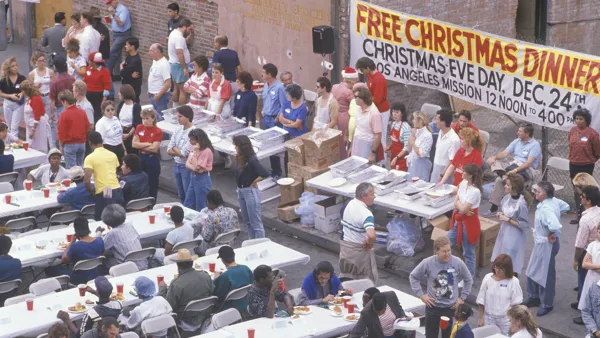
Talking Point in D.C. Homeless Housing Debate: 'Homeowner Lives Matter'
An already controversial proposal to disperse homeless shelters and service around Washington, D.C. is finding new ways to be controversial.
Utah to Build New, 1,200-Bed Shelter Campus
The state’s attempt to decentralize emergency homeless shelters yielded poor results, leading to a decision to develop a “transformative” intake campus with wraparound services.
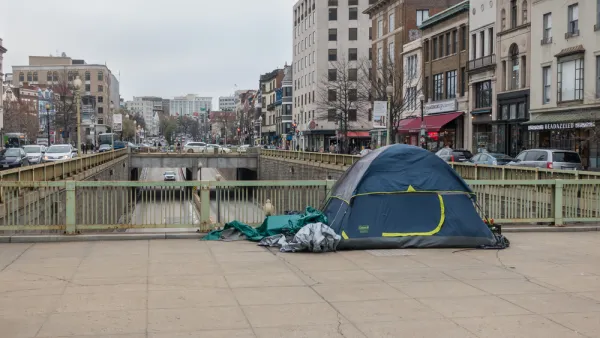
New Homeless Plan for D.C. Aims for Post-Pandemic Reset
Washington, D.C. is looking to build on some past success, and recover from some setbacks, with the adoption of a new plan to address homelessness called Homeward 2.0.

The state-sanctioned urbicide of Austin
People don’t kill cities. Freeways do.

US to reduce Colorado River water deliveries to Mexico
A new Colorado Treaty amendment reduces Mexico’s Colorado River water allocation by 250,000 acre feet.

New Jersey’s second-largest city bans standalone data centers
Jersey City will continue to allow co-location facilities, such as those meant for research institutions that store their own data.

Amtrak not solely to blame for New Jersey commuter rail's unreliability, report finds
A new study from the Garden State Initiative found that NJ Transit’s budget grew 20% across a 4 year period, but reliability declined significantly over the same period.

EPA erases limits on planet-warming pollution from power plants
Under Monday’s plan, power plants would still have some limits on how much mercury, arsenic and other contaminants they can emit.

Phoenix announces new on-demand transit service, more frequent RAPID buses
Both new services will launch in October, and are part of Phoenix's Project Effective Access Solutions for Easing Congestion.

FREE Course: Walkable City 1: Why Walkability?
After describing his path towards focusing on walkability as the essence of good planning, Jeff Speck marches through his five principal reasons for making more walkable places.
Reinventing Malls: Planning Alchemy—Turning Gray Fields Into Gold
The course focuses on the opportunities and imperatives that shape reinvention of mall sites.

Eagle County Government
Harvard University Graduate School of Design
Nashville Planning Department
The Architects Foundation
University of Cincinnati Online
The Pocatello Development Authority
The Urban Renewal Agency of the City of Pocatello
Journal of the American Planning Association