Streetsblog presents a look back, with some snark involved, at the year that was in transportartion.


Streetsblog has announced the winners (and/or losers) of the 2015 Streetsie Awards. After opening the awards to a public vote, the final tally is in, providing a country-spanning look at the year in transportation.
Perhaps the biggest Streetsie (it got its own preview post by Angie Schmitt) goes to the "Best Urban Street Transformation"—this year awarded to the New York City Department of Transportation's redesign of 1.3 miles of Queens Boulevard. Schmitt describe the changes on the street, which took place after years of lobbying: "This was the year NYC DOT responded, carving out space for walking and biking on the corridor’s service roads using paint and plastic bollards, while eliminating or calming dangerous slip lanes. Much more of Queens Boulevard needs to be overhauled for safety, but this project proved that the most dangerous street in the city can change."
Additional Streetsie Awards went to the following catagories:
- Worst livable streets villain
- Best tactical urbanism win
- Worst boondoggle
- Best sign of progress
- Biggest let down
Queens Boulevard has done well in collecting accolades as publications and advocacy groups reviewed the year, including a third place finish on the list of best new bike lanes in the country produced annually by People for Bikes.
FULL STORY: And the Best Urban Street Transformation of 2015 Is… Queens Boulevard


Queens Boulevard Redesign Spreads the Love Around
Queens Boulevard from Roosevelt Avenue to 73rd Street got a new look in 2015, but the New York Department of Transportation is planning to take the street redesign even further.
Vote on 2015's Best and Worst Developments in Streets
Streetsblog is calling for voters in the 2015 Streetsie awards—make your opinion count about the year's biggest developments in multi-modal transportation.
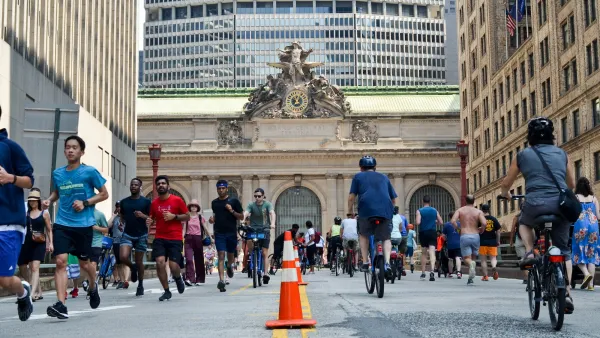
Mamdani’s Budget Fails to Expand Open Streets, Breaking Campaign Promise
The proposed budget allocates $2 million to Summer Streets and Open Streets, less than the $2.1 million allocated by the Adams administration last year.

Planetizen Federal Action Tracker
A weekly monitor of how Trump’s orders and actions are impacting planners and planning in America.

The state-sanctioned urbicide of Austin
People don’t kill cities. Freeways do.

US to reduce Colorado River water deliveries to Mexico
A new Colorado Treaty amendment reduces Mexico’s Colorado River water allocation by 250,000 acre feet.

5 New England states march closer to 800 megawatt wind energy project
Securing federal approval for the project may be complicated under the Trump administration, which has historically been hostile towards domestic wind power.

Baltimore to break ground on $50 million Transit Priority Project
The project will bring faster bus trips, safer streets and better bike connections to Baltimore.

Airbnb launches $250 million 'last-dollar financing' housing accelerator, makes first investment in Austin
The company will put $6.4 million towards affordable housing development in Texas’ capital.

FREE Course: Walkable City 1: Why Walkability?
After describing his path towards focusing on walkability as the essence of good planning, Jeff Speck marches through his five principal reasons for making more walkable places.
Reinventing Malls: Planning Alchemy—Turning Gray Fields Into Gold
The course focuses on the opportunities and imperatives that shape reinvention of mall sites.

Eagle County Government
Harvard University Graduate School of Design
Nashville Planning Department
The Architects Foundation
University of Cincinnati Online
The Pocatello Development Authority
The Urban Renewal Agency of the City of Pocatello
Journal of the American Planning Association