Unusually mild and dry weather in much of Italy has worsened air quality so much that city governments are acting to reduce emissions from one of the chief sources of air pollution by enacting odd-even license restrictions on driving.


Following the example set by Madrid last month and Paris in March, Italian cities are looking to curb driving and incentivize transit usage as a means to cope with unhealthy levels of air pollution.
"An unusually long period of stable weather with little rain or wind has driven air pollution levels to record highs in Italy and prompted emergency measures in a number of cities," writes Gaia Pianigiani for The New York Times in Rome. “(H)igh concentrations of particulate matter and nitrogen dioxide (NOx) continue, aggravated by the weather situation of high pressure and absence of wind,” the city government said.
But many argue that whatever the weather, Italy needs to get better control over the heavy traffic choking its cities and the emissions from home heating systems that are scarcely monitored by the authorities.
Pianigiani describes the driving restrictions and transit benefits that municipal governments will enact because of the high pollution levels. Air quality is not anticipated to improve because of the lingering high atmospheric pressure weather pattern.
- In Milan, Italy's second largest city, "the city government’s decision on Wednesday (Dec. 23) to restrict traffic between 10 a.m. and 4 p.m. for three days next week made headlines and raised health concerns. [More on Milan's congestion cordon charge below.]
- In Rome, the special commissioner who is acting as mayor said Thursday that car traffic in the city would once again be limited next Monday and Tuesday in the early morning and late afternoon, based on the last digits of license plate numbers, while single-ride tickets on the city’s transit system would become passes valid all day.
- In the northwestern city of Turin (pop. 911,823), public transportation was free for two days this month to encourage commuters to leave their cars at home.
As in other cities such as Delhi where diesel cars are singled-out because of their higher emissions, Milan's auto restrictions are confined to diesel cars.
Nicola Pirrone, director of the Institute of Atmospheric Pollution Research at Italy’s National Research Council, described episodic measures such as "blocking traffic for one or two days" and odd-even license plate driving restrictions, as "merely palliative".
One example of a policy change would be to follow Madrid's example of charging more for polluting cars and allowing electric vehicles to park for free.
Arguably a more effective policy of reducing traffic and auto emissions was implemented in 2008 in the form of a congestion cordon charge. A revised version was lifted after only six months due to a judge's ruling on a lawsuit brought by a garage owner, described in an August 2012 post.
Eric Jaffe of CityLab writes that when the 2012 cordon charge was halted for eight weeks, the effect was immediate—traffic returned as soon as the charge was waived, "no lag period." The charge had reduced emissions "from 6 to 17 percent."
The editor of Eltis describes the the two pricing schemes applied to "AREA C" in Milan since 2008. Ironically, the early scheme, Ecopass, is described as a pollution charge.
As noted in earlier this month, keeping the focus on air quality presents an effective strategy to reduce driving, even if it be episodic-based, as Mayor Anne Hidalgo of Paris implemented last month.
FULL STORY: Italy, Dirty Air at Record Levels, Is Putting Limits on Traffic

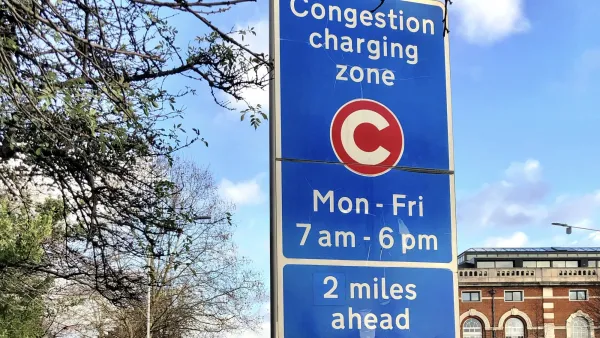
Report from London: Pollution Pricing Reduces Tailpipe Emissions
A new report shows that London's new emission fee, an additional driver charge that became operational 24/7 in April for all motor vehicles not meeting Euro standards that enter the congestion charge zone, has cut nitrogen oxide emissions by 31%.
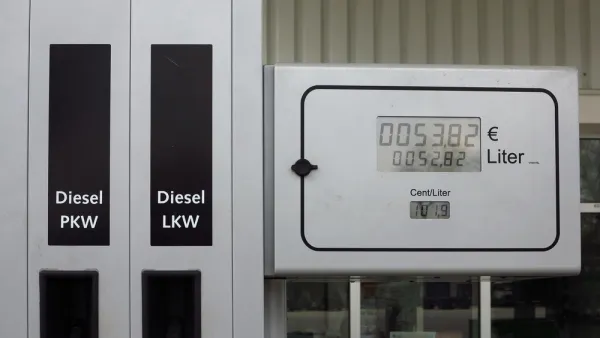
German Cities to Breathe Easier After Court Ruling on Diesel Car Bans
Unlike banning sales of new internal combustion vehicles at a future date, the German court ruling applies to the operation of older, diesel-powered cars in the country's most polluted cities. It's up to the cities, though, to enact the bans.
A Departing Blow to Clean Air on Pruitt's Final Day
Friday may have been disgraced EPA Administrator Scott Pruitt's last day in office of the agency in charge of protecting the nation's environment, but he still managed to roll back a regulation to create lasting air pollution far greater than VW did.

The state-sanctioned urbicide of Austin
People don’t kill cities. Freeways do.

US to reduce Colorado River water deliveries to Mexico
A new Colorado Treaty amendment reduces Mexico’s Colorado River water allocation by 250,000 acre feet.

New Jersey’s second-largest city bans standalone data centers
Jersey City will continue to allow co-location facilities, such as those meant for research institutions that store their own data.

Amtrak not solely to blame for New Jersey commuter rail's unreliability, report finds
A new study from the Garden State Initiative found that NJ Transit’s budget grew 20% across a 4 year period, but reliability declined significantly over the same period.

EPA erases limits on planet-warming pollution from power plants
Under Monday’s plan, power plants would still have some limits on how much mercury, arsenic and other contaminants they can emit.

Phoenix announces new on-demand transit service, more frequent RAPID buses
Both new services will launch in October, and are part of Phoenix's Project Effective Access Solutions for Easing Congestion.

FREE Course: Walkable City 1: Why Walkability?
After describing his path towards focusing on walkability as the essence of good planning, Jeff Speck marches through his five principal reasons for making more walkable places.
Reinventing Malls: Planning Alchemy—Turning Gray Fields Into Gold
The course focuses on the opportunities and imperatives that shape reinvention of mall sites.

Eagle County Government
Harvard University Graduate School of Design
Nashville Planning Department
The Architects Foundation
University of Cincinnati Online
The Pocatello Development Authority
The Urban Renewal Agency of the City of Pocatello
Journal of the American Planning Association