A crisis that stretches back for several months escalated this week, bringing this news of the very bad variety to national attention.


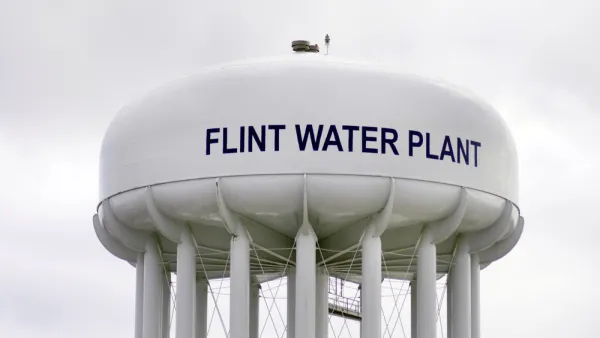
Yanang Wang reports that Flint Mayor Karen Weaver declared a state of emergency in an ongoing crisis over the city's water supply. In Weaver's own, official words from the statement declaring the emergency on Monday: "The City of Flint has experienced a Manmade disaster."
Wang provides some background on the genesis of the crisis:
"The Hurley Medical Center, in Flint, released a study in September that confirmed what many Flint parents had feared for over a year: The proportion of infants and children with above-average levels of lead in their blood has nearly doubled since the city switched from the Detroit water system to using the Flint River as its water source, in 2014."
Wang reports that the statement also stated that the city is "seeking support from the federal government to deal with the 'irreversible' effects of lead exposure on the city’s children." That federal support, according to the statement, will likely be needed in the form of "greater need for special education and mental health services, as well as developments in the juvenile justice system."
Writing for Vox, Libby Nelson provides an explainer of the crisis. John Wisely and Robin Erb reported on the emerging crisis in October for the Detroit Free Press.
FULL STORY: In Flint, Mich., there’s so much lead in children’s blood that a state of emergency is declared

Michigan Suing Flint to Force Long-Term Water Contract
The news from Michigan serves as a reminder that the Flint drinking water tragedy, which started in 2014, still has not been resolved. The health of Flint residents is still at risk.
$170 Million for Flint Water Pipes a Step Closer to Congressional Funding
An amendment to the Water Resources Development Act (WRDA) that would provide $170 million to replace contaminated water pipes is headed to the 11th hour of the Congressional session.
A Tale of Two Cities: San Jose and Flint
The fixed costs of infrastructure projects leave cities like Flint struggling to pay their bills with fewer people pooling their resources.

The state-sanctioned urbicide of Austin
People don’t kill cities. Freeways do.

US to reduce Colorado River water deliveries to Mexico
A new Colorado Treaty amendment reduces Mexico’s Colorado River water allocation by 250,000 acre feet.

New Jersey’s second-largest city bans standalone data centers
Jersey City will continue to allow co-location facilities, such as those meant for research institutions that store their own data.

Amtrak not solely to blame for New Jersey commuter rail's unreliability, report finds
A new study from the Garden State Initiative found that NJ Transit’s budget grew 20% across a 4 year period, but reliability declined significantly over the same period.

EPA erases limits on planet-warming pollution from power plants
Under Monday’s plan, power plants would still have some limits on how much mercury, arsenic and other contaminants they can emit.

Phoenix announces new on-demand transit service, more frequent RAPID buses
Both new services will launch in October, and are part of Phoenix's Project Effective Access Solutions for Easing Congestion.

FREE Course: Walkable City 1: Why Walkability?
After describing his path towards focusing on walkability as the essence of good planning, Jeff Speck marches through his five principal reasons for making more walkable places.
Reinventing Malls: Planning Alchemy—Turning Gray Fields Into Gold
The course focuses on the opportunities and imperatives that shape reinvention of mall sites.

Eagle County Government
Harvard University Graduate School of Design
Nashville Planning Department
The Architects Foundation
University of Cincinnati Online
The Pocatello Development Authority
The Urban Renewal Agency of the City of Pocatello
Journal of the American Planning Association