Gas prices are 80 cents a gallon less than a year ago and $1.50 less than April 2014. With this amount of savings, the economy should be improving from all the extra cash in consumers' hands. You'll be surprised where much of the savings is going.


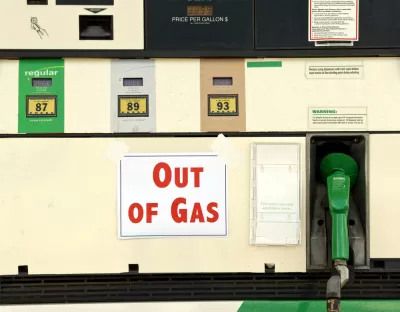
"Here's a funny one: Americans have spent their gas savings on gas," writes Myles Udland for Business Insider. According to new figures on spending released last week by the Department of Commerce's Bureau of Economic Analysis (pdf) last week, "inflation-adjusted personal consumption expenditures on gasoline rose 4.1% over the prior year, the most in at least 15 years."
What's surprising is what Udland doesn't attribute the increase to. No mention of driving more, or switching to gas-thirsty SUVs from compact cars, though I suspect both play a role, but I'm getting ahead of myself.
Udland wasn't surprised at the increase in gasoline spending as he anticipated it in a column he wrote in September. "The last time oil prices crashed and brought down the price of gas, US consumers spent more money on gas," he wrote.
According to behavioral economist Richard Thaler, "households typically have rigid 'buckets' of spending — $80 per week on food, $100 on gas, $500 for a mortgage, and so on. Humans tend to stick to their buckets," wrote Udland.
Thaler found that "(t)he shift toward higher grades of gasoline was fourteen times greater than would be expected in a world in which money is treated as fungible."
What's more, upgrading to "premium" was not found in other 'budgets' such as particular food items. "The one exception to that tendency was more splurging on upscale gasoline." [Emphasis is Udland's.]
Udland continues in the Sept. 5 column to indicate where the gas savings have gone—primarily increased savings, as opposed to retail sales other than gasoline.
Hat tip to Loren Spiekerman.
FULL STORY: Americans saved money on gas and then spent those savings on gas

2016 Sets New U.S. Driving Record as Gas Prices Remain Low
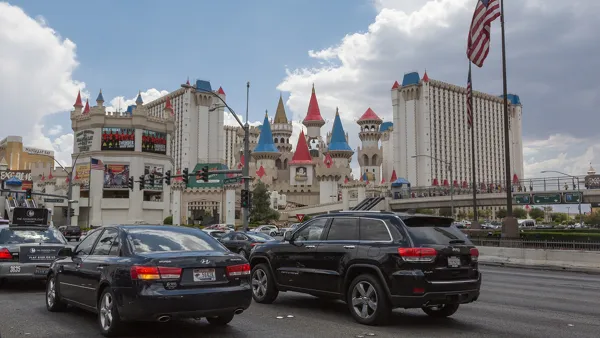
So much for the 2015 record of 3.148 trillion miles. Last year saw a cumulative travel increase of 2.8 percent to 3.218 trillion miles, setting a new record as cheap gas contributed to increased driving.
U.S. Gasoline Consumption Up, Oil Production Down
Gas prices are on the rise, though they will remain well below 2014 levels through this year. U.S. oil production dropped by 600,000 barrels from last year, while gas consumption is on track to break the 2007 record thanks to cheap gas and more SUVs.
Do You Know What Year the U.S. Hit Peak Gasoline Consumption?
Michael Sivak of the Univ. of Michigan has published another key report documenting our waning love affair with the automobile. Sivak documents peak overall gasoline consumption occurring in 2004. Per capita fuel consumption may have peaked in 2003.

The state-sanctioned urbicide of Austin
People don’t kill cities. Freeways do.

US to reduce Colorado River water deliveries to Mexico
A new Colorado Treaty amendment reduces Mexico’s Colorado River water allocation by 250,000 acre feet.

New Jersey’s second-largest city bans standalone data centers
Jersey City will continue to allow co-location facilities, such as those meant for research institutions that store their own data.

Amtrak not solely to blame for New Jersey commuter rail's unreliability, report finds
A new study from the Garden State Initiative found that NJ Transit’s budget grew 20% across a 4 year period, but reliability declined significantly over the same period.

EPA erases limits on planet-warming pollution from power plants
Under Monday’s plan, power plants would still have some limits on how much mercury, arsenic and other contaminants they can emit.

Phoenix announces new on-demand transit service, more frequent RAPID buses
Both new services will launch in October, and are part of Phoenix's Project Effective Access Solutions for Easing Congestion.

FREE Course: Walkable City 1: Why Walkability?
After describing his path towards focusing on walkability as the essence of good planning, Jeff Speck marches through his five principal reasons for making more walkable places.
Reinventing Malls: Planning Alchemy—Turning Gray Fields Into Gold
The course focuses on the opportunities and imperatives that shape reinvention of mall sites.

Eagle County Government
Harvard University Graduate School of Design
Nashville Planning Department
The Architects Foundation
University of Cincinnati Online
The Pocatello Development Authority
The Urban Renewal Agency of the City of Pocatello
Journal of the American Planning Association