Still without a corporate sponsor, Portland is moving ahead with a bikeshare proposal that will add 600 shared bikes to the city's streets.


"Portland plans to roll out a long-delayed bike rental program, perhaps as soon as next summer," reports Elliot Njus.
"The reworked proposal calls for a 600-bike fleet supplied by Social Bicycles, Inc., or SoBi, of New York. That's 150 fewer bikes than proposed in 2012, when the city signed a contract with Alta Bicycle Share, now under new ownership and rebranded as Motivate Co," adds Njus.
According to Njus, the city is forging ahead even without the corporate sponsor that has so far eluded the city's bikeshare plans—and proved the death of the earlier version of the plan. The current proposal estimates the launch of the program to cost $2 million, funded by federal grants. "Operations are intended to be self-sufficient through user fees and, eventually, sponsorships."
Njus goes on to provide more details about how the system will work and where the stations will be located around the city.
Read the full story: Portland says bike share coming in 2016, names bicycle supplier
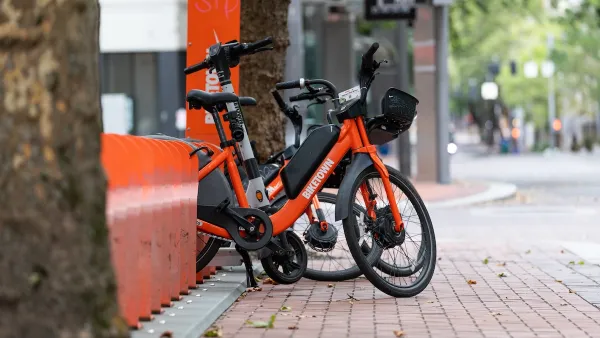
Biketown Lives
Despite public perception of its decline, Portland’s bike share system is alive and well.
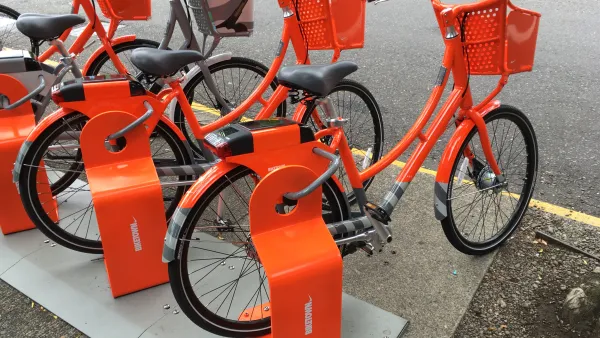
Portland's Biketown to Include 'Adaptive Bikes' to Ensure Universal Access
The city of Portland is wearing the Yellow Jersey on equity issues connected to the Biketown bikeshare system.
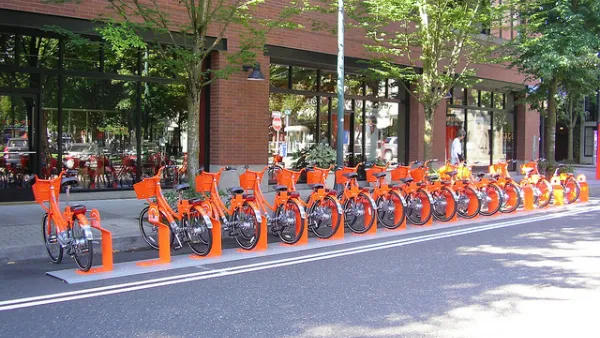
Portland Bikeshare Drawing Big Crowds in First Six Months
Users of Portland's Biketown bikeshare system are choosing to rent bikes instead of driving.

Planetizen Federal Action Tracker
A weekly monitor of how Trump’s orders and actions are impacting planners and planning in America.

California plans to bury El Niño’s downpour
If the state plays its cards right, it may be able to store a billion acre-feet of El Niño’s water in aquifers.

Desperate measures: Advocates weigh draining Lake Powell to fill Colorado River
Draining the reservoir could reduce evaporation losses by a couple hundred thousand acre-feet.

Chicago voters approve permanent festival grounds, penalty for vacant property owners
Currently, major summer and fall festivals take over public parks for weeks at a time, drawing criticism from nearby residents

NYC votes to cut outdoor dining red tape, speed up permitting
New York City also voted to allow the Department of Transportation to begin work on urgent projects before notifying elected officials.

California appears to reject Prop. 45
The proposition would have expanded the projects that qualify for a streamlined environmental review, effectively paring down the California Environmental Quality Act.

FREE Course: Walkable City 1: Why Walkability?
After describing his path towards focusing on walkability as the essence of good planning, Jeff Speck marches through his five principal reasons for making more walkable places.
Reinventing Malls: Planning Alchemy—Turning Gray Fields Into Gold
The course focuses on the opportunities and imperatives that shape reinvention of mall sites.

City of Rosemead
Rutgers University, Edward J. Bloustein School of Planning and Public Policy
One Hundred Miles
Hunter College, City University of New York (CUNY)
The Architects Foundation
University of Cincinnati Online
City of Cambridge
Montrose County
The Pocatello Development Authority