Plans to transform 60,000 square feet of dormant space under New York's Delancey Street into a park could be ready to reemerge into the public discussion.


Kevin Sweeting Revisits the plans for the "LowLine" park, first conceived in 2009 and still the dream of a collection of New Yorkers working to make the project a reality.
"The LowLine’s crusade to carve a park from an underutilized corner of belowground transit infrastructure is an innovative solution to a persistent problem: Community parks are a public good, and the Lower East Side is a neighborhood severely lacking in green space. The LowLine could be a subterranean respite in a neighborhood where real estate prices on the surface are inhospitable to the idea. What seems left unconsidered, however, is how it would fit into the future of a changing Lower East Side—and whose priorities “the world’s first underground park” would service."
The post details the site's history and its position—geographically and culturally—in New York City. The cause of the LowLine is currently the task of the Underground Development Foundation, which follows a similar roadmap as that of the Friends of the High Line.
Included in the long-read about the history of the project so far and the prospects of the project is a status report almost up to date: "On July 8th 2015, the LowLine closed out its second successful Kickstarter campaign, collecting over two hundred and twenty-three thousand dollars from more than twenty-five hundred backers. The LowLine Lab, which is scheduled to open this month, will be a kind of 'open studio'—a working research space opened up for public visits."
FULL STORY: Digging the LowLine

An Update on the Ambitious Lowline Project in New York
The Lowline is "one of the most intriguing" project proposals anywhere in the United States—so much so that it still seems a long shot to many observers.
Local Opposition Voices Displeasure with 'Lowline' Park Plans
An op-ed by Kerri Culhane, associate director of Two Bridges Neighborhood Council, asks "what is the Lowline, and who is it for?"
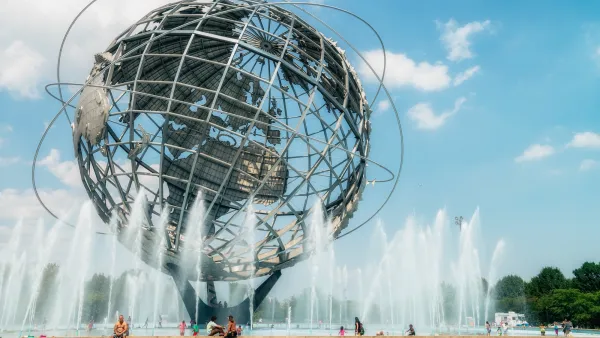
Historic Queens park is getting a $120M upgrade
The borough's largest park will undergo significant upgrades for accessibility, flood mitigation and historic preservation.

Planetizen Federal Action Tracker
A weekly monitor of how Trump’s orders and actions are impacting planners and planning in America.

The state-sanctioned urbicide of Austin
People don’t kill cities. Freeways do.

US to reduce Colorado River water deliveries to Mexico
A new Colorado Treaty amendment reduces Mexico’s Colorado River water allocation by 250,000 acre feet.

5 New England states march closer to 800 megawatt wind energy project
Securing federal approval for the project may be complicated under the Trump administration, which has historically been hostile towards domestic wind power.

Baltimore to break ground on $50 million Transit Priority Project
The project will bring faster bus trips, safer streets and better bike connections to Baltimore.

Airbnb launches $250 million 'last-dollar financing' housing accelerator, makes first investment in Austin
The company will put $6.4 million towards affordable housing development in Texas’ capital.

FREE Course: Walkable City 1: Why Walkability?
After describing his path towards focusing on walkability as the essence of good planning, Jeff Speck marches through his five principal reasons for making more walkable places.
Reinventing Malls: Planning Alchemy—Turning Gray Fields Into Gold
The course focuses on the opportunities and imperatives that shape reinvention of mall sites.

Eagle County Government
Harvard University Graduate School of Design
Nashville Planning Department
The Architects Foundation
University of Cincinnati Online
The Pocatello Development Authority
The Urban Renewal Agency of the City of Pocatello
Journal of the American Planning Association