A partnership between Waze and the city of Los Angeles has prompted a cry of "not on the street in front of my frontyard!" from residential neighborhoods around the city.


"The Waze traffic-avoidance app has begun sharing drivers' aggregated data with Los Angeles city and county traffic managers in exchange for information on street closures, detours and other data that make the app more useful," reports Sharon McNary.
McNary's coverage includes more details about the potential benefit of the deal to both of the parties involved. Los Angeles entered the agreement in October and announced during Mayor Eric Garcetti's State of the City Address in April.
Though Los Angeles is only one of ten cities to enter into the agreement, the unique relationship of the city's residents to their cars and the streets upon which they travel and park their cars, has prompted a strong response on the part of "Traffic NIMBYs" concerned about the number of drivers who use the app to more frequently access residential streets away from congested arterials and freeways. City Councilmember Paul Krekorian has even introduced legislation that would "reduce the impact of cut-through traffic that results from use of Waze and similar traffic apps," according to a separate article by Bianca Barragan.
Brian K. Roberts, author of L.A. Shortcuts: The Guidebook for Drivers Who Hate to Wait, written 25 years ago, pens an op-ed for the Los Angeles Times in response to pushback against Traffic NIMBYs, offering perspective about the clashing dynamics of public and private brought about by the controversy.
Roberts recalls being let off with a warning after making a turn that was once legal—before residents lobbied for changes to the street configuration in reaction to his book:
"Though I dodged a ticket, that traffic stop raised serious questions. How was it possible that a public street maintained with my tax dollars was no longer available to me? I wasn't speeding. I wasn't intoxicated. I had a valid license. It wasn't my fault that homeowners didn't look at a simple map or check the traffic patterns before they bought a house. Who were these people who had persuaded the government to give their private interests priority? What shortcut did they take every morning to get to work on time?"
One more of the best quotes from an op-ed full of provocative turns of phrase:
"Krekorian and other Waze critics — like the Brentwood woman who told the Associated Press recently that "the streets on the Westside are no longer a secret for locals, and people are angry" — should realize that the streets were never a secret meant for a select few and have been listed on maps at least since Wyatt Earp died here in 1929. Instead of blaming Waze, they should redirect their sense of entitlement to demand better mass-transit options that would reduce traffic for everyone."
Read the full story: Will traffic NIMBYs ruin Waze?


First responders use electric motorcycles to split lanes in LA traffic
The bike fleet will help LAFD firefighters reach emergency situations faster.
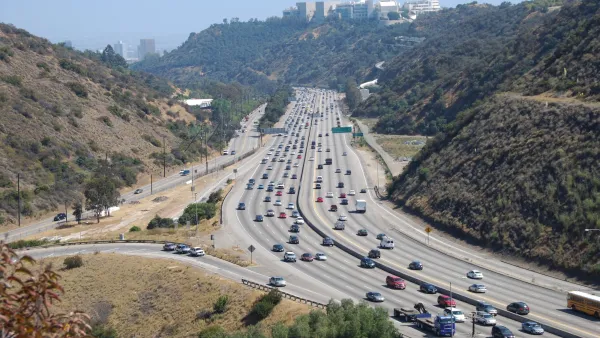
LA Metro Board Approves New Subway for One of Nation’s Busiest Freeway Corridors
The new subway could cut the hour-long trip between west Los Angeles and the San Fernando Valley to 20 minutes.
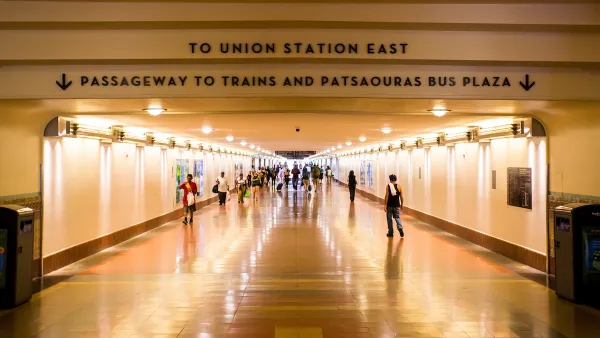
Can LA Achieve a ‘No-Car’ Olympics?
The city’s mayor promises all Olympic venues will be reachable by transit, but the city’s ability to finish its transit projects on time is coming into question.

Planetizen Federal Action Tracker
A weekly monitor of how Trump’s orders and actions are impacting planners and planning in America.

Amtrak, CN end decades-long dispute with eight-year agreement
The new operating agreement establishes an updated framework for the companies to work together, including processes to resolve disputes.

Judges permit Denver to divert 77,000 acre feet from the Colorado River for reservoir expansion
Overuse and climate change have caused the Colorado River’s water levels to plummet.

Northwest rail fans eager for Sept. 30 debut of Amtrak’s Airo fleet
Get ready for that new train smell and more seats. But they won’t go faster or run more frequently on the Cascades route in Washington and Oregon.

NYC DOT wants faster, more permanent street upgrades
The city is examining ways to build more concrete infrastructure without getting entangled in 'decades-long' projects.

'Something we’ve never seen before:' rising utility rates could strain city finances nationwide
Data centers, climate change and other factors have caused utility rates in the United States to increase by 38% since 2020.

FREE Course: Walkable City 1: Why Walkability?
After describing his path towards focusing on walkability as the essence of good planning, Jeff Speck marches through his five principal reasons for making more walkable places.
Reinventing Malls: Planning Alchemy—Turning Gray Fields Into Gold
The course focuses on the opportunities and imperatives that shape reinvention of mall sites.

Harvard University Graduate School of Design
KFH Group Inc.
Greater Baltimore Committee
The Architects Foundation
University of Cincinnati Online
The Pocatello Development Authority
The Urban Renewal Agency of the City of Pocatello