In what has been described as a "poster child" for future water showdowns in the west, local interests in Las Vegas are attempting a water grab from ranch land 275 miles north of the city.


"It’s Mammon versus Mormon as Las Vegas and its glittering towers of glass and greed seek to quench their growing thirst by draining billions of gallons of water from under the feet of ranchers whose cattle help feed the church’s poor," reports Edvard Pettersson.
"The surface of Las Vegas’s main source of water, Lake Mead, sits more than 100 feet below Hoover Dam’s spillways after reaching the lowest mark last summer since the dam was filled. As it seeks new sources, the city’s water supplier is waging a court fight over plans to suck as much as 27 billion gallons a year from the valley that is home to the Mormon ranch and its 1,750-head herd, as well as three other rural valleys."
The location in question is Spring Valley, near Route 50, where the Southern Nevada Water Authority would claim the 7,000-acre Cleveland Ranch owned by the Mormon church. The Spring Valley aquifer is one of four that the Southern Nevada Water Authority would connect to a 263-mile pipeline approved in 2007 and again in 2012, but currently delayed by ongoing litigation.
Read the full story: Sin City's Thirst Is Drying Up the West

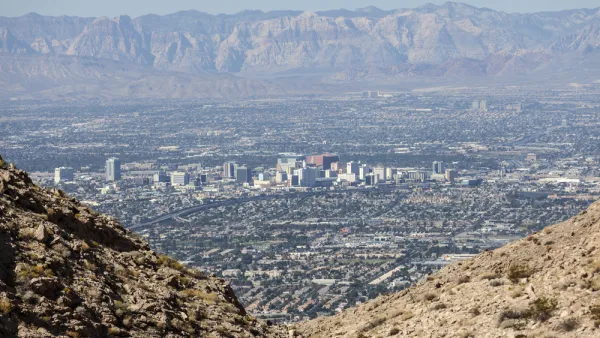
Sales Tax to Fund Water Projects Extended in Las Vegas Region
The Clark County Commission is extending a sales tax, created in 1998, which could have drawn to a close after raising $2.3 billion or the year 2025, whichever came first. The tax will remain in place indefinitely.

New Las Vegas Golf Courses Barred From Using Colorado River Water
A new rule from the Las Vegas Valley Water District prohibits new golf courses in the city from using Colorado River water for irrigation.
Nevada Bans the Use of Colorado River Water for Ornamental Grass
AB 356 could be "the most aggressive municipal water conservation measure that's been taken in the western United States."

Planetizen Federal Action Tracker
A weekly monitor of how Trump’s orders and actions are impacting planners and planning in America.

Data reveals that NYC’s bet on congestion pricing has paid off
After almost two years of the program, reports show positive impacts on traffic and air quality and no disruptions to parking.

HUD modernizes 50-year-old manufactured housing framework
The Next Generation Manufactured Housing Action Plan establishes new energy-efficiency standards for manufactured homes, and new guidelines for anchoring them.

Chicago city vehicles are on the hunt for illegally-parked cars
Cameras on the vehicles can automatically issue tickets to drivers who park their cars in bus or bike lanes.

Small single-family homes are illegal in most of MA. Voters can change that
Most land zoned for single-family housing in Massachusetts requires at least 40,000 square feet of land per house.

Public steps inside U.S.’s first battery-powered train
Metra’s groundbreaking train feature modern seats and a futuristic battery car.

FREE Course: Walkable City 1: Why Walkability?
After describing his path towards focusing on walkability as the essence of good planning, Jeff Speck marches through his five principal reasons for making more walkable places.
Reinventing Malls: Planning Alchemy—Turning Gray Fields Into Gold
The course focuses on the opportunities and imperatives that shape reinvention of mall sites.

One Hundred Miles
County of Mendocino
planning NEXT
The Architects Foundation
University of Cincinnati Online
Montrose County
Northern Illinois Transit Authority (NITA)
The Pocatello Development Authority