The news satire show "Last Week Tonight with John Oliver" gave comic treatment to the country's ever-present, much-neglected infrastructure crisis. It's hilarious and scary. At the same time!


"Last Week Tonight with John Oliver" will help reverse the lack of attention paid to the country's infrastructure (along with a recent "60 Minutes" segment and, of course, constant coverage by Planetizen).
According to Oliver, the country finds it easy to ignore its crumbling infrastructure because: "We tend to find it a bit boring." Or, put another way: "Most people find infrastructure boring."
The show starts by examining dams, noting that the average age of dams in the country is 52 years, but they get very little in the way of inspections. The state of Alabama, for instance, completely lacks inspectors for its dams. "That means that the state of Alabama has exactly the same number of dam inspectors as the band Alabama," cracks Oliver.
The show then switches its focus to bridges, borrowing heavily from the unintentional comedy of the recent "60 Minutes" feature on infrastructure. So, for instance, the Oliver notes the troubling nature of former Transportation Secretary Ray LaHood saying, "I don't want to say they're unsafe, but they're dangerous."
With consensus like this, how did things get so bad? Oliver turns to the Highway Trust Fund, and the gas tax that funds it, as an example of the inability of Congress to act. The problem, as we know, is that taxes are incredibly unpopular, and some in Congress aren't working as hard as they say there to find a new source of funding to replace the gas tax. This tweet from the show make's their opinion known:

Finally, the segment concludes with a star-studded fake movie trailer that tells viewers to "brace yourself for 98 minutes of incremental maintenance." Edward Norton delivers the line "Left loosey, righty tighty" in a particularly tense moment. And Steve Buscemi kills it as the "best damn inspector in the business," who is, "here to inspect this dam."
Robert Puentes reacts to the segment in a post for Brookings, finding a lot to agree with in the show's jokes and satire, but also noting one omission that was probably too complex for the show to fit into a 21-minute comedy segment:
"…it missed the mark by failing to recognize the diverse and highly fragmented ways that America selects, builds, maintains, operates, and pays for assets as different as public transit, telecommunications, and water. To be sure, for certain sectors federal spending is relatively high, such as transportation and water for which federal spending averaged $92.15 billion each year from 2000 to 2007. But even for those sectors, the federal share of total spending was never higher than 27 percent during that time. How choices are made about American infrastructure is exceedingly complex and depends on funding sources, jurisdictional concerns, and political negotiations."
The full segment is available in the video below.
Read the full story: Last Week Tonight with John Oliver: Infrastructure (HBO)

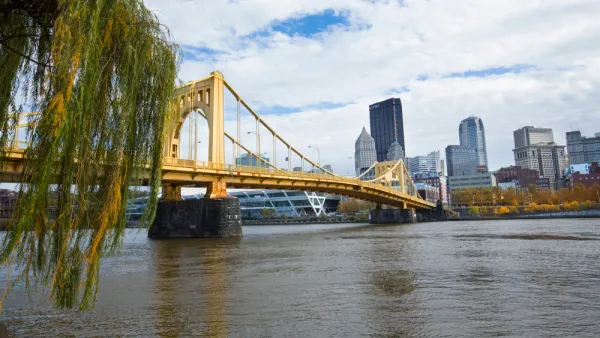
PennDOT Proposes Bridge Tolls to Fund Critical Repairs
With gas tax revenues projected to fall this fiscal year due to the pandemic, the Pennsylvania Department of Transportation argues it needs additional revenue to bridge its growing funding gap and repair crucial infrastructure.
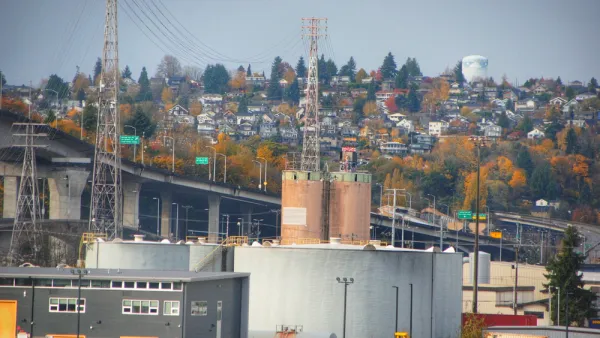
Scrambling to Replace the Heavily Used West Seattle Bridge
The West Seattle High-Rise Bridge Safety Project is in high gear, more than six months after the city's most heavily trafficked bridge was closed suddenly for safety risks.
Pittsburgh's Iconic Rachel Carson Bridge Closed for Repairs Until Summer 2020
One of the symbols of Pittsburgh's status as the Steel City and the City of Bridges will be closed for repairs for all of 2019 and a good portion of 2020 as well.

Planetizen Federal Action Tracker
A weekly monitor of how Trump’s orders and actions are impacting planners and planning in America.

Amtrak, CN end decades-long dispute with eight-year agreement
The new operating agreement establishes an updated framework for the companies to work together, including processes to resolve disputes.

Judges permit Denver to divert 77,000 acre feet from the Colorado River for reservoir expansion
Overuse and climate change have caused the Colorado River’s water levels to plummet.

Philadelphia to invest $2 billion into upgrading city airports as PHL places last in customer satisfaction
Modernizations to Philadelphia's airports will include baggage system upgrades and a new automated parking garage guidance system.

The LA housing policies making developers turn away from the city
Despite LA’s housing shortage, developers say the city’s "mansion-tax" and pandemic-era policies make it an unappealing place to build housing.

New density bill would require 7 California cities to establish regional transit hubs
The bill would also require major cities in California to permit high-rise residential buildings.

FREE Course: Walkable City 1: Why Walkability?
After describing his path towards focusing on walkability as the essence of good planning, Jeff Speck marches through his five principal reasons for making more walkable places.
Reinventing Malls: Planning Alchemy—Turning Gray Fields Into Gold
The course focuses on the opportunities and imperatives that shape reinvention of mall sites.

City of Wisconsin Rapids
Harvard University Graduate School of Design
KFH Group Inc.
The Architects Foundation
University of Cincinnati Online
The Pocatello Development Authority
The Urban Renewal Agency of the City of Pocatello