Ann Forsyth, professor of urban planning at the Harvard Graduate School of Design, shares insight into common traits of the best educational programs in planning.



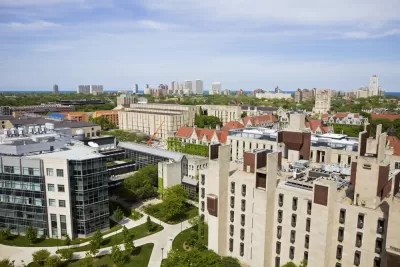
What makes a great planning program is an enduring question in planning. Some school have a period at the pinnacle: Penn in the late 1960s and early 1970s; UCLA in the 1980s; and so on. Others rise and fall. What makes a program great to work in for faculty or staff may not have as many benefits for students, and the reverse. However, if asked to propose key features of great programs, I would list the following.
- Students and faculty engaging planning practice and the profession as critical insiders. This can happen in lots of different ways—but involves faculty and students knowing and caring about planning practice and about the role of planning solving important problems in the here and now but with an eye for the long-term. It is about it being aplanningprogram rather than urban studies, public policy, environmental studies, urbanism, and the like even if the program is part of a larger department or school.
- Multiple faculty doing substantial work on how to face important contemporary challenges, making human settlements that are more just and that can sustain meaningful lives in the long term, for example, without obsessing about finding the NEW. In fields like high style architecture or social media the new is paramount. There are many grand pronouncements about ways forward. However, engaging important concerns over the long haul needs a different approach.
- Acknowledgement that there are multiple paths to excellence in planning. Such a program would include faculty and students who represent different approaches. Planning is pluralistic and integrative. It needs generalists who also have specialties across a range of topics. It needs technical and ethical thinking. One could hope that there might be mutual respect and admiration for different camps but acknowledgement or acceptance is a minimum. And by that I mean enough acceptance that people actually learn from each other and don’t just dismiss alternate views, specialties, and methods.
- Four to five faculty who are committed to the good of the whole. There are different ways to do this but one person cannot make a program; three could perhaps do it for a while but burn out. It needs more. This particular dimension can be difficult for students to ascertain but makes a huge difference to the cohesion of the program.
- Students who are committed to creating learning opportunities for themselves and their peers so they can make a difference. Active students can make or break a planning program. Faculty can do some work admitting people who want to learn and make positive changes; they can support a culture of student action. But a lot of it comes down to students being proactive and forward looking.
- Admissions processes need to be designed to create a perfect fit between students and program OR program need to have substantial flexibility and few absolutely required classes. It is easier to do the latter but possible to do the former.
- Finally, the program should have an ethical sense. The program itself should give something back to its local community—however defined--through outreach of various sorts. But mainly it needs to help students prepare for their own role in making the world better in the long term.
Others may have different lists—as might I at some time. Most are variations on engaging core ethical concerns in planning, learning from diversity, playing well with others, and keeping a focus on important issues and the long term. Note that this is not about planning rankings but something a bit more difficult to quantify.
There are also many very good planning programs that do an excellent job producing practicing planners. But a great planning program needs to do something more.

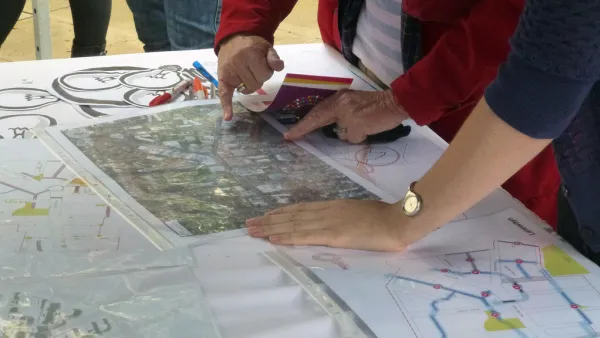
How do Planners Generate Ideas?
How to generate ideas in planning is a question that many planning students ask. This can seem a mysterious and difficult process. Unfortunately, planning education has not always done a great job of helping students unpack this apparent mystery.
The Basics of Artificial Neural Networks: What Urban Planners Should Know
Planetizen AI columnist Tom Sanchez takes us under the hood of the technology that drives many AI tools.

The Good, the Bad, and the Ethical: A Moral Philosopher's Perspective on Sustainable Urban Mobility
In the United States, a nation marked by unparalleled car reliance, the environmental and health consequences of car dependency pose a significant ethical dilemma for urban planners, policymakers, and engineers.

Planetizen Federal Action Tracker
A weekly monitor of how Trump’s orders and actions are impacting planners and planning in America.

The state-sanctioned urbicide of Austin
People don’t kill cities. Freeways do.

US to reduce Colorado River water deliveries to Mexico
A new Colorado Treaty amendment reduces Mexico’s Colorado River water allocation by 250,000 acre feet.

Nation's most wind-powered state turns to coal as data centers increase energy demand
For the first time in decades, Iowa has increased its generation of coal power.

NYC cools commuters with city's first rain garden above a bus stop
New York City officials say the plants in the rain garden can absorb 16 gallons of rainwater during heavy storms.

Brightline West’s future may rely on $6 billion federal loan
The company has until Nov. 2 to make a $400 million equity investment into its proposed high-speed rail line.

FREE Course: Walkable City 1: Why Walkability?
After describing his path towards focusing on walkability as the essence of good planning, Jeff Speck marches through his five principal reasons for making more walkable places.
Reinventing Malls: Planning Alchemy—Turning Gray Fields Into Gold
The course focuses on the opportunities and imperatives that shape reinvention of mall sites.

Greater Baltimore Committee
Eagle County Government
Harvard University Graduate School of Design
The Architects Foundation
University of Cincinnati Online
The Pocatello Development Authority
The Urban Renewal Agency of the City of Pocatello
Journal of the American Planning Association

