None other than U.S. Senator Dianne Feinstein, former mayor and native of San Francisco, penned an op-ed opposing a recent action by the San Francisco County Board of Supervisors to legalize short-term stays in private homes.


Senator Dianne Feinstein writes that legislation to legalize rental systems like Airbnb "is a shortsighted action that would destroy the integrity of zoning throughout San Francisco, allowing commercial and hotel use in residential areas throughout the city."
"This home-sharing legislation blurs those lines and provides for residential housing to be leased out for hotel use. As such, those of us who value the residential character of our neighborhoods and are invested in the city’s quality of life will see all of this washed away by a blanket commercialization of our neighborhoods."
In addition to arguing that rental services such as Airbnb pose a risk to neighborhood character, Senator Feinstein also argues that they also increase the cost of living in an already expensive city. Senator Feinstein urges Mayor Ed Lee to veto the legislation if it's fully approved by the Board of Supervisors.
Kim Mai-Cutler reports, however, that the Board of Supervisors approved the regulation on October 21, 2014.
H/T to Mario Trujillo for sharing news of the op-ed.
Read the full story: Don’t hand San Francisco over to Airbnb

Does Airbnb Impact the Affordable Housing Market?
Michelle Cohen discusses whether or not companies like Airbnb, which provide platforms for room and house-sharing aimed at travelers, impact a city's affordable housing market.
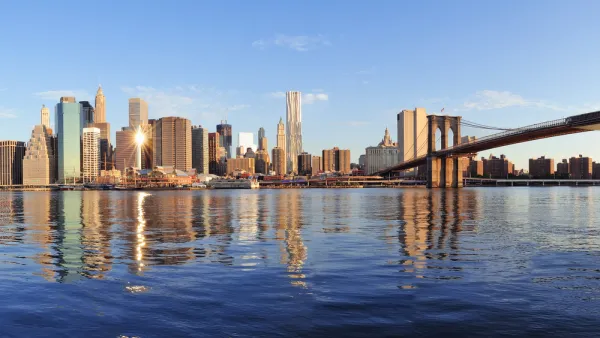
Comptroller's Report Finds Massive 'Airbnb Effect' in New York City
A new report by the New York City Comptroller's Office has estimated the cost of Airbnb to the city's rental market, and the tab is a big one: $616 million in 2016 alone.
City Study Finds Lots of Illegal Airbnb Listings in San Francisco
Despite Airbnb's promises to better regulate the hosts that use their site, and despite legislation approved a little over a year ago by the city, abuse of short-term rentals is rampant in San Francisco.

Planetizen Federal Action Tracker
A weekly monitor of how Trump’s orders and actions are impacting planners and planning in America.

Chicago breaks ground on $3 billion megadevelopment
The new neighborhood, titled Foundry Park, will one day host 3,700 residences.

This MA town is drowning in its own sewage — and residents like it that way
Susan Murcott, a waste water expert, said if Carlisle didn't address their leaking sewage, the problem could turn “deadly.”

Feds to more closely scrutinize proposed Amtrak facility’s environmental impact
The Federal Railroad Administration had initially said the facility qualified for a less extensive environmental review.

Boston is hard to build housing in: its chief of planning wants to keep it that way
Chief of Planning Kairos Shen said she would not make changes to Boston’s affordability requirements for new housing, which critics say have slowed down development.

California plans to bury El Niño’s downpour
If the state plays its cards right, it may be able to store a billion acre-feet of El Niño’s water in aquifers.

FREE Course: Walkable City 1: Why Walkability?
After describing his path towards focusing on walkability as the essence of good planning, Jeff Speck marches through his five principal reasons for making more walkable places.
Reinventing Malls: Planning Alchemy—Turning Gray Fields Into Gold
The course focuses on the opportunities and imperatives that shape reinvention of mall sites.

City of Rosemead
Rutgers University, Edward J. Bloustein School of Planning and Public Policy
One Hundred Miles
Hunter College, City University of New York (CUNY)
The Architects Foundation
University of Cincinnati Online
Montrose County
The Pocatello Development Authority
The Urban Renewal Agency of the City of Pocatello