Jeff Speck, author of Walkable City, argues that reducing the width of traffic lanes would be a panacea for the disastrous public health outcomes of traffic safety.


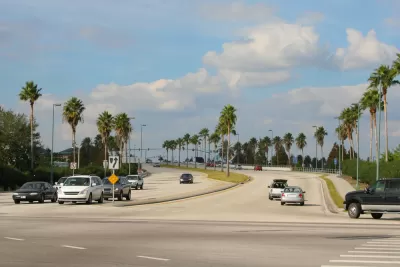
Jeff Speck makes a strong statement in an article for CityLab: "the single best thing we can do for the health, wealth, and integrity of this great nation is to forbid the construction, ever again, of any traffic lane wider than 10 feet."
The article begins by setting the history of the 12-foot lane and the agencies that have designed wide lanes despite the consequences. Many cities design streets with lanes wider than ten feet, according to Speck, and "states and counties almost always apply a 12-foot standard."
Speck goes on to address the consequences of that choice: "Why do they do this? Because they believe that wider lanes are safer. And in this belief, they are dead wrong. Or, to be more accurate, they are wrong, and thousands of Americans are dead."
Speck goes on to detail the errors in understanding and judgment that allow for 12-foot lanes as well as "evidence compiled by traffic engineers, for traffic engineers" against 12-foot lanes.
Read the full story: Why 12-Foot Traffic Lanes Are Disastrous for Safety and Must Be Replaced Now

Toronto to Narrow its Traffic Lanes
Toronto will begin rolling out a program to narrow traffic lanes on the city's streets. The new lane policy, recently completed, was in the works for the past year.
January Must-Reads: Top 10 Articles From Last Month
How a tidal wave of potential changes at the federal level could throw many programs planners depend on into chaos, a roundup of last year’s zoning stories, and the continuing ripple effects of a landmark Supreme Court case.
‘Safe Land Use:’ A Key to Road Safety
How approaching transportation planning through a public health lens can reduce traffic deaths.

Planetizen Federal Action Tracker
A weekly monitor of how Trump’s orders and actions are impacting planners and planning in America.

Amtrak, CN end decades-long dispute with eight-year agreement
The new operating agreement establishes an updated framework for the companies to work together, including processes to resolve disputes.

Northwest rail fans eager for Sept. 30 debut of Amtrak’s Airo fleet
Get ready for that new train smell and more seats. But they won’t go faster or run more frequently on the Cascades route in Washington and Oregon.

Trump administration unlawfully slashed $7 billion in clean energy grants, judge rules
The Environmental Protection Agency ended the Solar For All program, which provided the grants, after President Donald Trump’s inauguration.

Record-breaking wildlife overpass in Colorado brings 91% reduction in animal collisions
Prior to the overpass, vehicles were hitting one deer per day on Colorado’s Interstate 25.

California lawmakers approve just 5% of much-needed LA28 transportation funding
State legislators appear just as unwilling as Trump to pay for Olympics-related transportation projects.

FREE Course: Walkable City 1: Why Walkability?
After describing his path towards focusing on walkability as the essence of good planning, Jeff Speck marches through his five principal reasons for making more walkable places.
Reinventing Malls: Planning Alchemy—Turning Gray Fields Into Gold
The course focuses on the opportunities and imperatives that shape reinvention of mall sites.

City of Thousand Oaks
City of Wisconsin Rapids
Harvard University Graduate School of Design
The Architects Foundation
University of Cincinnati Online
The Pocatello Development Authority
The Urban Renewal Agency of the City of Pocatello