All Aboard Florida, the diesel-powered, high speed (125 mph) train connecting Miami to Orlando has ordered new locomotives and coaches with Siemen's Sacramento, California plant. The mostly privately funded train should be running by 2016.


"The trains will be built for maximum speed of 125 mph and will be assembled at Siemens’ solar-powered rail manufacturing hub in Sacramento," writes Paul Brinkmann for the Orlando Sentinel. The announcement was made on Sept. 11.
Don Robinson, All Aboard Florida president and CEO, said the company chose Siemens believing that it will “set a new industry standard, while providing the world-class amenities our customers will expect from our passenger service.
Siemens’ Sacramento plant, which has been in operation for almost 30 years, is up to 80 percent powered by two megawatts of solar energy and employs more than 800 people.
The train system will be built in two phases: Miami to West Palm Beach by 2016, and then extended to Orlando International Airport a year later. Five sets of trains will serve the initial route, "consisting of two diesel-electric locomotives, one on each end of four passenger coaches," writes Brinkman.
Expansion to seven coaches per train is anticipated eventually, and All Aboard expects to purchase an additional five sets of trains for the segment from West Palm Beach to Orlando International Airport.
The station platforms will allow for level boarding to greatly increase accommodation of those in wheelchairs, and those using bikes and strollers. And yes, the trains will have wi-fi.
According to the train's press release, "All Aboard Florida will be the first privately owned, operated and maintained passenger rail system in the United States," but Curtis Tate of McClatchy Washington Bureau notes "it did apply for a $1.6 billion loan from the Federal Railroad Administration. If the agency approves the loan, it would be the largest awarded under the Railroad Rehabilitation and Improvement Financing program."
Read the full story: Siemens to build All Aboard Florida trains

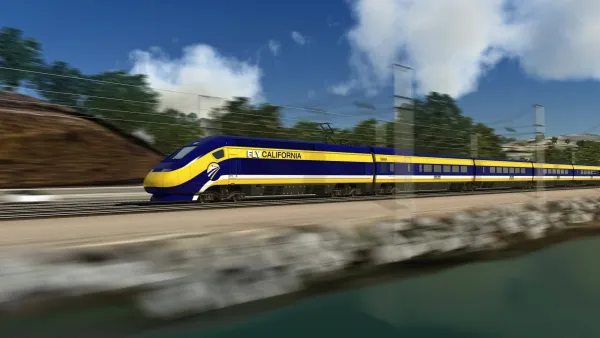
California High Speed Rail Authority Reaches Milestone
The Authority is ready to purchase trainsets, and once again, the Siemen's rail manufacturing facility in Sacramento is looking to add another contract to add to its growing rail car orders. A request for "expressions of interest" was issued.
San Francisco's Shopping Spree for New Muni Cars
After winning the contract to build All Aboard Florida's locomotives and passenger cars, Siemens Sacramento manufacturing plant landed a $648 million contract much closer to home: Replacement of the San Francisco Muni Metro Breda light rail cars.
Proposed California Ballot Measure From Gas Tax Opposition Goes After High-Speed Rail
A follow-up initiative to Proposition 6 would put the brakes on high-speed rail in California and funnel gas tax funds to roads.

Amtrak, CN end decades-long dispute with eight-year agreement
The new operating agreement establishes an updated framework for the companies to work together, including processes to resolve disputes.

Judges permit Denver to divert 77,000 acre feet from the Colorado River for reservoir expansion
Overuse and climate change have caused the Colorado River’s water levels to plummet.

Nation's most wind-powered state turns to coal as data centers increase energy demand
For the first time in decades, Iowa has increased its generation of coal power.

Boston has spent millions making the Green Line more accessible — and there’s no end in sight
While the city has invested millions into expanding and adding platforms to the Green Line to make it more accessible, new train cars set to arrive next year will be too tall for disabled passengers to board without raising the current platforms.

Idaho may see an 18% drop in federal surface transit funding — the largest estimated cut in the US
Transit systems in rural communities are much more reliant on federal funding to provide their services.

How ‘post-disaster gentrification’ alters neighborhoods after natural calamities
After hurricanes, fires or other calamities, the original residents of a community are often replaced by younger, wealthier residents.

FREE Course: Walkable City 1: Why Walkability?
After describing his path towards focusing on walkability as the essence of good planning, Jeff Speck marches through his five principal reasons for making more walkable places.
Reinventing Malls: Planning Alchemy—Turning Gray Fields Into Gold
The course focuses on the opportunities and imperatives that shape reinvention of mall sites.

City of Wisconsin Rapids
Harvard University Graduate School of Design
KFH Group Inc.
The Architects Foundation
University of Cincinnati Online
The Pocatello Development Authority
The Urban Renewal Agency of the City of Pocatello