Rachel Dovey details a new report that finds boom-era trends of gentrification persisted in urban areas throughout the effects of the post-2007 recession.


The conclusion of the report from the Federal Reserve Bank of Cleveland, as summarized by Dovey: "Urban neighborhoods were hot spots for redevelopment before the economy collapsed, and some have continued to gentrify post-recession."
"Portland, Seattle, Denver, Minneapolis and Washington, D.C. continue to see incomes rise in their urban core. Atlanta, where city-center wealth spiked before the recession, has not continued to gentrify. And post-boom Cincinnati is witnessing a surprising surge in city-center income," writes Dovey.
"The report points out that changes in income ranking over time were actually driven largely by poor neighborhoods that gained wealth, not wealthy neighborhoods that became even wealthier — a trend the report calls “consistent with gentrification.'"
Read the full story: These Cities Have Held Onto Pre-Bust Gentrification Highs

How Do Neighborhoods Become Wealthy?
A new study by the Federal Reserve Bank of Cleveland examines a “troubling consistency” of neighborhoods—that is that over the past 30 years, the poorest neighborhoods have stayed that way.

How ‘post-disaster gentrification’ alters neighborhoods after natural calamities
After hurricanes, fires or other calamities, the original residents of a community are often replaced by younger, wealthier residents.
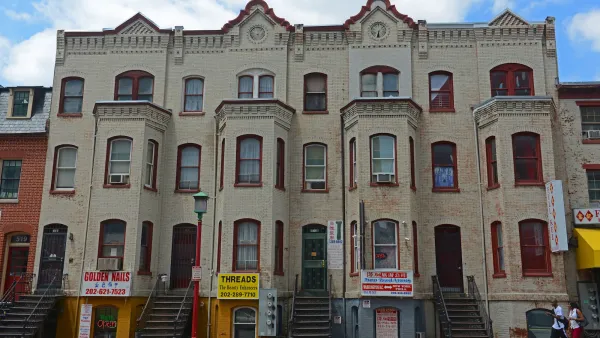
Is this the first wave of de-gentrification?
Valencia, Temescal, H Street and the fickle fortunes of the gentrified neighborhood.

Planetizen Federal Action Tracker
A weekly monitor of how Trump’s orders and actions are impacting planners and planning in America.

Northwest rail fans eager for Sept. 30 debut of Amtrak’s Airo fleet
Get ready for that new train smell and more seats. But they won’t go faster or run more frequently on the Cascades route in Washington and Oregon.

Record-breaking wildlife overpass in Colorado brings 91% reduction in animal collisions
Prior to the overpass, vehicles were hitting one deer per day on Colorado’s Interstate 25.

Detroit to transform waterfront with $2.2 billion investment
Developers will convert about 18 acres of unused parking lot space into civic spaces.

‘Going backwards:’ Baltimore mayor, students rally against state's transit funding plan
Maryland's proposed six-year plan provides no funding for Baltimore’s BMORE bus program and reduces its road maintenance funding.

Trump wants to cancel nearly 98% of funding for HUD housing support program
Multiple housing groups are suing the administration in an effort to preserve the funding.

FREE Course: Walkable City 1: Why Walkability?
After describing his path towards focusing on walkability as the essence of good planning, Jeff Speck marches through his five principal reasons for making more walkable places.
Reinventing Malls: Planning Alchemy—Turning Gray Fields Into Gold
The course focuses on the opportunities and imperatives that shape reinvention of mall sites.

City of Thousand Oaks
City of Wisconsin Rapids
Harvard University Graduate School of Design
The Architects Foundation
University of Cincinnati Online
Northern Illinois Transit Authority (NITA)
The Pocatello Development Authority
The Urban Renewal Agency of the City of Pocatello