California's Strategic Growth Council has begun to shape the Affordable Housing and Sustainable Communities program around its new allocations of cap-and-trade funds. The first key public meeting on creating the program was July 10.


Under SB 862, signed by Governor Jerry Brown just three weeks ago, California's Strategic Growth Council suddenly has $130 million to fund the first year of a new Affordable Housing and Sustainable Communities (AHSC) program, and after that a promise of ongoing funding from cap-and-trade revenues.
Last week the SGC met to take stock of its budgetary good fortune. It was a happy meeting as meetings go, but some positions on uses for the money were quietly being staked out. The Affordable Housing and Sustainable Communities program will fund planning and construction to reduce greenhouse gas (GHG) emissions by means consistent with SB 375 and AB 32, coordinating energy-efficient transportation, land conservation and compact housing growth.
The program will be shaped by its overarching statutory scheme, but there's room within it for a lot of different organizational structures and funding choices, as shown by questions raised at the meeting: Would the program focus on urban transit-oriented development, or could it fund more varied and more rural projects? Among the goals of housing, conservation and transportation efficiency, would one predominate? Would one of the state agencies partnering with SGC assert primary control? How much power would locally affected people and organizations have over the nature of promised benefits to disadvantaged communities? How would larger nonprofits be involved? And -- as Bill Higgins of the California Association of Councils of Government (CALCOG) has suggested -- should regional planning entities help allocate the money?
Workshops to take public comment on creating the program guidelines are to be announced soon, probably for August.
Read the full story: SGC meeting begins to shape the Affordable Housing and Sustainable Communities program

Cong. Blumenauer Updates Federal Cap-and-Trade, Transportation Bill Status
With Congress mired in the health care debate, legislation critical to rebuilding communities, such as ACES and the reauthorization of the Surface Transportation Bill, languish. Rep. Earl Blumenauer (D-Oregon) details the political climate in D.C.
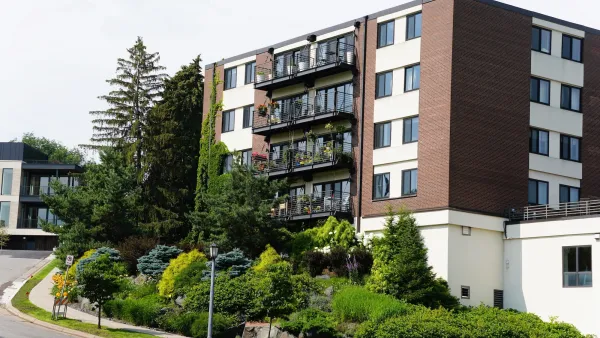
How policy changes helped Minneapolis beat rent inflation
Despite a boom in population, Minneapolis has managed to keep rents relatively steady through a combination of legislative action and private investment.
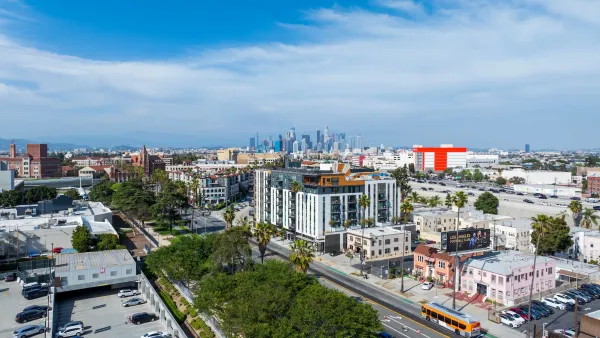
LA delays state housing mandate with 'low-rise ordinance'
The new ordinance allows the city to delay implementing SB 79, a state law requiring more density near transit.

Planetizen Federal Action Tracker
A weekly monitor of how Trump’s orders and actions are impacting planners and planning in America.

Amtrak, CN end decades-long dispute with eight-year agreement
The new operating agreement establishes an updated framework for the companies to work together, including processes to resolve disputes.

Judges permit Denver to divert 77,000 acre feet from the Colorado River for reservoir expansion
Overuse and climate change have caused the Colorado River’s water levels to plummet.

NYC DOT wants faster, more permanent street upgrades
The city is examining ways to build more concrete infrastructure without getting entangled in 'decades-long' projects.

'Something we’ve never seen before:' rising utility rates could strain city finances nationwide
Data centers, climate change and other factors have caused utility rates in the United States to increase by 38% since 2020.

Trump to overrule local leaders, lease millions of acres of America’s Pacific Island territories’ seafloors to mining companies
International law says that the Indigenous people of America’s territories have a right to prior and informed consent regarding projects that impact their countries.

FREE Course: Walkable City 1: Why Walkability?
After describing his path towards focusing on walkability as the essence of good planning, Jeff Speck marches through his five principal reasons for making more walkable places.
Reinventing Malls: Planning Alchemy—Turning Gray Fields Into Gold
The course focuses on the opportunities and imperatives that shape reinvention of mall sites.

KFH Group Inc.
Greater Baltimore Committee
Eagle County Government
The Architects Foundation
University of Cincinnati Online
The Pocatello Development Authority
The Urban Renewal Agency of the City of Pocatello