The city of Clearwater in Tampa Bay has a "sleepy" downtown, much of which is owned by the Church of Scientology. Can investments by the city revive its downtown, as it did with $30 million worth of investments in Clearwater Beach?


Mike Brassfield asks surprising questions of a recent push to revitalize downtown Clearwater—the third largest city in Tampa Bay: "Is there any hope for sleepy downtown Clearwater? Is it worth saving? And in the year 2014, in these decentralized, disconnected times, does a city even need a downtown anymore?"
His questions arise from a recent report by the Urban Land Institute that recommended a number of changes, including partnerships with the Church of Scientology, "a free parking garage, interactive fountains in Coachman Park, another entertainment venue, a water taxi between downtown and Clearwater Beach, and more."
The problem, according to Brassfield, "Downtown boosters hope to turn that wish list into an action plan. Others are leery of pouring more taxpayer money into the district, where empty storefronts persist on blocks that aren't near the recently revived Capitol Theatre."
The article goes on to examine the tricky relationship with the Church of Scientology and the big question: "Is downtown needed?"
Read the full story: Does Clearwater still need a downtown?
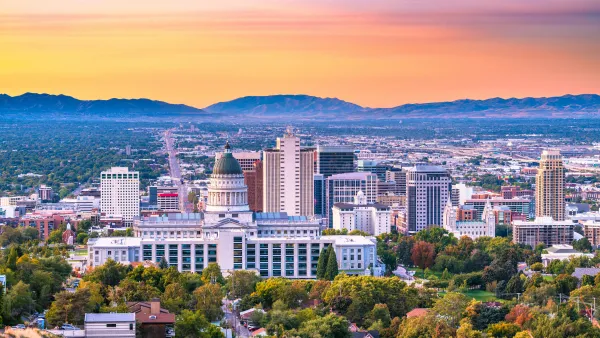
Salt Lake City Bucks Downtown Decline Trend
The city’s central business district is bustling with more activity than before the pandemic.
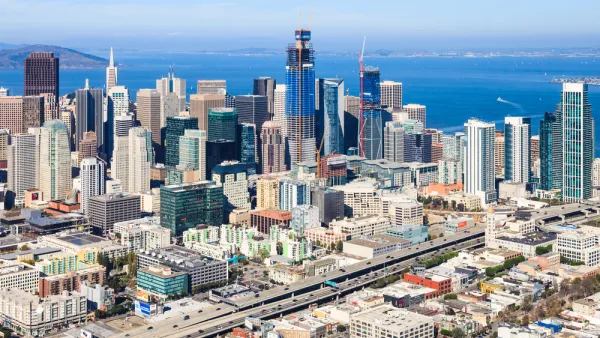
11,000 Housing Units Possible with S.F. Office Conversions, Study Says
A new study by SPUR and the Urban Land Institute’s San Francisco chapter estimates a specific number of apartment units that could be built from vacant office units in the city.
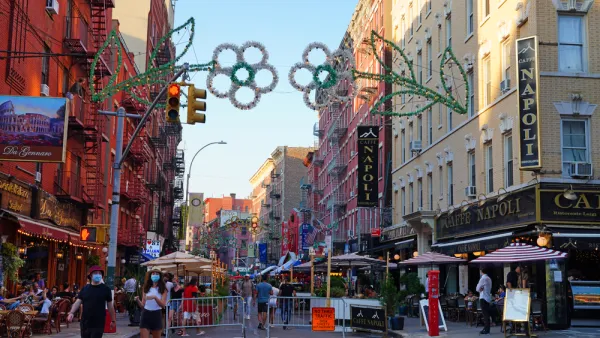
The Once-in-a-Generation Opportunity to Remake Downtown
Urban cores around the country were transforming into live, work, and play destinations before the pandemic. The pandemic was a setback for this transformation, but it could also be a rare opportunity. It’s up to city leadership to seize it.

Planetizen Federal Action Tracker
A weekly monitor of how Trump’s orders and actions are impacting planners and planning in America.

Eastern Nebraska is running out of electricity
Data centers and electrification are straining eastern Nebraska’s grid, throttling economic development.

Study reveals best places in the U.S. for cycling, walking
New research from Streetlight Data examines bicycle and pedestrian miles per capita in the 100 largest U.S. cities by population.

DSA members accuse Mamdani of 'abandoning values' over housing redevelopment
New York City's mayor plans to replace about 2,000 units of public housing with private, mixed-income housing.

All sides of BRT debate unhappy with CDOT’s most recent move
The Colorado Department of Transportation is no longer considering center-running bus lanes for Colorado Boulevard.

Massachusetts bogs generate both power, and cranberries
Putting solar panels above farmland is one way Massachusetts is advancing toward its goal of net-zero carbon emissions by 2050.

FREE Course: Walkable City 1: Why Walkability?
After describing his path towards focusing on walkability as the essence of good planning, Jeff Speck marches through his five principal reasons for making more walkable places.
Reinventing Malls: Planning Alchemy—Turning Gray Fields Into Gold
The course focuses on the opportunities and imperatives that shape reinvention of mall sites.

City of Rosemead
Rutgers University, Edward J. Bloustein School of Planning and Public Policy
One Hundred Miles
University of Michigan School for Environment and Sustainability (SEAS)
Hunter College, City University of New York (CUNY)
The Architects Foundation
City of Cambridge
The Pocatello Development Authority
The Urban Renewal Agency of the City of Pocatello