A recent report by the American Public Transportation Association (APTA) shows transit ridership increasing to historic levels. The surprise is that the increase occurs as gas prices have fallen.


The news of increased transit ridership around the nation has attracted a lot of attention this week. “In 2013 Americans took 10.7 billion trips on public transportation, which is the highest annual public transit ridership number in 57 years,” explained APTA in a statement announcing the report’s findings.
First, J. Green writes of the “fundamental shift” those numbers represent: “Since 1995, the U.S. population has grown 20 percent, but public transit use has increased 37 percent, while VMT is only up 23 percent. Public transit use has increased far faster than population growth while VMT has largely mirrored population growth.”
Jon Hurdle shares one of the implications of transit’s growing popularity: “The ridership in 2013, when gas prices were lower than in 2008, undermines the conventional wisdom that transit use rises when those prices exceed a certain threshold, and suggests that other forces are bolstering enthusiasm for public transportation…”
Meanwhile, in Houston, some cold water, where Dug Begley reports that Houston’s transit ridership is not growing at pace with the rest of the country.
FULL STORY: Record 10.7 Billion Trips Taken On U.S. Public Transportation In 2013

Rejecting the Popular Transit Ridership Narrative
A recent study claimed that transit ridership had reached the highest levels seen in 57 years. Wendell Cox, however, argues that the narrative about a “fundamental shift” in the transportation paradigm is a misrepresentation of the truth.
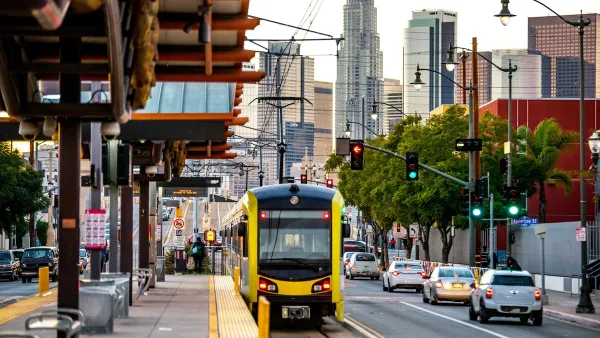
L.A. Transit Surpasses 1M Weekday Riders for First Time Since Pandemic
Rail and bus ridership in the Los Angeles metropolitan area is recovering at a faster rate than the national average.
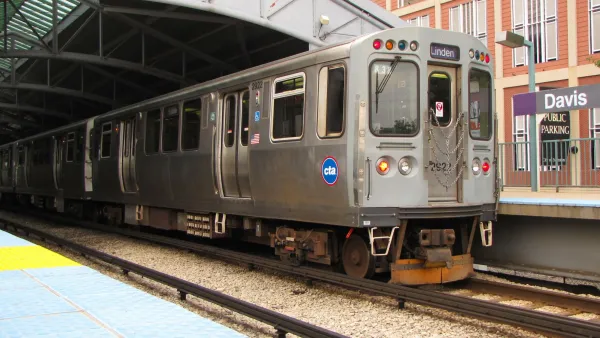
Chicago Transit Recovery Trails Behind Other Major US Cities
Sluggish ridership rates and staffing shortages are dampening recovery. Looming budget gaps could make things even worse.

The state-sanctioned urbicide of Austin
People don’t kill cities. Freeways do.

US to reduce Colorado River water deliveries to Mexico
A new Colorado Treaty amendment reduces Mexico’s Colorado River water allocation by 250,000 acre feet.

New Jersey’s second-largest city bans standalone data centers
Jersey City will continue to allow co-location facilities, such as those meant for research institutions that store their own data.

Amtrak not solely to blame for New Jersey commuter rail's unreliability, report finds
A new study from the Garden State Initiative found that NJ Transit’s budget grew 20% across a 4 year period, but reliability declined significantly over the same period.

EPA erases limits on planet-warming pollution from power plants
Under Monday’s plan, power plants would still have some limits on how much mercury, arsenic and other contaminants they can emit.

Phoenix announces new on-demand transit service, more frequent RAPID buses
Both new services will launch in October, and are part of Phoenix's Project Effective Access Solutions for Easing Congestion.

FREE Course: Walkable City 1: Why Walkability?
After describing his path towards focusing on walkability as the essence of good planning, Jeff Speck marches through his five principal reasons for making more walkable places.
Reinventing Malls: Planning Alchemy—Turning Gray Fields Into Gold
The course focuses on the opportunities and imperatives that shape reinvention of mall sites.

Eagle County Government
Harvard University Graduate School of Design
Nashville Planning Department
The Architects Foundation
University of Cincinnati Online
The Pocatello Development Authority
The Urban Renewal Agency of the City of Pocatello
Journal of the American Planning Association