The newly opened Bell Street Park in Seattle offers the kind of "social friction" Leigh Gallagher called for in Friday's NYT with "planters, perches ... and the simplest but most innovative feature of all, a level plane between sidewalk and street."


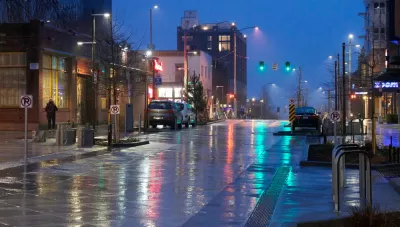
Josh Feit provides an update on Bell Street Park, the $5 million pedestrian-friendly project along Bell Street between 1st and 5th avenues.
"...now, stretching up to 5th, the corridor of planters, perches, mixed car-and-ped zones, zebra crosswalks, a dog park, and the simplest but most innovative feature of all, a level plane between sidewalk and street (no curbs), it's easy to see what a vibrant stretch of downtown this is going to be. (By the way, the perches are made out of the re-purposed, former curbs.)"
Relating the park to a recent New York Times op-ed that advocates for a "social friction" design for city streets, Feit writes: "And here's the argument city leaders should be making for more Bell Street Parks, as they're bound to face opposition from people who don't like the move away from car-centric design to one that accommodates urban density: This isn't a rush into some development dystopia, it's a return to the lazy Seattle of the 1970s, when life moved a bit slower."
"That, in fact, is the whole point of building a street grid that accommodates foot traffic: Creating spaces to linger on the corner (picture food trucks in the extended pedestrian zones, one of the designers at SvR Design told me) and forcing cars to pay attention by creating more entry points for foot traffic, establishes an Andy Griffith Mayberry setting, not an Uma Thurman Gattaca nightmare."
Read the full story: Pedestrian Chronicles: Building Bell Street Park

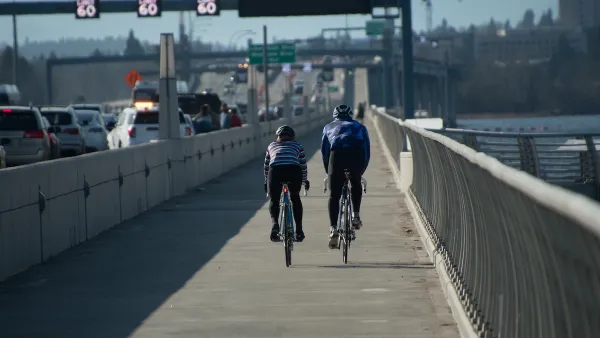
Seattle Road Safety Advocates Say Transportation Levy Perpetuates Car-Centric Status Quo
Critics of a proposed $1.3 billion transportation levy say the package isn’t enough to keep up with inflation and rising costs and fails to support a shift away from car-oriented infrastructure.
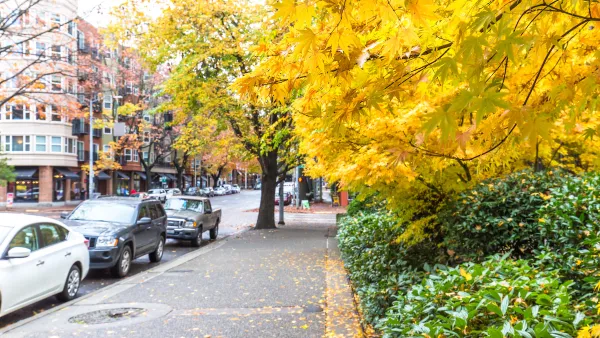
Proposal Could Mandate Sidewalks as Part of Seattle Complete Streets
Almost a third of the city’s neighborhood streets lack sidewalks.
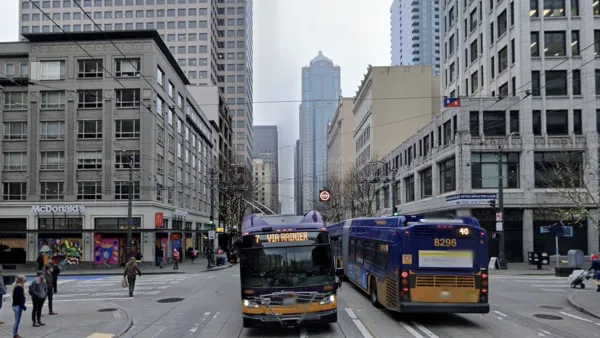
Op-Ed: A Bold but Attainable Vision for Seattle’s Third Avenue
The editorial board of The Urbanist lays out their plan for a reimagined Third Avenue that plays to the strengths of the corridor while improving safety and transit service.

Planetizen Federal Action Tracker
A weekly monitor of how Trump’s orders and actions are impacting planners and planning in America.

Amtrak, CN end decades-long dispute with eight-year agreement
The new operating agreement establishes an updated framework for the companies to work together, including processes to resolve disputes.
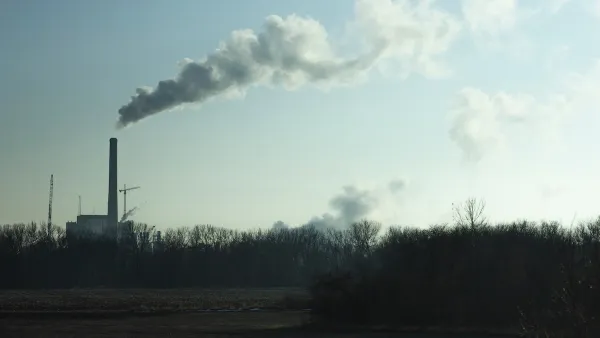
Nation's most wind-powered state turns to coal as data centers increase energy demand
For the first time in decades, Iowa has increased its generation of coal power.

Alabama scores up to $2.5 billion federal loan for largest infrastructure project in state’s history
The Mobile River Bridge and Bayway Project aims to ease congestion at Alabama’s worst bottleneck.

Trump is considering data centers on 6 states' public land — some state officials say they had no idea
If the administration approves the proposed projects, data center and data center-related developments will cover 17,600 acres of public land.

Despite court ruling, Trump is keeping nearly all wind projects in the US on hold
At least 110 wind energy projects have not heard from the government since a federal judge ruled that the Trump administration's freeze on wind turbine clearances was likely illegal.

FREE Course: Walkable City 1: Why Walkability?
After describing his path towards focusing on walkability as the essence of good planning, Jeff Speck marches through his five principal reasons for making more walkable places.
Reinventing Malls: Planning Alchemy—Turning Gray Fields Into Gold
The course focuses on the opportunities and imperatives that shape reinvention of mall sites.

KFH Group Inc.
Greater Baltimore Committee
Eagle County Government
The Architects Foundation
University of Cincinnati Online
The Pocatello Development Authority
The Urban Renewal Agency of the City of Pocatello