The Mormon Church released renderings for development plans at 16th and Vine in Philadelphia. The plan's grab-bag of historic architecture styles succeeds in urbanism but roots the area in an unfortunate historicism, according to critic Inga Saffron.


Inga Saffron’ provides an ambivalent review of the Mormon Church’s plans for the area at 16th and Vine streets. “The collection of architectural pastiches promises to be one of the weirder ensembles produced in 21st-century America outside of Las Vegas,” writes Saffron. But, “Weirder still, they could end up as one of the most civic-minded projects now being built in Philadelphia.”
The development includes “a 1920s-style apartment tower with a teensy redbrick meetinghouse that looks as if it was dragged across town from colonial-era Society Hill” as well as a “snow-white, double-spired, French classical Mormon temple.”
Saffron’s very good question: “How do you respond to a development where the architecture is awful, but the urbanism is terrific - especially in a city routinely shortchanged in both categories?”
Read the full story: Changing Skyline: Mormon development combines civic-mindedness, awful architecture


Philadelphia Sees Record Housing Production
An influx of millennials is driving population and housing growth in the Center City neighborhood.

In Philadelphia, Improving Bus Service by Tackling Traffic Congestion
With buses crawling along through downtown Philadelphia, the city has plans to step up law enforcement to help them move faster.
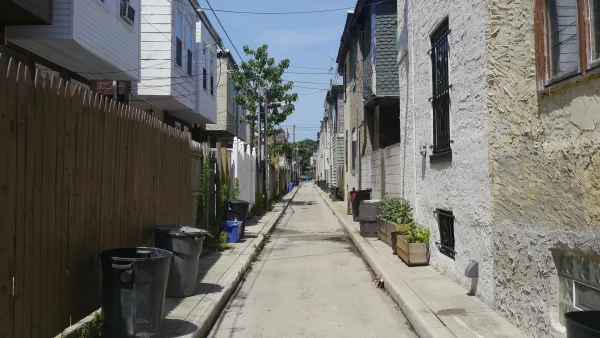
Philadelphia Alleys Ranked for Makeover
In advance of what may be a wider program, Philadelphia's alleys have been ranked for their aesthetic quality. Those in the "average" range are most suitable for retrofits.

Planetizen Federal Action Tracker
A weekly monitor of how Trump’s orders and actions are impacting planners and planning in America.

‘Going backwards:’ Baltimore mayor, students rally against state's transit funding plan
Maryland's proposed six-year plan provides no funding for Baltimore’s BMORE bus program and reduces its road maintenance funding.

Detroit to transform waterfront with $2.2 billion investment
Developers will convert about 18 acres of unused parking lot space into civic spaces.

U.S.-Iran war may have ‘devastating’ impact on cost to warm homes
Vermont and Maine residents may see a 76% increase in the cost of warming their homes this winter.

Senate bill would ‘overhaul’ environmental permitting laws
Under the proposed act, government agencies would also not be able to suspend or rescind permits after granting them.

Exemption applications for NYC’s pied-à-terre tax see 55% success rate
The city sent nearly 40% of its initial pied-à-terre tax warnings erroneously.

FREE Course: Walkable City 1: Why Walkability?
After describing his path towards focusing on walkability as the essence of good planning, Jeff Speck marches through his five principal reasons for making more walkable places.
Reinventing Malls: Planning Alchemy—Turning Gray Fields Into Gold
The course focuses on the opportunities and imperatives that shape reinvention of mall sites.

One Hundred Miles
County of Mendocino
planning NEXT
The Architects Foundation
University of Cincinnati Online
Montrose County
Northern Illinois Transit Authority (NITA)
The Pocatello Development Authority