Five years after Chicago's Rogers Park neighborhood pioneered participatory budgeting in the United States, the bottom-up budgeting practice is gaining adherents across the country. Can Rogers Park's experiment find success citywide?


"Here in the beach-lined Rogers Park neighborhood, Chicagoans are activating an experiment in democratic governance: participatory budgeting. A simple yet radical departure from traditional city budgeting processes, the participatory system allows residents of a given area to directly vote on how government money is spent within their community," explains Anna Clark.
In the years since Rogers Park began asking residents to propose priorities for using their council member's “menu money”, cities such as New York and Vallejo have experimented with the practice. "The results are promising," notes Clark, "with participation levels relatively strong and zero scandals to date."
"Chicago Mayor Rahm Emanuel said in late October that he’s interested in taking participatory budgeting citywide. And this isn’t just talk: Emanuel’s 2014 budget includes funds for a manager of such a program, who would provide technical support to bring the process into each of Chicago’s 50 wards. Other U.S. cities will be watching, potentially opening to the door for mainstreaming a practice that has struggled to gain legitimacy beyond the provinces of the left."
Read the full story: Five Years After Pioneering It in North America, Chicago Might Take Participatory Budgeting Citywide
Chicago to 'Facilitate and Accelerate' Growth in Seven Promising Neighborhoods
Chicago Mayor Rahm Emanuel has identified seven city neighborhoods as "Opportunity Planning Areas" where public resources will be directed to help shape and accelerate nascent redevelopment efforts, reports Fran Spielman.
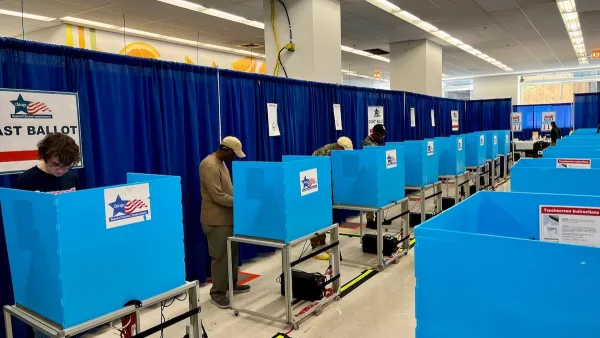
Chicago voters approve permanent festival grounds, penalty for vacant property owners
Currently, major summer and fall festivals take over public parks for weeks at a time, drawing criticism from nearby residents
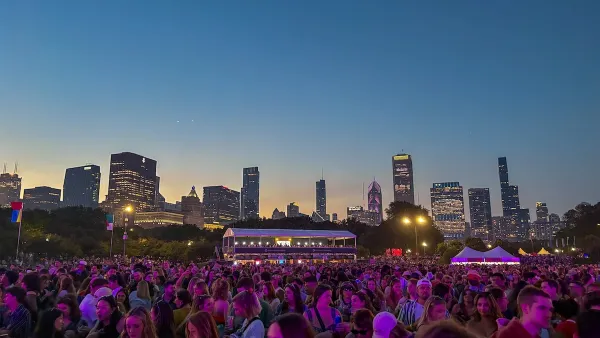
Non-stop party: Chicago voters weigh permanent festival grounds
A stable place for bleachers, stages and drainage may streamline the setup and teardown of large events.

Planetizen Federal Action Tracker
A weekly monitor of how Trump’s orders and actions are impacting planners and planning in America.

California plans to bury El Niño’s downpour
If the state plays its cards right, it may be able to store a billion acre-feet of El Niño’s water in aquifers.

Desperate measures: Advocates weigh draining Lake Powell to fill Colorado River
Draining the reservoir could reduce evaporation losses by a couple hundred thousand acre-feet.

Housing is the top priority of Seattle’s sole new councilmember
Jenks campaigned on building 1,000 new units of affordable housing.

New tax cuts may slash $1.5 billion in funding for Miami transit, public parks
Amendment 3 will save Miami-Dade homeowners $2,700 in 2028.

Arizona, Wisconsin, Pennsylvania hope to finally advance climate goals post-midterms
The three states have spent years under Republican or divided control.

FREE Course: Walkable City 1: Why Walkability?
After describing his path towards focusing on walkability as the essence of good planning, Jeff Speck marches through his five principal reasons for making more walkable places.
Reinventing Malls: Planning Alchemy—Turning Gray Fields Into Gold
The course focuses on the opportunities and imperatives that shape reinvention of mall sites.

City of Rosemead
Rutgers University, Edward J. Bloustein School of Planning and Public Policy
One Hundred Miles
University of Michigan School for Environment and Sustainability (SEAS)
Hunter College, City University of New York (CUNY)
The Architects Foundation
City of Cambridge
Montrose County
The Pocatello Development Authority