Forget all the statistics you've read about the rise in distracted driving, they'll never have the potency of this film by acclaimed director Werner Herzog on the impact of texting while driving on victims, their families, and the drivers themselves.


"The 35-minute film [From One Second to the Next], which premiered on Thursday and is available to watch for free on YouTube--and which will be distributed to more than 40,000 high schools around the United States--is a brutal piece of documentary storytelling in which both the perpetrators and the victims of texting and driving open up about the ways that the collisions have changed their lives," writes Dan Solomon.
“'There was always a guiding principle. What we are doing has to do with a campaign, and the campaign is very, very simple: Don’t text and drive,' [Herzog] says when asked if the storytelling potential of the film’s subjects were what attracted him to the project. 'The consequences are catastrophic, and the statistics are appalling. This campaign certainly comes at the right time. It had to be done. Everything else is of secondary importance.'”
Read the full story: WERNER HERZOG ON HIS DEVASTATING ANTI-TEXTING-AND-DRIVING DOC


Distracted Driving—Still a Problem and a Threat to Public Safety
Even with laws limiting or prohibiting the use of devices while driving, motorists continue to make calls and text while driving.
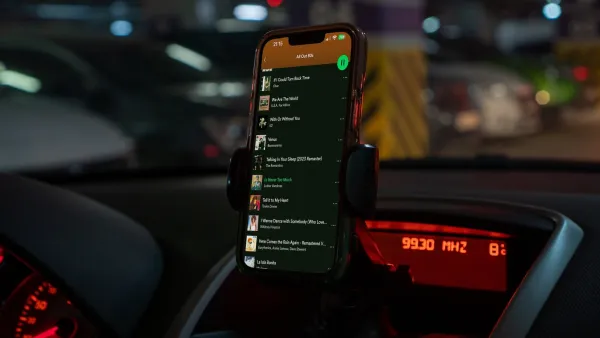
Traffic deaths rise by 15% on major album release days
Enjoy those new tracks, but don't forget to keep your eyes on the road.

StreetVision tool pinpoints likely crash sites using mobile phone data
The tool can help cities quickly identify high-risk intersections and corridors and make an evidence-based case for safety interventions.

Planetizen Federal Action Tracker
A weekly monitor of how Trump’s orders and actions are impacting planners and planning in America.

HUD modernizes 50-year-old manufactured housing framework
The Next Generation Manufactured Housing Action Plan establishes new energy-efficiency standards for manufactured homes, and new guidelines for anchoring them.

Data reveals that NYC’s bet on congestion pricing has paid off
After almost two years of the program, reports show positive impacts on traffic and air quality and no disruptions to parking.

How Chicago, New York and Seattle are funding transit projects amid tough times
Notes from the American Public Transportation Association's TransForm conference in Chicago.

Transport for London tackles hate crime spike with free bystander training
Recorded hate crime offences on the London's transport network have increased by 36 per cent.

Denver is solving homelessness. Why aren't the rest of us?
Since 2023, Denver's street homeless population has decreased by 64%, proving that effective tools exist to support those in need of housing.

FREE Course: Walkable City 1: Why Walkability?
After describing his path towards focusing on walkability as the essence of good planning, Jeff Speck marches through his five principal reasons for making more walkable places.
Reinventing Malls: Planning Alchemy—Turning Gray Fields Into Gold
The course focuses on the opportunities and imperatives that shape reinvention of mall sites.

One Hundred Miles
County of Mendocino
planning NEXT
The Architects Foundation
University of Cincinnati Online
Montrose County
Northern Illinois Transit Authority (NITA)
The Pocatello Development Authority