The startup Renew has taken targeted advertising to a whole new level. Its Internet-connected recycling bins look for cell phones they recognize, then alter their video displays accordingly.


On July 6, the 100 bins installed in London found a record 106,629 unique individuals based on cell phone MAC addresses. The technology uses your phone’s Wi-Fi connection, which means that you can opt out by turning off Wi-Fi (or by filling out an online form).
The idea is to track consumers' habits and tailor advertising to either reinforce or break existing routines. It’s the same concept behind computer cookies, though in the European Union the former are regulated, while Wi-Fi tracking isn’t, at least not yet.
As of now, the recycling bins are outside, on the city’s streets. But, writes Siraj Datoo, Renew hopes to bring the devices inside, where retailers could track everything from how long a customer stays to his or her gender, based on bathroom use.
Read the full story: This recycling bin is following you

What Transport for London Learned While Tracking Users for a Month in 2016
Public transit agencies don't normally get the kind of fine-grained location and navigation data made possible by tracking phones. London got temporary access to that info at the end of 2016, however.

Flock cameras misread license plates in 71% of cases in California study
An analysis of 1,500 reports showed a shockingly high rate of error when reading license plates.
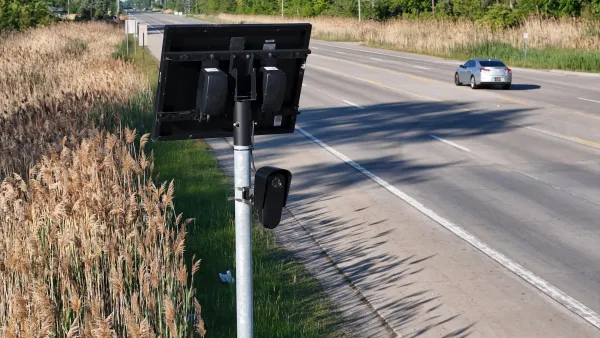
Commentary: Legitimate privacy fears undermine legitimate, life-saving speed camera programs
Automated traffic enforcement works — but excessive surveillance threatens to derail this key safety initiative.

Desperate measures: Advocates weigh draining Lake Powell to fill Colorado River
Draining the reservoir could reduce evaporation losses by a couple hundred thousand acre-feet.

Eastern Nebraska is running out of electricity
Data centers and electrification are straining eastern Nebraska’s grid, throttling economic development.

Move over, LA: St. Louis gears up for Olympics, invests millions in downtown redevelopment
The Missouri city will host the 2028 Olympic soccer group stage and knockout matches.

Bill to overhaul energy permitting clears Senate
The Bipartisan American Affordability and Jobs Act of 2026 still needs to pass the House of Representatives.

MTA sends Dem leaders a wish list to mend Trump’s damages
Requests include exempting new train and bus components from tariffs and increasing transit security funding.

Mass. votes against statewide minimum lot size for single-family homes
Over 2 million residents voted on Question 7; it was decided by just over 30,000 votes.

FREE Course: Walkable City 1: Why Walkability?
After describing his path towards focusing on walkability as the essence of good planning, Jeff Speck marches through his five principal reasons for making more walkable places.
Reinventing Malls: Planning Alchemy—Turning Gray Fields Into Gold
The course focuses on the opportunities and imperatives that shape reinvention of mall sites.

City of Rosemead
Rutgers University, Edward J. Bloustein School of Planning and Public Policy
One Hundred Miles
University of Michigan School for Environment and Sustainability (SEAS)
Hunter College, City University of New York (CUNY)
The Architects Foundation
City of Cambridge
The Pocatello Development Authority
The Urban Renewal Agency of the City of Pocatello