A new report from the Lincoln Institute of Land Policy examines American cities suffering significant population losses, and concludes that investing in existing assets such as historic areas and transit systems offers the best path to prosperity.


"Many of America's legacy cities -- older industrial metropolitan areas facing manufacturing decline and population loss -- have had a difficult time bouncing back." says the Lincoln Institute's At Lincoln House blog. "But the key to revitalization for Baltimore, St. Louis, Camden, N.J., Youngstown, Ohio or Flint, Michigan, is to take stock of the assets right at their doorstep, such as downtowns, parks, transit systems, and academic and cultural institutions."
"That's the message of Regenerating America’s Legacy Cities [free download], an analysis of 18 cities by Alan Mallach and Lavea Brachman, who advocate step-by-step 'strategic incrementalism' as a path to economic development, rather than the silver-bullet approach of signature architecture, a sports stadium or other megaprojects."
“'Intentional strategies are needed to unlock the potential of a city’s assets to bring about sustainable regeneration,' the authors write. Making progress 'begins with leaders sharing a vision of the city’s future and then making incremental, tactical decisions that will transform the status quo, while avoiding grandiose and unrealistic plans.'”
Read the full story: Regenerating America's Legacy Cities

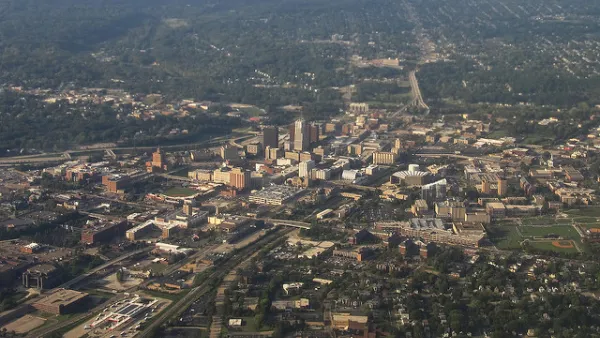
New Legacy Cities Initiative Announced
The Lincoln Institute of Land Policy is launching the Legacy Cities Initiative to provide a network of support for cities of the country's industrial past.

The Vacancy Epidemic
A new report uses terms like epidemic and hyper-vacancy to drive home the point about the effects of vacancies on communities like Cleveland, Gary, Toledo, and Detroit.
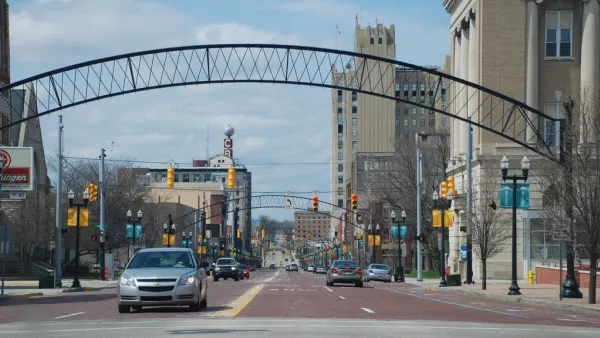
Strategies for Revitalizing Smaller Post-Industrial Cities
For every Pittsburgh or Cleveland success story, there's a story waiting to be told in smaller cities like Gary and Lowell.

Planetizen Federal Action Tracker
A weekly monitor of how Trump’s orders and actions are impacting planners and planning in America.

Amtrak, CN end decades-long dispute with eight-year agreement
The new operating agreement establishes an updated framework for the companies to work together, including processes to resolve disputes.

Northwest rail fans eager for Sept. 30 debut of Amtrak’s Airo fleet
Get ready for that new train smell and more seats. But they won’t go faster or run more frequently on the Cascades route in Washington and Oregon.

MTA looks to bring AI-assisted, multilingual announcement system to subways
Some of the transit agency’s audio systems haven’t been upgraded in 40 years.

Houston Metro makes on-demand rideshare pilot a permanent part of its network
The transit agency is launching upgrades to three of its on-demand services.

LAX SkyLink opening delayed again, contractor won’t commit to new deadline
The project was supposed to open its doors to the public in 2023.

FREE Course: Walkable City 1: Why Walkability?
After describing his path towards focusing on walkability as the essence of good planning, Jeff Speck marches through his five principal reasons for making more walkable places.
Reinventing Malls: Planning Alchemy—Turning Gray Fields Into Gold
The course focuses on the opportunities and imperatives that shape reinvention of mall sites.

City of Thousand Oaks
City of Wisconsin Rapids
Harvard University Graduate School of Design
The Architects Foundation
University of Cincinnati Online
The Pocatello Development Authority
The Urban Renewal Agency of the City of Pocatello