Chuck Wolfe summarizes a major tenet of his new book and suggests we risk ignoring the back story of urban forms and functions by failing to truly understand the traditional relationships between people and place.


Summarizing his new book Urbanism Without Effort, Wolfe emphasizes the importance of first isolating spontaneous and latent examples of successful urban land use, before applying any prescription of typologies, desired ends, or governmental initiative. He suggests "urbanism without effort" as the the basis for a clean, multidisciplinary slate for reinvigorating the way we think about urban development today.
Simply stated "urbanism without effort" is what happens naturally when people congregate in cities.
Rather than assume that the popular and touted is readily adaptable, or readily subject to metrics or labels, Wolfe argues that we should return to first principles and isolate the fundamental, vernacular relationships between city inhabitants and what surrounds them:
We need to look, analyze, and discern, until we remember what a basic sort of city life looks like. While we consider these inherent factors that shape spaces and their use, we also must remember that there is a certain, spontaneous magic attributable to good urban places that can awaken them, but will only occur when they are locally relevant and embraced.
Read the full story: The Dynamic Potential of Urbanism Without Effort


Placemaking in the Barrio: Conceptualizing Infill Development in Disenfranchised Communities
How one San Antonio neighborhood could approach sustainable revitalization while supporting the existing community and drawing on its rich and diverse history and cultural resources.
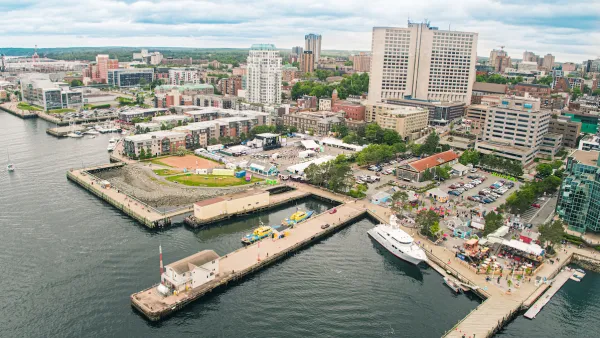
Placemaking on the Halifax Waterfront
How small, incremental changes can create vibrant places.
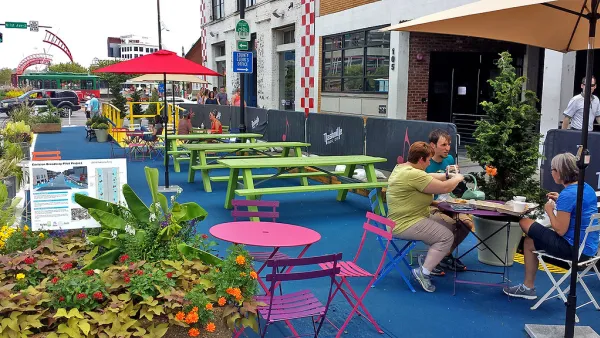
Tactical Urbanism Reshaping Nashville's Broadway Ave
Nasvhille's embrace of temporary urban interventions is producing amazing results that are capturing the imagination of both locals and tourists alike.

Planetizen Federal Action Tracker
A weekly monitor of how Trump’s orders and actions are impacting planners and planning in America.

Northwest rail fans eager for Sept. 30 debut of Amtrak’s Airo fleet
Get ready for that new train smell and more seats. But they won’t go faster or run more frequently on the Cascades route in Washington and Oregon.

Trump is considering data centers on 6 states' public land — some state officials say they had no idea
If the administration approves the proposed projects, data center and data center-related developments will cover 17,600 acres of public land.

After decades of planning, Sacramento gains new light rail station
Trains will arrive every 15 minutes during peak hours and every 30 minutes during non-peak hours.

Massive tunnel-boring machine breaks ground on Gateway Project
The Trump administration revoked funding for the project in October 2025, and then restored it earlier this year.

Airo trainsets begin service on Amtrak Cascades route
The trains feature panoramic windows, complementary wifi and over 300 seats per train set.

FREE Course: Walkable City 1: Why Walkability?
After describing his path towards focusing on walkability as the essence of good planning, Jeff Speck marches through his five principal reasons for making more walkable places.
Reinventing Malls: Planning Alchemy—Turning Gray Fields Into Gold
The course focuses on the opportunities and imperatives that shape reinvention of mall sites.

City of Thousand Oaks
City of Wisconsin Rapids
Harvard University Graduate School of Design
The Architects Foundation
University of Cincinnati Online
Northern Illinois Transit Authority (NITA)
The Pocatello Development Authority
The Urban Renewal Agency of the City of Pocatello