Tim Logan dives deep on Mayor Rahm Emanuel's bold plan to help fund Chicago's infrastructure improvements with private capital. American cities need new ways to pay for projects, but can a city with a history of making bad deals provide the road map?


"Governments across Europe, Canada and Australia have long turned to the private sector to help finance public assets, and even in the U.S., more places are dabbling in it," writes Logan. "But it’s still rare for cities to take the lead. And no place, at least in this country, has tried what Chicago is launching this year: A non-profit agency devoted to tapping private capital through structured financing while retaining public ownership, both for big-ticket items but also for workaday municipal infrastructure."
"A lot of people are watching what’s going on in Chicago, and if the 'City That Works' can make this work, it could hold the key to an evolution in public-private partnerships — and the way our cities get built."
Read the full story: Rahm Emanuel Has an Idea

Illinois Legislators Pass Controversial I-55 Road Expansion Legislation
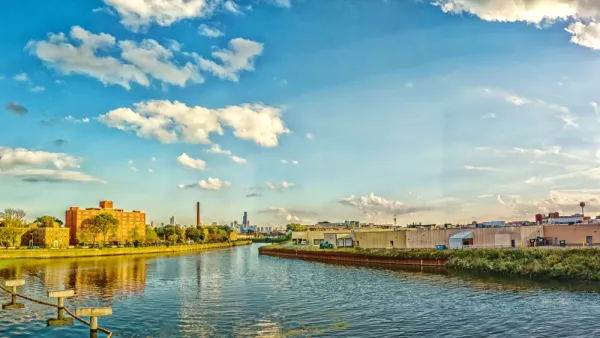
Legislation to enable the addition of express toll lanes on Interstate 55 in the Southwest Side of Chicago, opposed by environmental justice advocates, cleared the Illinois General Assembly last month.
Editorial Board Calls for Tax Increment Financing Reform in Chicago
The Chicago Tribune says the city of Chicago can't be trusted with tax increment financing (TIF), so it's time for a do-over.
O'Hare Tunnel, Proposed by Elon Musk, Looks Dead on Arrival in Chicago's New Political Regime
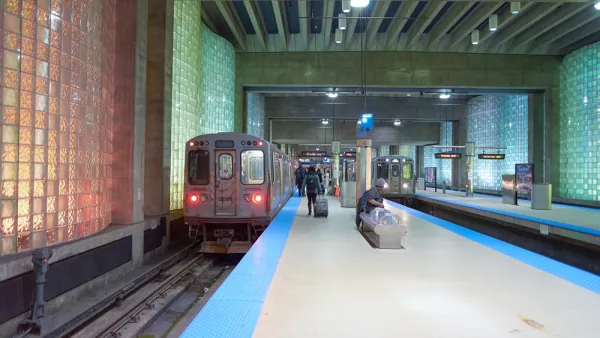
Advocates are relieved Elon Musk's proposal to build a new subterranean connection to O'Hare is dead, but still disappointed at the wasted brainpower and public funding devoted to the idea.

Desperate measures: Advocates weigh draining Lake Powell to fill Colorado River
Draining the reservoir could reduce evaporation losses by a couple hundred thousand acre-feet.

Eastern Nebraska is running out of electricity
Data centers and electrification are straining eastern Nebraska’s grid, throttling economic development.

Malls are becoming the midtowns of the future
Mall and office park redevelopments are a generational opportunity to create new nodes of urbanity.

NYC breaks ground on anti-flooding infrastructure project
New York City's new system will reduce stormwater flows to local sewers by 90%.

One Kentucky town’s secret to affordable housing
The Smoketown Community Land Trust has already built seven affordable homes for community members.

Houston gains petal-shaped cooling infrastructure to make streets more ‘delightful’
The city has installed the pavilions along 15 blocks in Houston.

FREE Course: Walkable City 1: Why Walkability?
After describing his path towards focusing on walkability as the essence of good planning, Jeff Speck marches through his five principal reasons for making more walkable places.
Reinventing Malls: Planning Alchemy—Turning Gray Fields Into Gold
The course focuses on the opportunities and imperatives that shape reinvention of mall sites.

City of Rosemead
Rutgers University, Edward J. Bloustein School of Planning and Public Policy
One Hundred Miles
University of Michigan School for Environment and Sustainability (SEAS)
Hunter College, City University of New York (CUNY)
The Architects Foundation
City of Cambridge
Montrose County
The Pocatello Development Authority