While modernist buildings have fared somewhat better in the minds of preservationists, recent trends seem to indicate a more promising future for protecting the significant modernist landscapes of the recent past, says Charles Birnbaum.


Until recently, the prospects for protecting treasured modernist landscapes seemed grim. "Fewer than 2,500 of the 80,000-plus National Register sites boast any significant landscape design," explains Birnbaum, and only "[a] few modernist icons have won this coveted consideration..."
"Opinion about contemporary landscape architecture, however, does seem to be evolving," he notes. “Design icons, such as the Eames chairs and the Glass House, have helped solidify modernism’s significance among scholars and the public,” says historical consultant Charlene Roise, president of Hess, Roise and Company. “Now, with renewed interest nationally in urban centers and a growing understanding of landscape architecture’s value through projects like the High Line, modernist landscapes are also gaining awareness and supportive constituencies.”
With the recent listing of M. Paul Friedberg’s Peavey Plaza, in Minneapolis, and Richard Haag's Gas Works Park, in Seattle, "[t]he tide is slowly turning for landscape architecture and its practitioners, especially as preservationists come to see that recognizing the designed outdoors can provide a more complete picture of modernism as a movement," says Birnbaum. "And though it’s still too early to tell if these spaces will get the same consideration as the buildings, this recent activity is the start of a broader bid for immortality."
Read the full story: Charles Birnbaum on the Future of Landscape Architecture

Minnesota's Modernism Gaining Historic Status
It might seem like a contradiction of terms, but many buildings labeled "modern" when built some 50 years ago are now considered "historic."
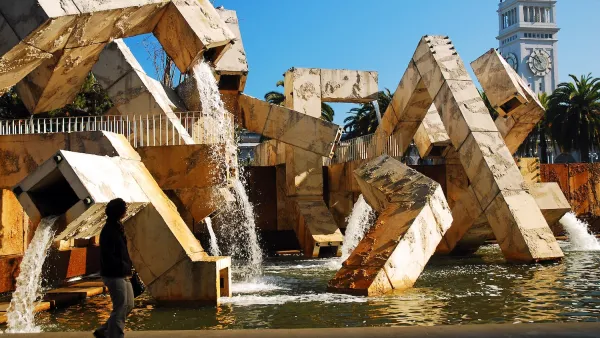
San Francisco to Dismantle its Polarizing Brutalist Fountain
The Vaillancourt Fountain stands as a symbol of the tension between the city’s past and future.
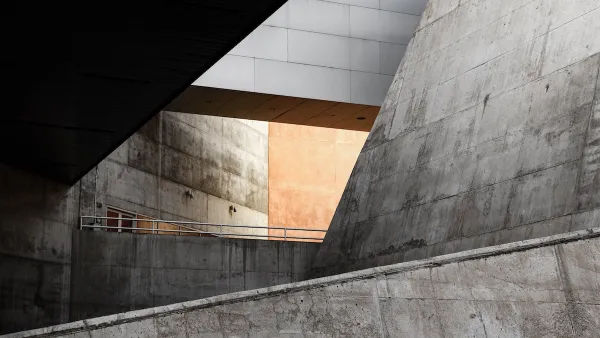
What ‘The Brutalist’ Teaches Us About Modern Cities
How architecture and urban landscapes reflect the trauma and dysfunction of the post-war experience.

Desperate measures: Advocates weigh draining Lake Powell to fill Colorado River
Draining the reservoir could reduce evaporation losses by a couple hundred thousand acre-feet.

Eastern Nebraska is running out of electricity
Data centers and electrification are straining eastern Nebraska’s grid, throttling economic development.

Move over, LA: St. Louis gears up for Olympics, invests millions in downtown redevelopment
The Missouri city will host the 2028 Olympic soccer group stage and knockout matches.

Mass. votes against statewide minimum lot size for single-family homes
Over 2 million residents voted on Question 7; it was decided by just over 30,000 votes.

Maryland’s $15 billion bridge project gains key approval
The Maryland Transit Authority said the project will create over 60,000 jobs and add $23 billion to the local economy.

‘No clear next steps’ for Chicago's permanent festival grounds
Eleventh Ward Ald. Nicole Lee has suggested Soldier Field as a possible location for the permanent event space.

FREE Course: Walkable City 1: Why Walkability?
After describing his path towards focusing on walkability as the essence of good planning, Jeff Speck marches through his five principal reasons for making more walkable places.
Reinventing Malls: Planning Alchemy—Turning Gray Fields Into Gold
The course focuses on the opportunities and imperatives that shape reinvention of mall sites.

City of Rosemead
Rutgers University, Edward J. Bloustein School of Planning and Public Policy
One Hundred Miles
University of Michigan School for Environment and Sustainability (SEAS)
Hunter College, City University of New York (CUNY)
The Architects Foundation
City of Cambridge
Montrose County
The Pocatello Development Authority