At a visit to the Argonne National Laboratory today, President Obama was expected to unveil his plan to spend $2 billion in oil and gas revenues "to find ways to replace hydrocarbons as the primary fuel for the nation’s cars, trucks and buses."


John M. Broder reports on the Energy Security Trust, an idea Obama first proposed in last month’s State of the Union address, which would divert "$2 billion in revenue from federal oil and gas leases over the next decade to pay for research on advanced vehicles, White House officials said."
"The idea enjoys some bipartisan and business support," adds Broder, "but is likely to encounter strong resistance from Congressional Republicans, who will portray it as a tax on energy producers. The White House says the money will come from growth in drilling revenue from leases on public lands and waters over the next decade and is not a new tax."
"Officials said Mr. Obama will present the proposal as part of his 'all-of-the-above energy strategy,' which includes an increase in oil and gas development; support for nonpolluting sources like wind, solar and geothermal energy; loan guarantees for new nuclear plants; and research into long-term alternatives to fossil fuels."
Read the full story: Obama Seeks $2 Billion in Research on Cleaner Fuels
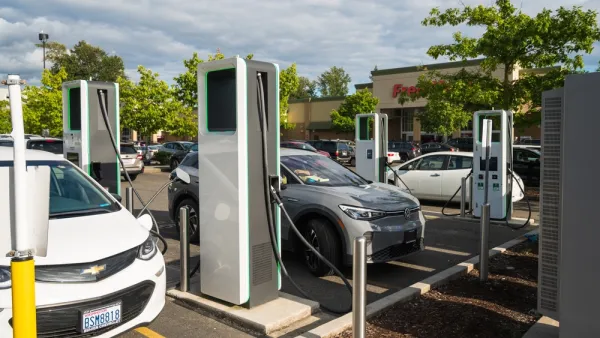
Federal Alternative Fuel Charging Grant Funding Announced
The grant program is part of the 2021 infrastructure act, which promised to invest in charging and fueling stations for electric cars and other vehicles powered by alternative energy.
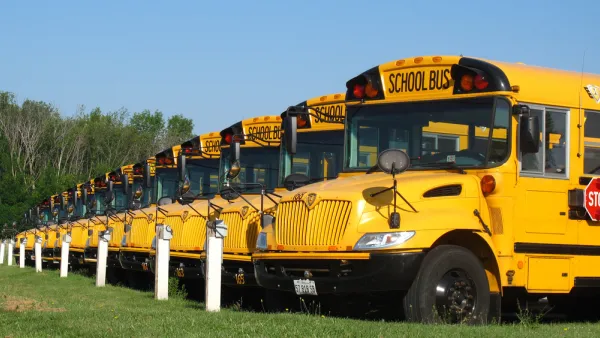
EPA Launches School Bus Electrification Program
The agency will distribute $5 billion over the next five years to help school districts purchase electric and low-emissions buses.
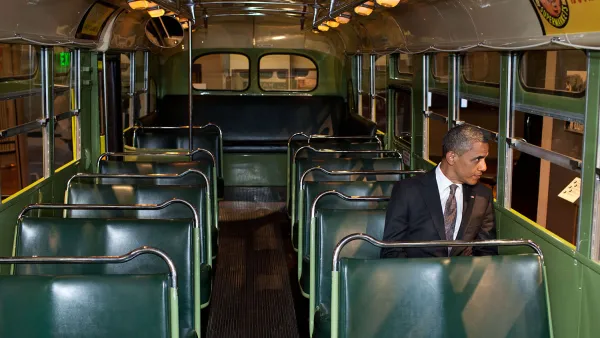
Former President Barack Obama Addresses Gentrification
Former President Barack Obama is facing a new kind of politics while working to support the development plan for the Barack Obama Presidential Center.

Planetizen Federal Action Tracker
A weekly monitor of how Trump’s orders and actions are impacting planners and planning in America.

California plans to bury El Niño’s downpour
If the state plays its cards right, it may be able to store a billion acre-feet of El Niño’s water in aquifers.

Desperate measures: Advocates weigh draining Lake Powell to fill Colorado River
Draining the reservoir could reduce evaporation losses by a couple hundred thousand acre-feet.

US buildings threatened, destroyed by fires set to triple by 2060
Researchers found a high fire risk for socioeconomically vulnerable neighborhoods in the American West.

LA residents may be allowed to paint their own crosswalks
Councilwoman Katy Yaroslavsky put out a motion instructing the Los Angeles Department of Public Transportation to study the feasibility of allowing volunteers to paint crosswalks.

Dallas moves to overhaul its zoning code
The city's zoning reform will allow more multi-family and mixed-use developments.

FREE Course: Walkable City 1: Why Walkability?
After describing his path towards focusing on walkability as the essence of good planning, Jeff Speck marches through his five principal reasons for making more walkable places.
Reinventing Malls: Planning Alchemy—Turning Gray Fields Into Gold
The course focuses on the opportunities and imperatives that shape reinvention of mall sites.

City of Rosemead
Rutgers University, Edward J. Bloustein School of Planning and Public Policy
One Hundred Miles
Hunter College, City University of New York (CUNY)
The Architects Foundation
University of Cincinnati Online
City of Cambridge
Montrose County
The Pocatello Development Authority